Celestron SkyMaster 15x70 Binoculars Review
Published on 25 April 2026 · By OptiqueNature
Review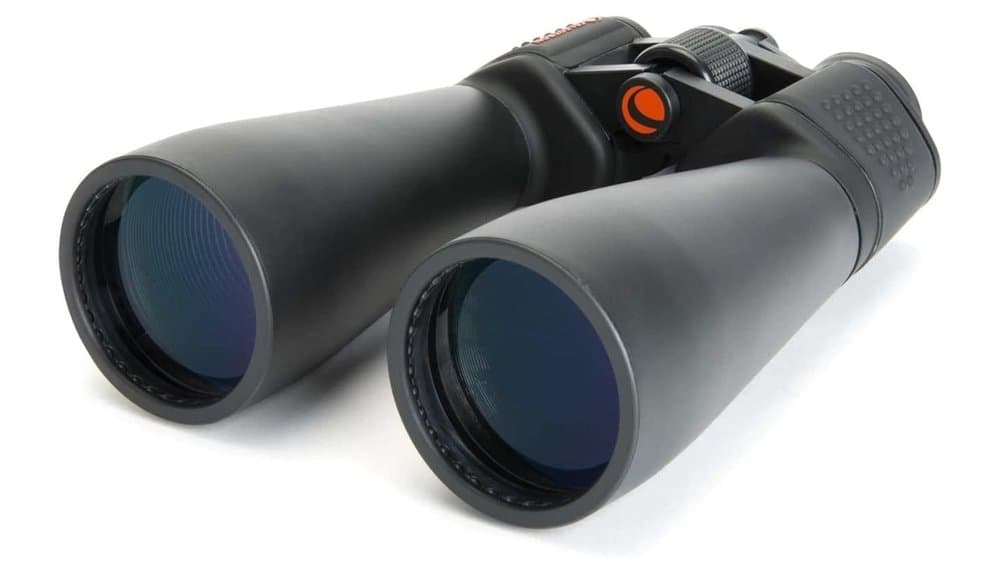
Complete Analysis: Celestron SkyMaster 15x70, Wide-Field Astronomy Binoculars
In the world of nature and night sky observation, high-power binoculars hold a special place. They open a door to a universe of details inaccessible to the naked eye. The Celestron SkyMaster 15x70 Porro Prism Binoculars have been a reference point in the entry and intermediate segment for years. On paper, they promise performance worthy of more expensive instruments. But how do they truly fare in the field, when faced with the demands of observers? Here, we analyze their technical characteristics, construction, and community feedback to determine their place in an enthusiast's optical arsenal.
Strengths
The advantages of the SkyMaster 15x70 are clear and make it a standout product for specific uses.
- Exceptional Performance-to-Price Ratio: This is the most praised point. They offer access to a level of magnification and light gathering that far surpasses standard compact binoculars, without reaching the budget of high-end models.
- Remarkable Low-Light Brightness: The 15x70 combination (15x magnification, 70 mm objectives) is particularly well thought out. The large objectives capture an impressive amount of light, resulting in a bright and detailed image during twilight or astronomical observations.
- Quality Optics for the Category: The use of BaK-4 prisms (barium crown) and fully multi-coated optics ensures efficient light transmission, good contrast, and minimizes internal light loss. Expert testers note that the image in the center of the field is sharp and satisfactory.
- Observation Versatility: Although designed with astronomy in mind, their magnification allows for terrestrial observation at very long distances (coastal viewing, long-distance wildlife spotting, distant landscapes).
- Completeness of the Package: The systematic inclusion of a tripod adapter is a major asset, immediately acknowledging the need for stability with this type of instrument.
Weaknesses
Certain compromises are inherent to this type of product and its price positioning.
- Weight and Size: At approximately 1.5 kg, these imposing binoculars are not designed for mobile or hiking use. Prolonged handheld use is physically demanding and counterproductive.
- Imperative Need for a Tripod: The high magnification (15x) amplifies the slightest tremor. The community is unanimous: to fully exploit the optical potential, a robust tripod is essential, transforming observation into a more static activity.
- Limited Build Quality and Sealing: Unlike premium models, standard SkyMasters are water resistant but not waterproof or nitrogen-purged. Their rubber armor offers a good grip, but the mechanisms can feel basic.
- Chromatic Aberrations and Edge of Field: User feedback notes the presence of chromatic aberrations (color fringing) on high-contrast edges. Furthermore, sharpness tends to decrease towards the edge of the field of view, an area where superior versions (like ED models) make the difference.
Detailed Performance Analysis
Let's delve into the specifics to understand what these numbers concretely mean for the observer.
Optical Quality and Viewing
The generous objective diameter (70 mm) results in an exit pupil of 4.7 mm (70/15). This value is excellent for nighttime observation, allowing the eye to receive a lot of light even when the pupil is dilated. The twilight factor (√(15x70) ≈ 32.4) is high, confirming their suitability for low-light conditions. The BaK-4 prisms and multi-coatings ensure decent light transmission, though it is lower than that achieved with dielectric or XLT coatings found on higher-end models. This is where the model's positioning is clear: it offers very good brightness for its price, but cannot rival the complete absence of chromatic aberrations found in models with ED (Extra-low Dispersion) glass.
Field of View and Ergonomics
The 4.4° angular field of view translates to a linear field of about 70 meters at 1000 meters. This is a relatively comfortable field for this level of magnification, allowing you to frame vast regions of the sky like the Orion Nebula (M42) or the Pleiades star cluster (M45). The 18 mm eye relief is appreciated by eyeglass wearers, allowing them to see the entire field without removing their corrections. However, testers note that the rubber eyecups, while foldable, may lack comfort during very long sessions.
Construction and Practical Use
The Porro prism construction explains the characteristic wide profile of these binoculars. This optical architecture generally offers better depth perception and a greater sense of depth at a lower manufacturing cost. The rubber coating provides good protection against minor shocks and a secure grip. The central focusing wheel, with its large knob, is generally considered precise. On the other hand, the minimum focusing distance of about 16 meters (52.5 feet) makes them poorly suited for close-up bird watching or insect observation.
Value Comparison
The SkyMaster 15x70 occupy a precise niche. Compared to compact 8x42 or 10x50 binoculars, they are less versatile and portable but far surpass their capabilities in brightness and power for the night sky. Compared to premium models of the same format (like the Orion UltraScan or Celestron SkyMaster Pro ED), they yield on ultimate optical finesse, sealing, and material quality, but at a fraction of the price. They thus represent the best compromise for an amateur wanting to seriously get into binocular astronomy without a significant investment, or for a terrestrial observer needing a very bright but stationary spotting scope.
Recommended Use Cases
- Beginner and Intermediate Astronomy: Detailed observation of the Moon, locating planets (Jupiter and its moons, Saturn), exploring star clusters (Pleiades, Double Cluster in Perseus), bright nebulae (Orion), and nearby galaxies (Andromeda).
- Very Long-Distance Terrestrial Observation: Wildlife observation from a fixed blind, coastal viewing, or distant mountain landscapes.
- Special Events: Observing eclipses, high-altitude aircraft passages.
Discouraged Use Cases: Hiking, close-up birding, indoor sports events (field too narrow, too heavy).
Technical Specifications
| Characteristic | Detail |
|---|---|
| Model | Celestron SkyMaster 15x70 Porro Prism |
| Magnification | 15x |
| Objective Diameter | 70 mm |
| Prism | Porro, BaK-4 glass |
| Optical Coatings | Fully Multi-Coated |
| Field of View (at 1000m) | ~70 m (230 ft at 1000 yds) |
| Angular Field of View | 4.4° |
| Exit Pupil | 4.7 mm |
| Eye Relief | 18 mm |
| Minimum Focus Distance | ~16 m (52.5 ft) |
| Diopter Adjustment | On right eyepiece |
| Tripod Adapter | Included (standard 1/4" thread) |
| Sealing | Water Resistant |
| Weight | Approximately 1.49 kg |
| Included Accessories | Case, strap, tripod adapter, lens caps, ocular sunshade |
What Users Say: A Synthesis of Reviews
Analysis of hundreds of user reviews and expert tests converges towards a clear consensus.
Praise is recurring on several points. Amateur astronomers are unanimously impressed by the value for money. Many describe their first view of the Milky Way, lunar craters, or Jupiter's moons as a revelation, highlighting the brightness and detail obtained for a moderate investment. The ability to mount them on a standard photo tripod is considered an essential asset. The handling and feeling of sturdiness are generally judged good for the category.
Criticism focuses on the expected practical and optical limits. Weight is the first drawback mentioned, making handheld use beyond a few seconds nearly impossible and unstable. The necessity of a solid tripod (often purchased separately) is consistently emphasized. Optically, while the central image is appreciated, many observers note the presence of chromatic aberrations (purple/green fringing) on the edges of high-contrast objects, as well as sharpness that declines towards the edges of the field. The build quality, while decent, does not inspire the same confidence as that of waterproof professional ranges.
In summary, the community considers them the perfect tool to "try out" binocular astronomy or to have a performance pair without breaking the bank. They are often seen as an excellent first step before a potential leap to more expensive ED or apochromatic models.
Conclusion
The Celestron SkyMaster 15x70 Porro Prism Binoculars are not versatile, all-purpose binoculars. They are, however, a specialized tool that excels in its domain. Their strength lies in their ability to offer serious optical performance for astronomy and very long-distance observation at a very accessible entry point.
Purchasing them should come with a clear understanding of their limitations: their weight mandates use on a tripod, and their optics, while very honest, present the typical compromises of their segment compared to premium models. For the observer who accepts these constraints and is primarily seeking power and brightness without blowing their budget, the SkyMaster 15x70 remain a pertinent and hard-to-beat choice in their price category. They constitute an exciting and rewarding gateway to the starry sky.
100% free and independent — All our articles are written independently, without any sponsorship. We may earn a commission on purchases made through our links, at no extra cost to you.
Articles you might like
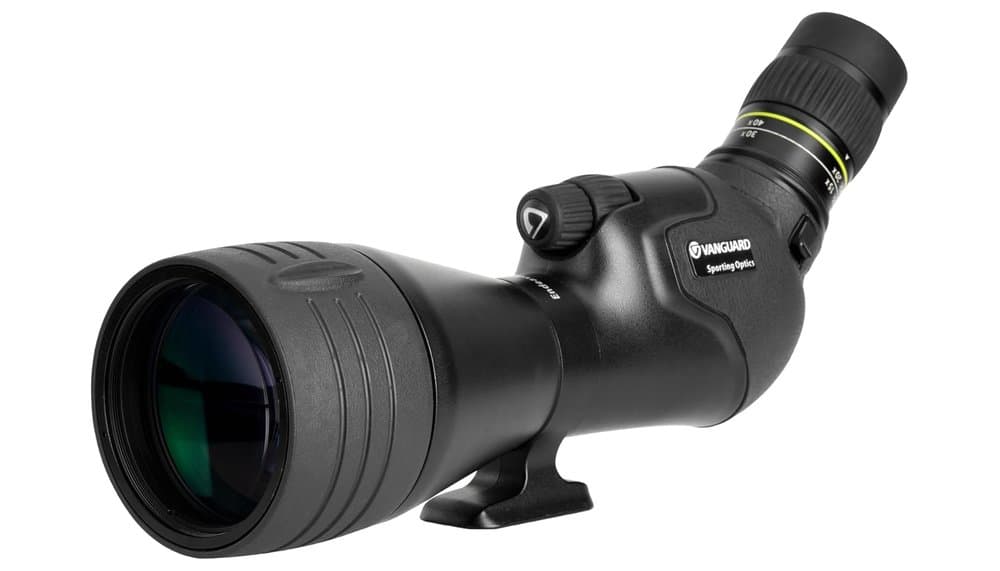
Vanguard Endeavor HD65A Spotting Scope Review
Spotting scope with 65mm ED glass & 15-45x zoom for birding & hiking. Balanced performance & portability for serious nature observers.
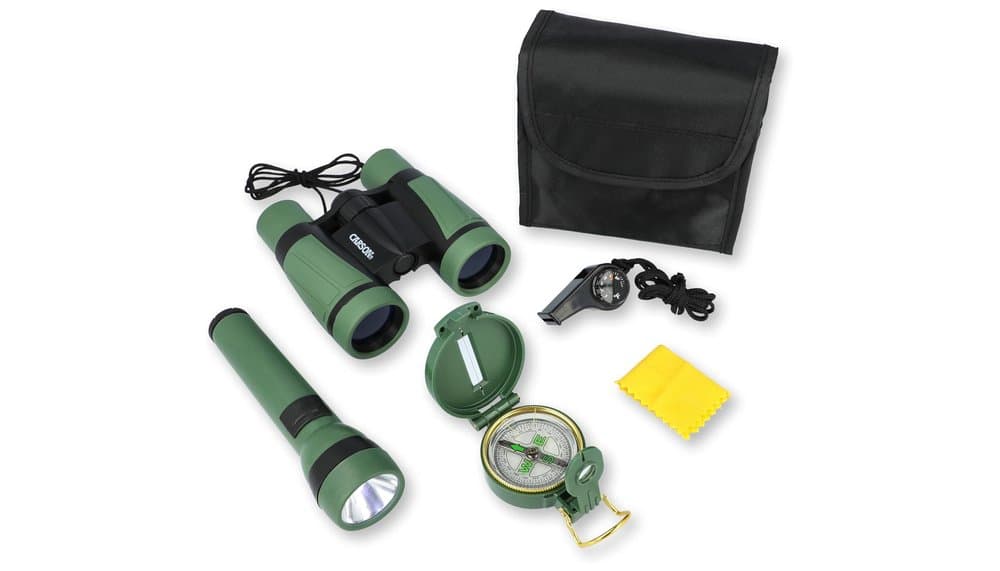
Carson AdventurePak Kids' Exploration Tool Kit Review
Explore nature with this kid's 5-piece tool kit for outdoor adventure and educational discovery. Perfect for young explorers.
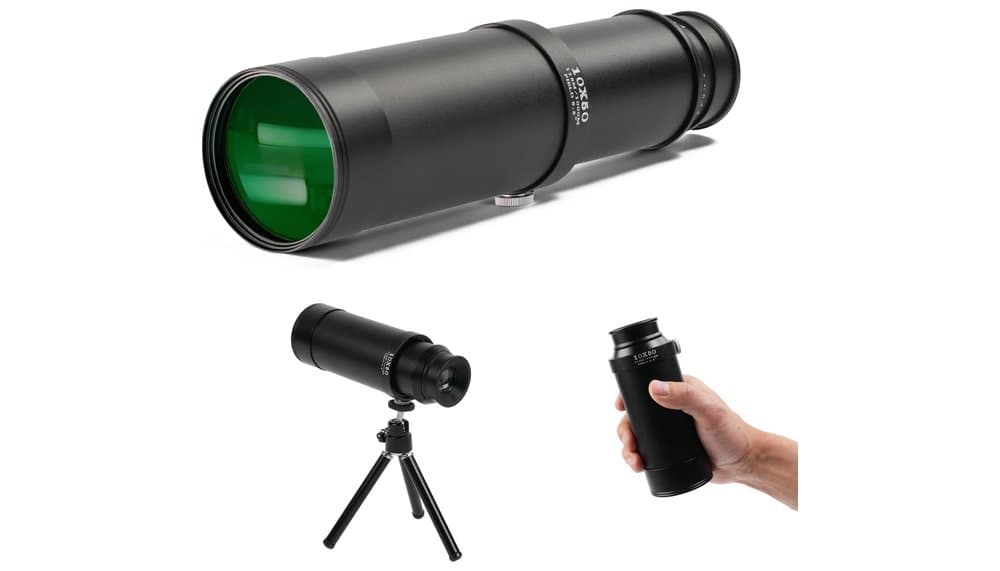
BOSTRON CY 10x50 Monocular Review & Test
Compact 10x50 monocular review: Analyzes optical clarity, field of view & build quality for hiking, nature & astronomy. See its true value.
Guides you might like

WiFi Trail Camera Guide
See wildlife discreetly from your couch! Learn how WiFi trail cameras let you monitor animals without disturbance and how to choose the right one.
Ultimate Travel Telescope Guide
Choose a portable, high-performance travel telescope to explore the universe from your backpack without compromising on essential astronomical views.
Ultimate Guide to Night Vision Binoculars
Choose the perfect night vision binoculars: Gen vs. digital? Unravel the tech to make your nighttime wildlife adventures a total success. Guide inside.