Celestron Nexstar Evolution 8 Telescope Review
Published on 2 August 2026 · By OptiqueNature
Review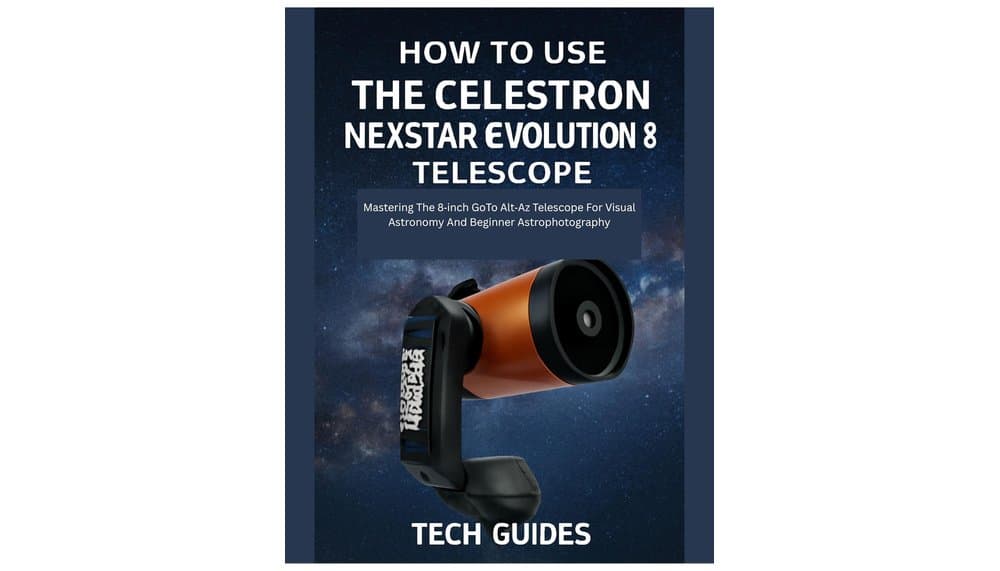
Complete Analysis: Celestron Nexstar Evolution 8 Telescope
For the amateur astronomer looking to move up to the next level without breaking the bank, choosing a telescope is a significant investment. The options are vast, but the Celestron Nexstar Evolution 8 Telescope stands out as a pillar in the premium consumer segment. It is a complete instrument that promises to do everything, from simple observation to first steps in astrophotography. But how does it really perform in the field, once the marketing promises are scrutinized against specifications, expert feedback, and user experience? This is what we will untangle here, focusing on what concretely makes the value of this instrument.
Strengths of the Nexstar Evolution 8
What immediately strikes you about the Celestron Nexstar Evolution 8 is its all-in-one proposition and its great autonomy. The first undeniable strength is its integrated lithium-ion battery. According to testers, it allows for several hours of observation without any cables, a freedom that radically changes the user experience compared to models requiring an external power source. Secondly, its motorized altazimuth mount coupled with the GoTo system, controllable directly from a smartphone via Wi-Fi (SkyPortal app), makes accessing celestial objects deceptively simple after a quick alignment. The user spends more time observing than searching.
The third major asset lies in its 203 mm (8-inch) Schmidt-Cassegrain optics. This generous aperture is a passport to a wide variety of observations: planetary details (Jupiter's bands, Saturn's rings), nebulae, globular clusters, and galaxies. Finally, one cannot ignore its relative compactness. For a 200 mm aperture, the tube retracts, offering a performance/size ratio that makes it easily transportable, a point often highlighted by the community.
Weaknesses and Limitations
No instrument is perfect, and an analysis of expert and user feedback allows us to identify a few areas of concern. The main compromise concerns its suitability for deep-sky astrophotography. As the mount is of the altazimuth type (and not equatorial), it induces field rotation during long exposures, seriously limiting its use in this area without the addition of a corrective accessory (a field reducer/corrector is often recommended to improve the field and edge quality). It is, however, perfectly suitable for planetary or lunar astrophotography using video.
Another point of caution: the autonomy of the integrated battery. While judged sufficient for a typical evening, users note that it can become a limiting factor during very long sessions or in sub-zero temperatures. Power management then becomes a constraint. Finally, some reviews point to an improvable rigidity of the supplied tripod, especially at full height or in light wind, where residual vibrations can be noticeable. This is a point often cited as the first area for improvement for those wishing to optimize stability.
Detailed Technical Analysis
We will dissect the key components of this telescope to understand the source of its performance and limitations.
Optics and Visual Performance
The optical heart is a 203 mm diameter primary mirror, offering a long focal length of 2032 mm (f/10 ratio). This Schmidt-Cassegrain configuration is a proven classic, renowned for its versatility. The large aperture allows for excellent brightness and resolving power, essential for revealing faint details on planets and deep-sky objects. The mirror coatings, of the StarBright XLT type, are designed to maximize light transmission and contrast. On paper, the specs announce optimized transmission, which translates in the field to brighter and sharper images for a given aperture. The closed-tube design also protects the optics from dust and thermal air currents, promoting a stable image.
Mount, Electronics, and Ease of Use
The single fork altazimuth mount is the element that defines the "Evolution" experience. Its motorization on both axes is smooth and precise, controlled by an onboard system with a database of over 40,000 objects. The integrated Wi-Fi connection and compatibility with SkyPortal or SkySafari apps literally transform a smartphone into a sophisticated control console, much more pleasant than the old button hand controller. Experts praise this modernization, which makes the instrument very intuitive, especially for beginners. The build quality of the tube/mount assembly is generally described as solid and premium, with careful finishes.
Portability and Versatility of Use
This is where the Nexstar Evolution 8 finds its ideal niche. It is compact and light enough (the tube weighs about 12 kg assembled) to be moved by one person, whether in the garden or for an outing to a more pristine observation site. Compared to the often-mentioned 9.25" model, the community notes that the 8-inch offers a better portability/aperture compromise, the 9.25" becoming significantly heavier and bulkier. It is therefore suitable for the mobile astronomer. However, for a permanent observatory installation, its mount can show its limitations compared to more specialized instruments.
Range Comparison and Value for Money
In the world of high-end computerized telescopes, the Nexstar Evolution 8 clearly positions itself in the accessible premium segment. It surpasses entry-level models through the quality of its optics, the robustness of its mount, and the ergonomics of its control system. It does not reach the level (and cost) of high-end equatorial mounts dedicated to demanding astrophotography. Its real direct competitor is often the equivalent model from rival brands. What analyses show is that its value lies in its complete and coherent package: you buy a ready-to-use, autonomous, and modern system that avoids having to assemble and make separate components compatible (mount, tube, power supply, control interface). For a similar budget, one could opt for a Newtonian tube on a robust equatorial mount, but at the cost of much greater complexity of setup and bulk.
What Users Say
A synthesis of customer feedback and forum discussions reveals clear trends.
The recurring positive points confirm the technical strengths: the convenience of the wireless system is widely praised, as is the simplicity and speed of the alignment (alignment routine). Observers are satisfied with the optical quality for visual observation, noting sharp and contrasted images on the Moon and planets. The rich celestial database and the GoTo pointing accuracy are also highly appreciated.
The negative points or remarks mainly concern the limitations already mentioned: autonomy sometimes perceived as tight, the need to improve stability via a more robust tripod for the most demanding uses, and a learning curve to perfectly master all the software settings and get the best out of the pointing. A few users also mention that to fully exploit the potential of the optics, investing in higher-quality eyepieces than those supplied in the kit is highly recommended.
Technical Specifications Table
| Characteristic | Detail |
|---|---|
| Optical Type | Schmidt-Cassegrain |
| Diameter (Aperture) | 203 mm (8 inches) |
| Focal Length | 2032 mm |
| Focal Ratio | f/10 |
| Optical Coating | StarBright XLT |
| Mount | Motorized single fork altazimuth |
| Pointing System | GoTo with 40,000+ object database |
| Control | Integrated Wi-Fi, control via smartphone/tablet (SkyPortal app) |
| Power Supply | Integrated rechargeable Lithium-ion battery |
| Optical Tube Weight | Approximately 12 kg |
| Preferred Uses | Planetary observation, visual deep-sky, lunar/planetary astrophotography |
Conclusion
The Celestron Nexstar Evolution 8 Telescope is not a niche instrument, but a versatile and technologically accomplished observation companion. It excels in its primary role: making access to deep-sky objects and planets both easy and rewarding for the serious amateur astronomer. Its autonomy and wireless control make it a modern product that fits current usage patterns.
It is perfectly suited for the visual observer who prioritizes ease of use and mobility, and who wants a high-performance, ready-to-use instrument without complications. For the beginning astrophotographer, it brilliantly opens the door to planets and the Moon, but requires an understanding of its limitations for deep-sky, where it will need adaptations and more advanced technical mastery.
Ultimately, its success rests on a successful balance between generous aperture, intuitive pointing technology, compactness, and build quality. It is a telescope that, as user feedback confirms, delivers on its promises for anyone looking for a premium and complete entry point into the world of automated astronomy.
100% free and independent — All our articles are written independently, without any sponsorship. We may earn a commission on purchases made through our links, at no extra cost to you.
Articles you might like
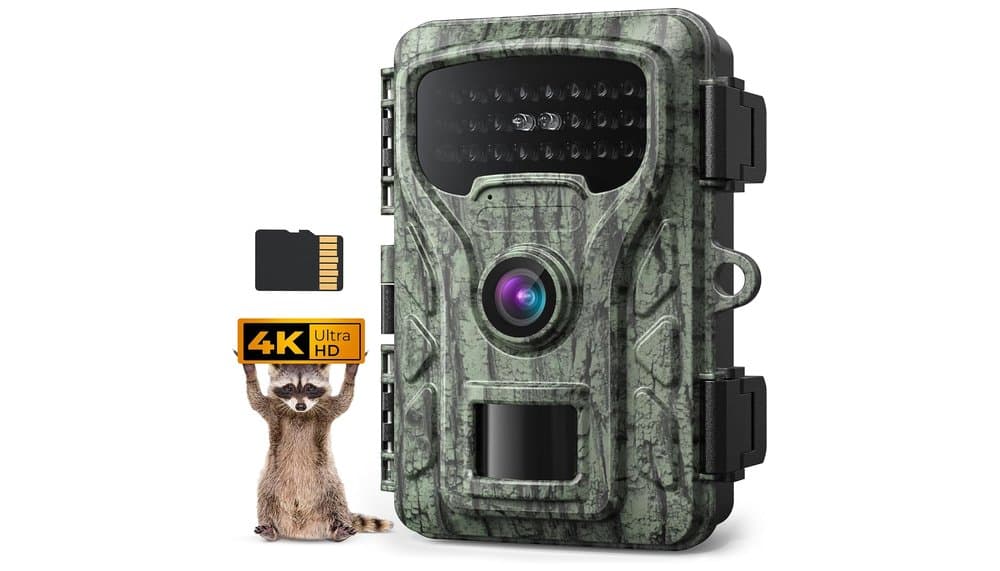
Caytail 4K 48MP Hunting Camera Review & Test
In-depth review of the Caytail 4K 48MP trail camera with included SD card. We analyze specs and real user feedback on its true field performance.
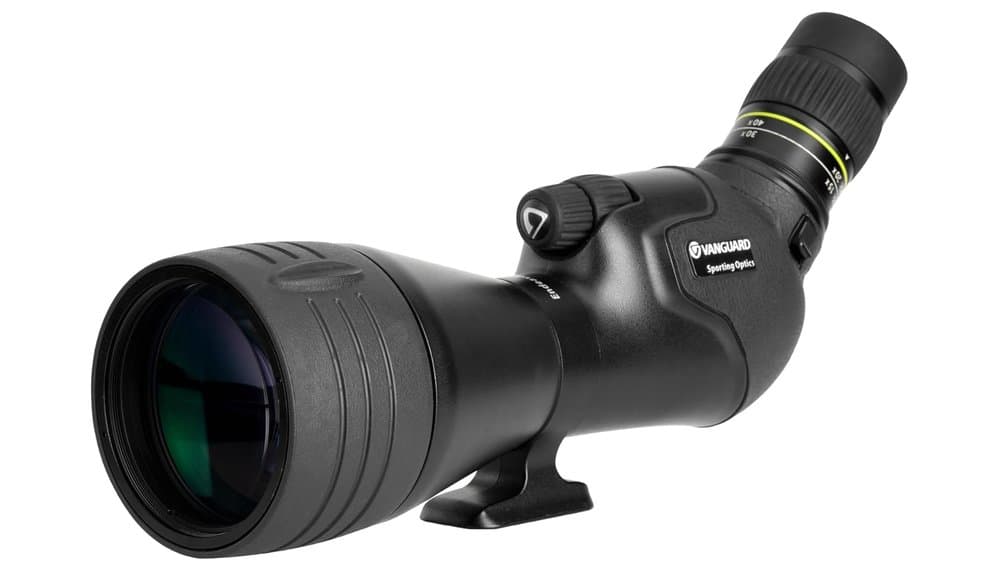
Vanguard Endeavor HD65A Spotting Scope Review
Spotting scope with 65mm ED glass & 15-45x zoom for birding & hiking. Balanced performance & portability for serious nature observers.
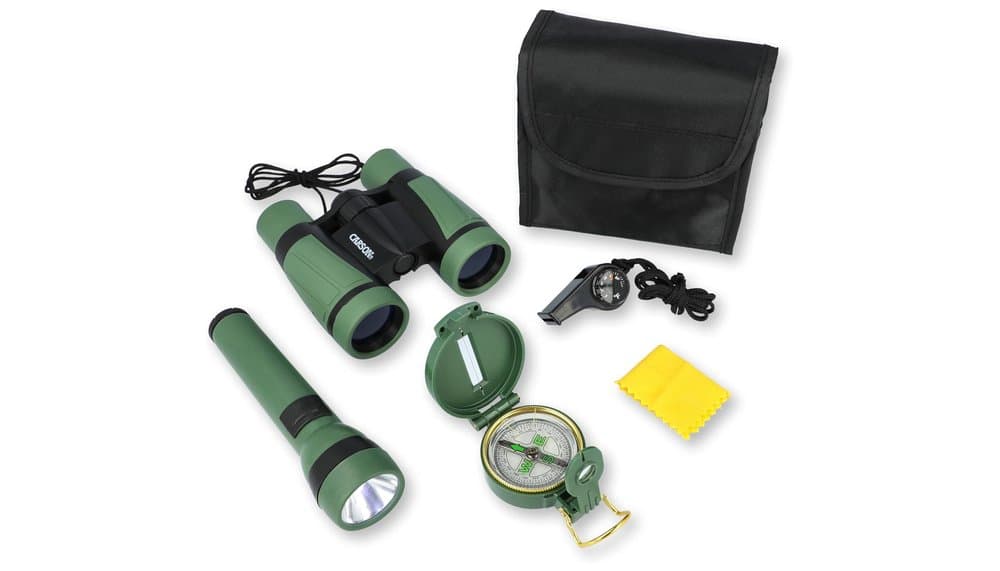
Carson AdventurePak Kids' Exploration Tool Kit Review
Explore nature with this kid's 5-piece tool kit for outdoor adventure and educational discovery. Perfect for young explorers.
Guides you might like

WiFi Trail Camera Guide
See wildlife discreetly from your couch! Learn how WiFi trail cameras let you monitor animals without disturbance and how to choose the right one.

Ultimate Travel Telescope Guide
Choose a portable, high-performance travel telescope to explore the universe from your backpack without compromising on essential astronomical views.
Ultimate Guide to Night Vision Binoculars
Choose the perfect night vision binoculars: Gen vs. digital? Unravel the tech to make your nighttime wildlife adventures a total success. Guide inside.