Celestron AstroMaster 130EQ Reflector Telescope Review
Published on 4 June 2026 · By OptiqueNature
Review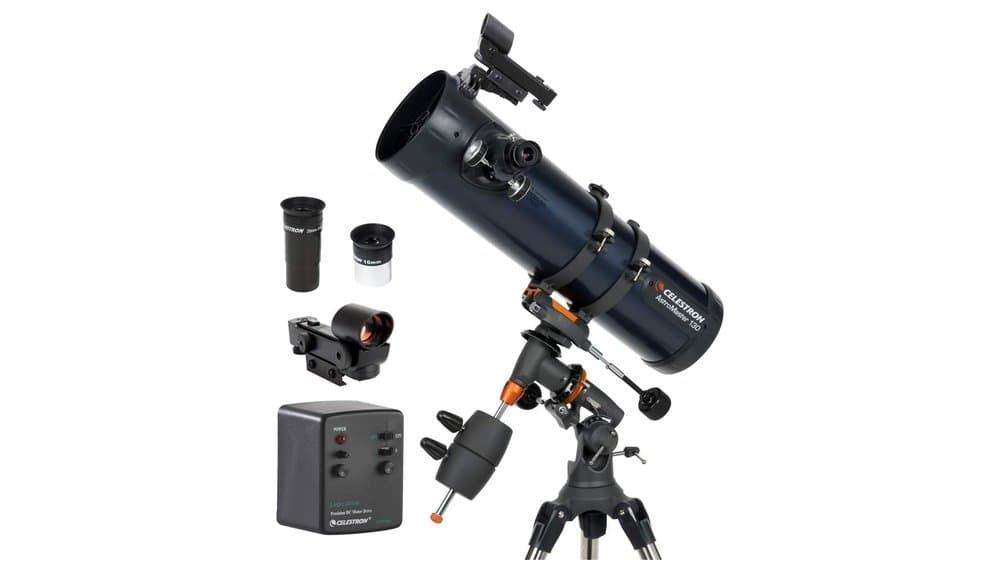
Complete Analysis of the Celestron AstroMaster 130EQ Reflector Telescope
Introduction: A Newtonian Telescope for Beginners
The Celestron AstroMaster 130EQ is presented as an entry-level telescope for visual astronomy, combining a Newtonian optical design with a 130 mm diameter primary mirror and a motorized equatorial mount. It is an instrument clearly aimed at the beginner amateur astronomer, promising accessible planetary and deep-sky observations. Through this analysis, we will dissect its real-world performance based on its technical specifications, expert feedback, and user community testimonials.
Strengths and Weaknesses
Based on user feedback and analysis of the specifications, here are the main strengths and limitations of this telescope.
Strengths
- Good performance optics for the price: A 130 mm diameter (5.1-inch) mirror offers significant light-gathering capability, theoretically sufficient to observe Saturn's rings, Jupiter's bands, the Moon in detail, and some deep-sky objects like the Orion Nebula.
- Equatorial (EQ) mount with tracking motor: The German-type equatorial mount, accompanied by a drive motor (RA drive), is a major educational asset. It allows learning the basics of celestial coordinates and compensates for the Earth's rotation, facilitating tracking of objects over long periods.
- Attractive initial value for money: As an entry-level product, the complete package of tube + motorized mount + tripod seems to offer a complete setup for discovering astronomy.
- Relative portability: With a total weight of about 16 kg, it remains transportable for observation sessions in the garden or at a dark site.
Weaknesses
- Unstable mount and tripod: This is the most recurrent point of criticism. The EQ-2 mount and lightweight tripod are described as lacking rigidity, causing significant vibrations with the slightest touch or in wind. These vibrations hinder observation comfort and require a stabilization time after each adjustment.
- Low-end accessories: The red dot finder is frequently judged unreliable and of "toy-like" quality, complicating initial aiming. The supplied eyepieces (10 mm and 20 mm) are considered the bare minimum, limiting possibilities and visual comfort. Users note the absence of filter threads on the 20 mm eyepiece.
- Steep learning curve: Mastering polar alignment (aligning the mount with the Earth's rotational axis) and collimation (precise alignment of the Newtonian's mirrors) is essential to obtain good images. These steps can discourage an absolute beginner without guidance.
- Build quality below the optics: While the optical tube itself is often praised, the mechanics (focuser, locks) and mount materials are perceived as cost-saving measures that impact the overall experience.
Detailed Component Analysis
Optical Quality and Observing Performance
The optical tube is a 130 mm diameter Newtonian reflector (f/5). This configuration offers a short focal length (650 mm), resulting in a relatively wide field of view, suitable for observing extended objects like some nebulae or star clusters.
- Light transmission and resolution: As a Newtonian, it does not use ED glass or complex multi-coatings like high-end apochromatic refractors. Transmission depends on the mirror coating quality (usually aluminum with a protective layer). Experts note that the optics themselves are decent for its price, but its performance is often limited by the quality of the supplied eyepieces and the mechanical stability of the setup.
- Practical magnifications: With the supplied eyepieces (10 mm and 20 mm), magnifications of 65x and 32.5x are obtained. According to the community, the maximum useful magnification without loss of sharpness is around 260x, but it is rarely achievable in practice due to atmospheric turbulence and mount vibrations. A shorter focal length eyepiece or a Barlow lens is often necessary for planetary observation.
- Astronomical observation: User feedback confirms it allows viewing Saturn's rings, Jupiter's four main moons (the Galilean satellites) as well as details on the Moon. For deep-sky, bright objects like the Orion Nebula (M42) or the Pleiades cluster (M45) are accessible under sufficiently dark skies.
Construction, Ergonomics, and Handling
Mechanical reliability is the Achilles' heel of this model, according to a majority of feedback.
- CG-3 Equatorial Mount: While the concept is educational, its execution is criticized. The Right Ascension and Declination movements can be jerky, and the locks sometimes lack precision. The tracking motor (running on a 9V battery) is appreciated for its usefulness once polar alignment is successful.
- Stability and tripod: The steel tripod is light and its accessory tray is practical. However, its stability is insufficient, amplifying vibrations. Several users recommend not fully extending the legs to gain rigidity, at the expense of height.
- Red dot finder: Often described as the first accessory to replace. Its adjustment is delicate and its mounting is not very robust. Many users have changed it for a more reliable model.
- Collimation: Adjusting the mirror alignment (collimation) is essential on a Newtonian, especially with a short focal ratio (f/5). Beginners should expect to learn this procedure, which may seem daunting at first but is crucial for obtaining a sharp image.
Value for Money and Competitive Segments
In the entry-level telescope segment, the AstroMaster 130EQ positions itself as an "all-in-one" option with a motorized equatorial mount.
- Versus Dobsons: For a similar budget, a 150 mm or 200 mm Dobsonian telescope will offer a larger aperture (thus more light and detail) and much better stability thanks to its simple and robust alt-azimuth mount. However, it will not have motorized tracking and will be less suited for learning celestial coordinates.
- Versus Alt-Azimuth Mounts: Models like the Celestron Starsense or some Schmidt-Cassegrains are simpler to use (alt-azimuth pointing) but often more expensive. The AstroMaster 130EQ requires more time investment to master.
- Conclusion on value: Its entry price is attractive, but experienced users agree that a supplementary budget must be planned for essential accessories: a more solid finder, better eyepieces (notably a Plössl or a 5-8 mm BST for planets), and possibly a laser collimator to facilitate adjustments. Without these investments, the experience can be frustrating.
What Users Say: Summary of Customer Reviews
Analysis of hundreds of user reviews reveals clear trends:
Recurrent positive points:
- Satisfaction of beginners after successful setup: "Excellent first choice", "very happy with my first purchase".
- Image quality on the Moon and planets once properly adjusted: "superb for admiring the Moon", "Saturn's rings visible".
- Educational potential of the equatorial mount for understanding celestial motion.
- Wonder guaranteed during the first successful observations.
Recurrent negative points:
- Instability of the mount and tripod: "very light tripod and lacks stability in strong wind".
- Poor quality accessories: "the red dot finder looks more like a toy and is not very reliable".
- Setup difficulty for a novice: "you still need to have essential knowledge about collimation and polar alignment. For those ignorant of these procedures, steer clear as it will quickly discourage you."
- Weight and bulk: the setup is heavy and not very manageable once assembled.
Online expert reviews corroborate these points, noting that it is a telescope that rewards patience and perseverance. It is not a "point-and-view" instrument, but a learning tool that can deliver very good results if the user accepts overcoming its initial flaws and investing in a few key accessories.
Technical Specifications
| Characteristic | Detail |
|---|---|
| Optical type | Newtonian Reflector |
| Diameter (aperture) | 130 mm |
| Focal length | 650 mm |
| Focal ratio (F/D) | f/5 |
| Mount | German equatorial CG-3 with tracking motor (RA) |
| Tripod | Adjustable height steel tripod |
| Finder | StarPointer red dot finder |
| Supplied eyepieces | 20 mm (32.5x) and 10 mm (65x) - 1.25" |
| Included software | Starry Night Basic (introductory version) |
| Approximate weight | 16.8 kg (packaged set) |
Conclusion: Who is this telescope for?
The Celestron AstroMaster 130EQ is a telescope with real optical qualities but hampered by its entry-level mechanics and accessories. It suits a motivated and hands-on beginner, willing to learn the basics of practical astronomy (equatorial mount, collimation) and to invest time (for adjustments) and a little money (to improve the weakest accessories).
It is not an instrument we recommend for someone wanting a simple and immediate "out-of-the-box" experience. On the other hand, for the person who sees astronomy as a hobby to build, who accepts the learning curve and mechanical limitations, the AstroMaster 130EQ can serve as a valid stepping stone. It will reveal the wonders of the solar system and open the door to deep-sky, provided it is considered as a base to improve rather than a perfect and definitive solution. Its greatest merit is perhaps educational: it teaches as much about how a telescope works as about the sky itself.
100% free and independent — All our articles are written independently, without any sponsorship. We may earn a commission on purchases made through our links, at no extra cost to you.
Articles you might like
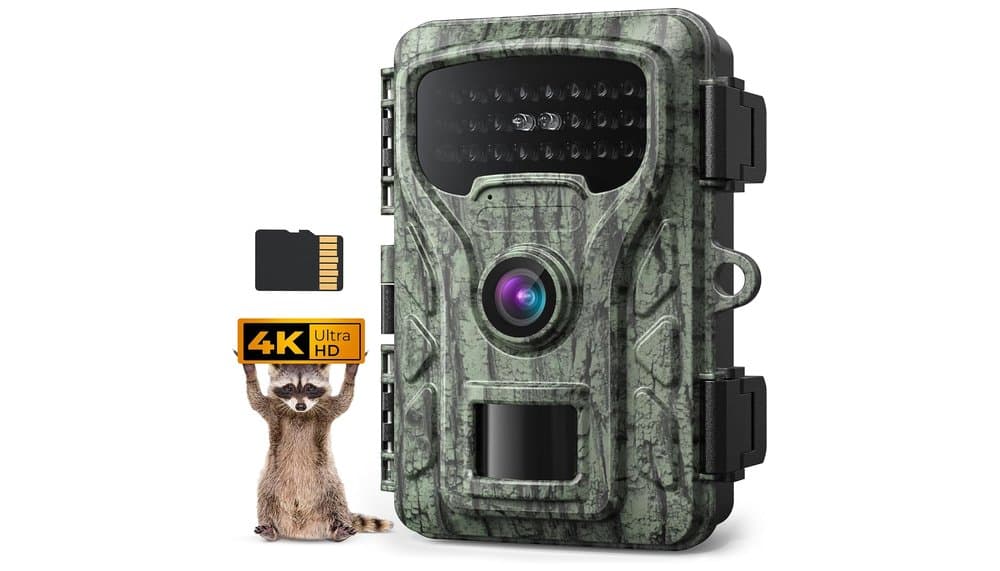
Caytail 4K 48MP Hunting Camera Review & Test
In-depth review of the Caytail 4K 48MP trail camera with included SD card. We analyze specs and real user feedback on its true field performance.
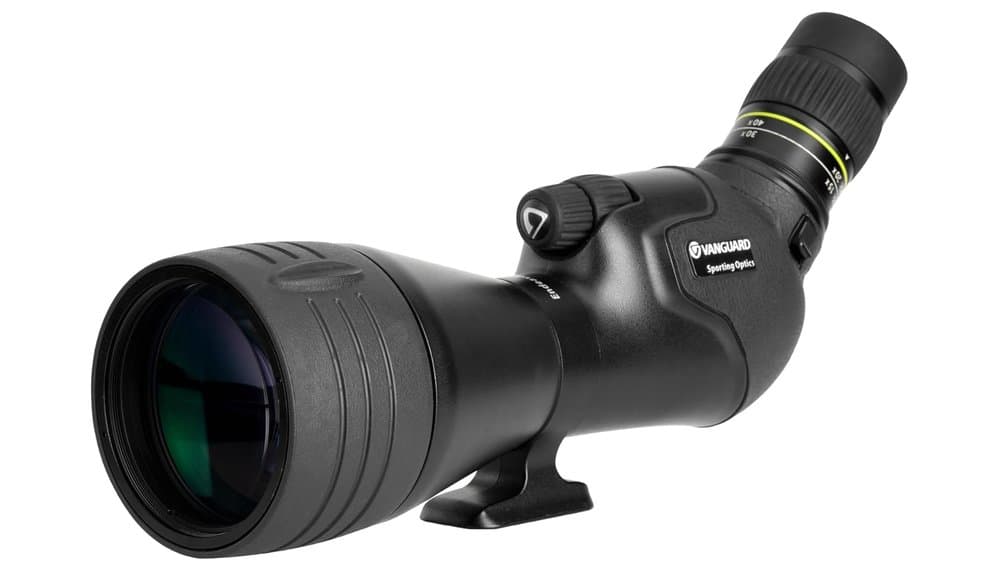
Vanguard Endeavor HD65A Spotting Scope Review
Spotting scope with 65mm ED glass & 15-45x zoom for birding & hiking. Balanced performance & portability for serious nature observers.
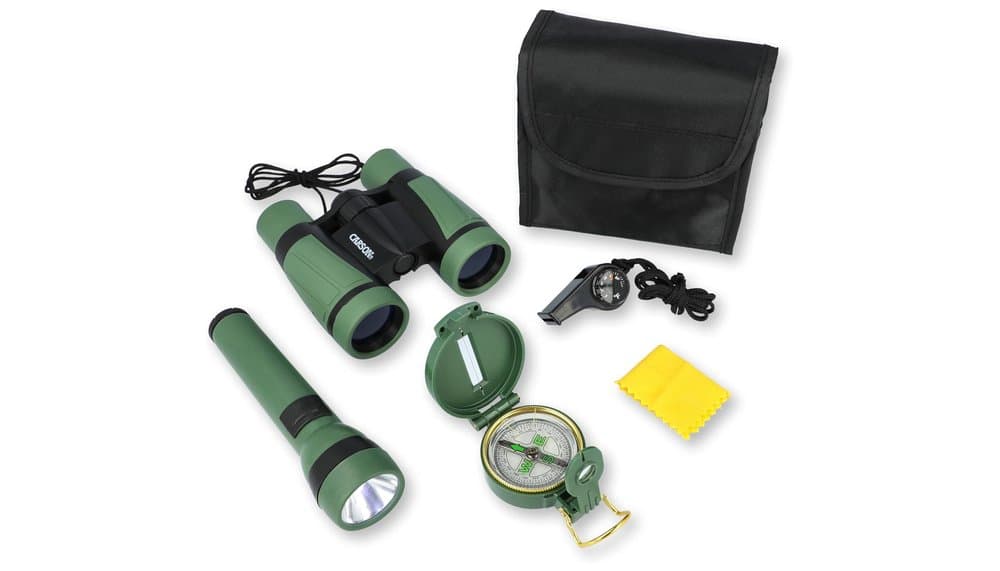
Carson AdventurePak Kids' Exploration Tool Kit Review
Explore nature with this kid's 5-piece tool kit for outdoor adventure and educational discovery. Perfect for young explorers.
Guides you might like

WiFi Trail Camera Guide
See wildlife discreetly from your couch! Learn how WiFi trail cameras let you monitor animals without disturbance and how to choose the right one.

Ultimate Travel Telescope Guide
Choose a portable, high-performance travel telescope to explore the universe from your backpack without compromising on essential astronomical views.
Ultimate Guide to Night Vision Binoculars
Choose the perfect night vision binoculars: Gen vs. digital? Unravel the tech to make your nighttime wildlife adventures a total success. Guide inside.