BUSHNELL Navy 7x50 Binoculars Review
Published on 18 May 2026 · By OptiqueNature
Review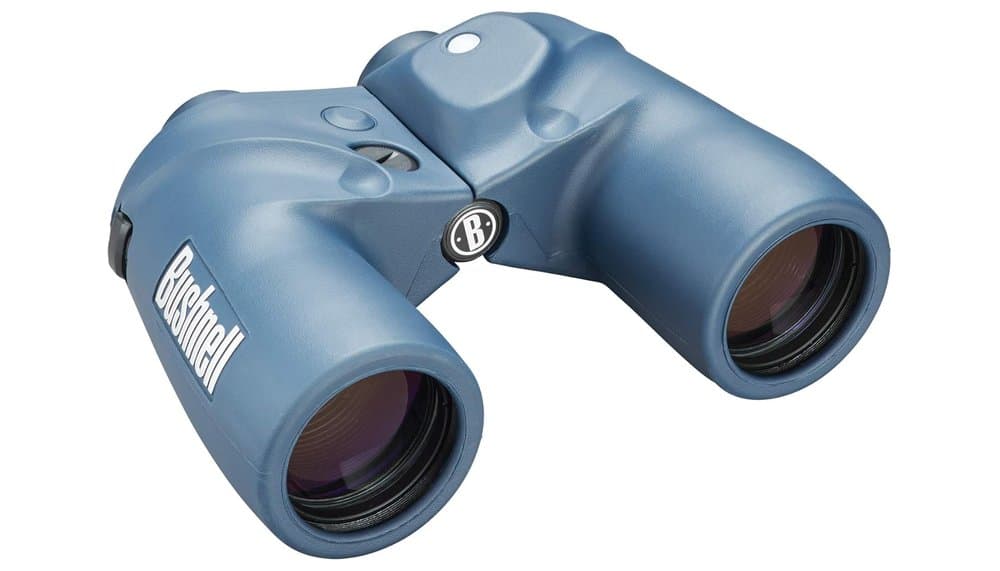
Comprehensive Analysis of the Bushnell Navy 7x50 Binoculars
In the vast world of outdoor optics, some instruments are designed for a specific environment, and that is precisely the case with the BUSHNELL Navy 7x50 Binoculars. This model, recognizable by its blue armor and characteristic Porro design, presents itself as a specialized tool for the maritime environment. But how does it really perform against the demands of discerning observers? We will dissect its specifications, confront its promises with field feedback, and determine for which uses it constitutes a wise choice.
Designed explicitly for navigation, this product relies on a proven optical formula (7x50), extreme ruggedness, and dedicated features like an integrated compass. Our analysis will be based on its technical characteristics, tests published by experts, and consolidated feedback from the user community.
Strengths and Weaknesses
Based on the available data, here is what stands out as the major assets and limitations of this model.
Strengths
- Rugged construction suited to the marine environment: Certified waterproofing and anti-fog treatment (nitrogen purged) are consistently praised. Their ability to float, mentioned by the manufacturer, is a major safety asset in aquatic environments.
- Integrated navigation features: The presence of a luminous compass and a rangefinder reticle (model 137500) makes it an active tool for taking bearings and estimating distances, a unique added value in its category.
- Excellent low-light brightness: The combination of moderate 7x magnification and 50mm diameter objectives generates an exit pupil of 7.1mm, ideal for observation at dawn, dusk, or in overcast weather.
- Good perceived value for money: According to reviews, many users feel these binoculars offer features and solidity usually found on much more expensive models, particularly in the nautical domain.
Weaknesses
- Significant weight and bulk: At about 1.05 kg, they are considered heavy and bulky. This can make them tiring for prolonged land observations or hiking.
- Individual Focus (Double Focus): The independent focus system on each eyepiece (instead of a central knob) is considered less convenient and slower for observing moving objects, like birds in flight.
- Uneven optical quality at the periphery: While central sharpness is generally described as good, some expert testers and users note the presence of chromatic aberrations or a drop in sharpness at the edges of the field of view.
- Sometimes limited interpupillary adjustment: Some feedback indicates that the adjustment range for the tube separation does not always allow for perfect adaptation for all face shapes, potentially preventing perfect merging of the two images.
Detailed Analysis by Criterion
Optical Quality and Performance
On paper, the specifications announce multi-coated lenses to improve light transmission and a built-in UV filter. The 7x50 configuration is a timeless classic for a reason: it offers a good balance between stability (the 7x magnification is easy to hold steady by hand), brightness, and field of view.
The twilight factor is high (approximately 18.7), which theoretically favors detail in low-light conditions. The field of view is 122m at 1000m, which is standard for this type of instrument. It is slightly less than what premium Roof-prism binoculars of the same magnification would offer, but remains entirely usable.
Web experts emphasize that clarity and brightness are the optical strong points of these Bushnell Navy binoculars, particularly in their intended maritime context. However, they also note that this is clearly a mid-range optic: the prism is of the Porro type (which explains the width of the body and improves depth perception), but it apparently does not benefit from the dielectric coatings or phase corrections found on high-end models. This results in contrast and color fidelity that, while very decent, do not rival those of premium products.
Finish, Ergonomics, and Durability
This is unquestionably the area where this product scores points. The community is unanimous on the secure grip, even with gloves, thanks to its thick rubber armor. The overall feel is that of a solid and reliable tool, designed to withstand spray and light shocks.
The major ergonomic point of attention, already mentioned, is the individual focus system. It is inherited from traditional marine and military binoculars, as it offers better long-term waterproofing (fewer moving parts penetrating the body). For nautical use where one often focuses on infinity, this poses little problem. On the other hand, for a nature observer who must constantly re-adjust focus, it becomes a drawback. The 18mm eye relief is however highly appreciated by eyeglass wearers, offering visual comfort without having to remove them.
The integrated compass, illuminated by an LED, is described as legible and responsive. Testers advise, however, to regularly check the sealing of its battery cover to ensure its longevity.
Recommended (or Not) Use Cases
- Navigation and Boating: This is its preferred domain. Ruggedness, waterproofing, buoyancy, and the compass make it an excellent choice.
- Basic Astronomical Observation: Their large exit pupil and brightness make them suitable for an introduction to deep-sky observation (star clusters, bright nebulae), but their weight may require a tripod (they are equipped with a standard mount).
- Wildlife Observation from a Fixed Point: From a hide, a vehicle, or a stationary boat, they can be effective, especially in low light.
- To Avoid for:
- Long-distance hiking or active birdwatching: their weight and focus system make them impractical.
- Digiscoping: the lack of dedicated support and ergonomics are not suited for it.
- Users seeking perfect image fineness across the entire field: they should aim for the higher-end segment.
Summary Technical Sheet
| Characteristic | Specification BUSHNELL Navy 7x50 |
|---|---|
| Model Analyzed | 137500 (with compass & rangefinder) |
| Magnification | 7x |
| Objective Diameter | 50 mm |
| Prism | Porro |
| Optical Coatings | Multi-coated (Full Multi-Coated) |
| Field of View (at 1000m) | 122 m |
| Exit Pupil Diameter | 7.1 mm |
| Eye Relief | 18 mm |
| Minimum Focus Distance | ~10 m (estimated from design) |
| Diopter Adjustment | Individual focus on each eyepiece |
| Waterproofing | Yes (Waterproof) |
| Gas Filling | Yes (Anti-fog, Nitrogen) |
| Special Features | Luminous compass, rangefinder reticle, floats |
| Armor Material | Rubber |
| Weight | Approximately 1049 g |
| Tripod Mount | Yes (standard adapter) |
What Users and Testers Say
The synthesis of hundreds of customer reviews and expert analyses reveals clear trends.
Recurrent praise focuses on the perceived solidity ("they inspire confidence"), the good brightness ("perfect for gray weather"), and the usefulness of nautical features. The compass is often cited as accurate and practical. Many buyers, notably boaters, favorably compare them to naval equipment costing several times their price, which fosters a strong feeling of good value for money. The delivery with a case and a strap is also appreciated.
The most frequent criticisms revolve around ergonomics. The weight is the first negative point raised for uses other than maritime. The individual focus system is misunderstood or deemed impractical by those not used to it. There are also a few isolated but significant reports of alignment (collimation) issues or a misaligned reticle (not vertical), which seem to stem from occasionally faulty quality control. Finally, some users find that the retractable eyecups lack firmness.
The overall impression that emerges is that of a specialized tool that fulfills its primary mission (navigation) very well without claiming to be an absolute reference in optical fineness or lightness. The high overall satisfaction rate (4.4/5) indicates that for its target audience, its strengths largely outweigh its weaknesses.
Conclusion
The BUSHNELL Navy 7x50 Binoculars are not all-purpose binoculars. They embody the definition of a tool designed for a specific environment: the maritime world. Their analysis reveals a coherent product that owns its compromises.
If you are a boater, a sea fisherman, or an enthusiast of observation from a fixed point in wet or low-light conditions, these binoculars present a strong case. Their ruggedness, waterproofing, navigation features, and excellent brightness make them a reliable companion that justifies their weight and particular focus system.
On the other hand, if your main activity is mountain hiking, active birdwatching, or seeking high-end optics with perfect contrast, you will likely be frustrated by their bulk and focusing mechanism. There are then alternatives, perhaps less resistant to spray, but better optimized for those uses.
In summary, the Bushnell Navy 7x50 excels in its primary role. They do not claim to be the most versatile or the lightest, but in their field, according to user feedback, they offer a reliable and functional package that explains their lasting popularity with their target audience.
100% free and independent — All our articles are written independently, without any sponsorship. We may earn a commission on purchases made through our links, at no extra cost to you.
Articles you might like
Caytail 4K 48MP Hunting Camera Review & Test
In-depth review of the Caytail 4K 48MP trail camera with included SD card. We analyze specs and real user feedback on its true field performance.
Vanguard Endeavor HD65A Spotting Scope Review
Spotting scope with 65mm ED glass & 15-45x zoom for birding & hiking. Balanced performance & portability for serious nature observers.
Carson AdventurePak Kids' Exploration Tool Kit Review
Explore nature with this kid's 5-piece tool kit for outdoor adventure and educational discovery. Perfect for young explorers.
Guides you might like
WiFi Trail Camera Guide
See wildlife discreetly from your couch! Learn how WiFi trail cameras let you monitor animals without disturbance and how to choose the right one.

Ultimate Travel Telescope Guide
Choose a portable, high-performance travel telescope to explore the universe from your backpack without compromising on essential astronomical views.
Ultimate Guide to Night Vision Binoculars
Choose the perfect night vision binoculars: Gen vs. digital? Unravel the tech to make your nighttime wildlife adventures a total success. Guide inside.