Bresser WiFi Eyepiece Camera Review for Telescopes
Published on 7 May 2026 · By OptiqueNature
Review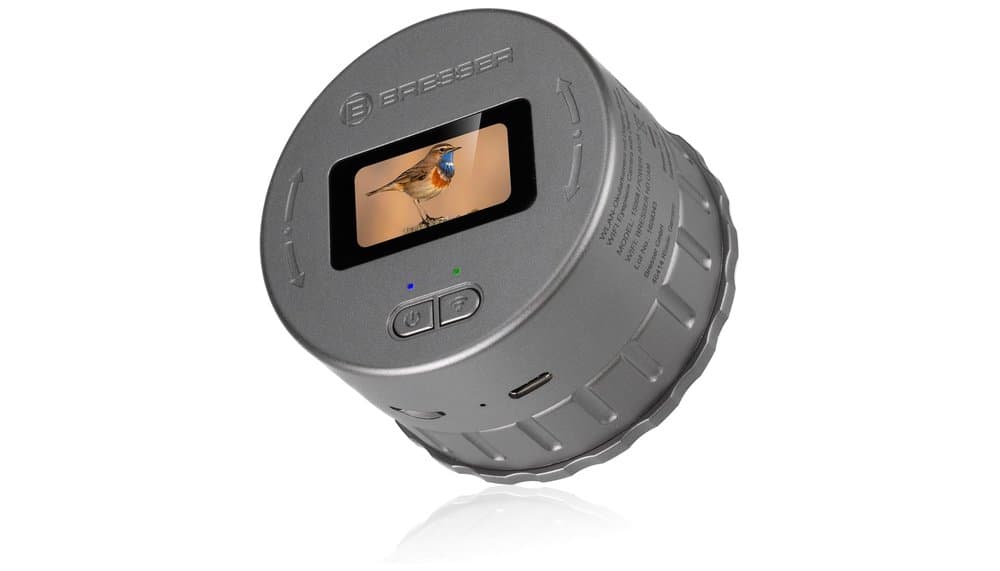
Introduction: The Versatile Digital Eye
In the world of naturalistic and astronomical observation, sharing what one sees is often a passion in itself. The Bresser WiFi eyepiece camera for telescopes and microscopes presents itself as an all-in-one solution to transform any optical instrument into a digital capture and streaming system. It is a bridge between the analog world of the eyepiece and the era of instant sharing. This product does not position itself as a high-end deep-sky astrophotography camera, but as a tool for accessible and versatile digiscoping. We will dissect its promises through its technical specifications, expert feedback, and the concrete experiences of the user community, to clearly determine its place in the observer's toolkit.
Strengths
Based on available data, the main assets of this Bresser WiFi camera are its versatility and ergonomics designed for sharing.
- Universal Versatility: Its adjustable adapter system (from 30 to 65 mm) allows it to fit a very wide range of eyepieces for telescopes, microscopes, spotting scopes, and even some binoculars. This is its main selling point.
- Integrated Screen for Framing: The presence of a small 1.47" screen on the device is a major practical advantage highlighted by testers. It allows for precise focusing and framing without immediately resorting to a smartphone, simplifying the initial setup.
- Wireless Connection and Dedicated App: The creation of a dedicated WiFi network from the camera and the free mobile application (ONREAL for Android/iOS) offer freedom of movement and facilitate live sharing, ideal for family demonstrations or in an educational context.
- Ease of Use: The "clip and play" concept – clipping onto the eyepiece and starting – makes it an ideal gateway to digiscoping without the complications of smartphone adapters or complex photo setups.
Weaknesses
User feedback and technical analysis point to several limitations inherent to this consumer concept.
- Limited Image Quality in Low Light: The 4MP CMOS sensor, while sufficient for daytime documentation or lunar observation, shows its limits in astronomy on faint objects or in very low-light conditions. It does not replace a dedicated astrophotography setup.
- Battery Life and Power Issues: A recurring point of frustration in reviews is the need to plug the camera in via USB-C to use it, contradicting the idea of a completely wireless use. The integrated battery, if it exists, seems reserved for minimal functions.
- microSD Card Compatibility: Several users report difficulties with cards larger than 32 GB. Although the technical sheet claims compatibility up to 128 GB, it is often necessary to format these cards in FAT32, a format poorly suited for large files, with a 4GB limit per file.
- Adapter Construction: Some feedback describes the clamping mechanism on the eyepiece as fragile or poorly suited to certain specific eyepieces (such as those with a long rubber eyecup).
Detailed Analysis by Criteria
Optical Quality and Image Performance
On paper, the specs announce 2K video (i.e., 1920x1080 pixels) at 30 fps and Full HD photos. The sensor is a standard CMOS, with no mention of special optical treatments (like multi-layer anti-reflective coating) directly on the sensor. The final quality will therefore depend greatly on the optics to which it is coupled and the lighting conditions.
According to feedback, the community notes that image quality is entirely satisfactory for daytime digiscoping use (bird watching, wildlife observation) or for capturing the Moon. Images are sharp and detailed for sharing on social media or personal documentation. On the other hand, for serious planetary astronomy or deep sky, testers emphasize that the performance is far below that of a dedicated astronomy camera, particularly in sensitivity and parameter control (gain, exposure).
Build Quality and Ergonomics
The device is light (120g), which is an asset for not unbalancing a spotting scope or a small tripod-mounted telescope. It has a tripod mount thread on the bottom, useful for use in standalone camera mode. However, feedback converges on one point: the sliding ring mounting system, although ingenious for adapting to various diameters, can seem not very robust and requires careful handling. There is no indication of waterproofing or fogproofing, limiting it to use in dry weather or under shelter.
Features and Software
The ONREAL application is described as intuitive for basic functions: viewing the live feed, triggering photos/videos, and downloading media to the smartphone. However, its "spartan" side is noted. Advanced manual controls are almost non-existent (no control over shutter speed, ISO gain, or white balance in detail), limiting the ability to adapt to complex scenes. The loop recording function (1,3,5 min) is a good idea for capturing unpredictable events without filling the memory card.
Comparison and Value for Money
Positioned in the budget to entry-level segment, the Bresser WiFi Eyepiece Camera has no true direct equivalent due to its combination of an integrated screen and WiFi. Compared to alternative solutions, its assessment is mixed:
- Versus Smartphone Adapters: It is more stable (solid fixation once in place) and avoids focus and parallax issues. The integrated screen is a definite plus. However, it can be more expensive and the image quality of a high-end smartphone can sometimes be superior.
- Versus Wired Electronic Eyepiece Cameras: It loses in responsiveness (possible WiFi latency) and software control, but gains in freedom of movement and ease of sharing.
- Versus Astrophotography Cameras: It is simply not in the same category. The latter offer total control, much higher sensitivity, and specialized software, for a significantly larger investment.
Its main merit is to democratize digiscoping by offering an integrated and largely frustration-free solution, where other methods often require more tinkering and patience.
Technical Specifications
| Criterion | Detail |
|---|---|
| Product Type | Electronic Eyepiece Camera |
| Compatibility | Eyepieces from 30 to 65 mm in diameter |
| Sensor | 4 Megapixel CMOS |
| Video Resolution | 2K / Full HD (1920 x 1080) at 30 fps |
| Photo Resolution | 1920 x 1080 pixels |
| Integrated Screen | 1.47 inches (3.8 cm) |
| Connection | Dedicated WiFi, control via mobile app |
| Storage | microSD card (up to 128 GB, FAT32 format) |
| Power Supply | Via USB-C port |
| Special Feature | Loop recording (1/3/5 min) |
| File Formats | Video: MP4; Photo: JPG |
| Weight | 120 grams |
| Mount | Standard tripod thread |
What Users Say: Review Summary
The overall rating of 3.8/5 accurately reflects the shared experience: a practical and appreciated product when it works as expected, but with flaws that can spoil the experience.
Recurring positive points:
- Easy Setup and Use: Users find the "clip and go" system very simple and effective.
- Adequate Image Quality for Intended Use: For the Moon, daytime observation, or documentation, photos and videos are considered of good quality, "perfect" according to some.
- The integrated screen is a real plus for initial framing without the phone.
- The mount is considered stable on most standard eyepieces.
Frequently reported negative points:
- Power Supply Problem: The most critical comment is that the device often requires a permanent USB connection to function, negating the hoped-for "wireless" aspect.
- SD Card Compatibility: Many buyers encountered problems with 64 GB or 128 GB cards. The solution (formatting in FAT32) is not trivial for everyone and introduces a file size limit.
- Perceived Fragility: The adapter mechanism is described by some as "very fragile and needs revision."
- Limited Application: The lack of manual controls (speed, gain) is a barrier for users wishing to optimize their captures in difficult conditions.
- Manual Focus Only: Focusing must absolutely be done on the host optical instrument, which is normal but may disappoint beginners.
Conclusion: Who Is It For?
The Bresser WiFi eyepiece camera for telescopes and microscopes is a niche tool that perfectly fulfills its mission under certain conditions. It is an excellent gateway to digiscoping without complications.
You should consider this purchase if: You are a hobbyist, educator, or naturalist wishing to easily and quickly share daytime (birds, landscapes) or lunar observations. You value simplicity, versatility, and the freedom of wireless for group sharing. You are willing to accept a few software and technical constraints for an integrated solution.
You should, however, look elsewhere if: You are looking for a solution for serious planetary or deep-sky astrophotography. You need total wireless autonomy without a power cable. You demand full manual controls and professional image quality. Your eyepiece has a particular morphology or you are concerned about the robustness of the mounting system.
In short, this Bresser camera is the ideal companion for someone who wants to document and share their visual explorations without turning their passion into a technical headache. It makes digital accessible at the eyepiece, with the compromises that implies in the entry-level segment.
100% free and independent — All our articles are written independently, without any sponsorship. We may earn a commission on purchases made through our links, at no extra cost to you.
Articles you might like
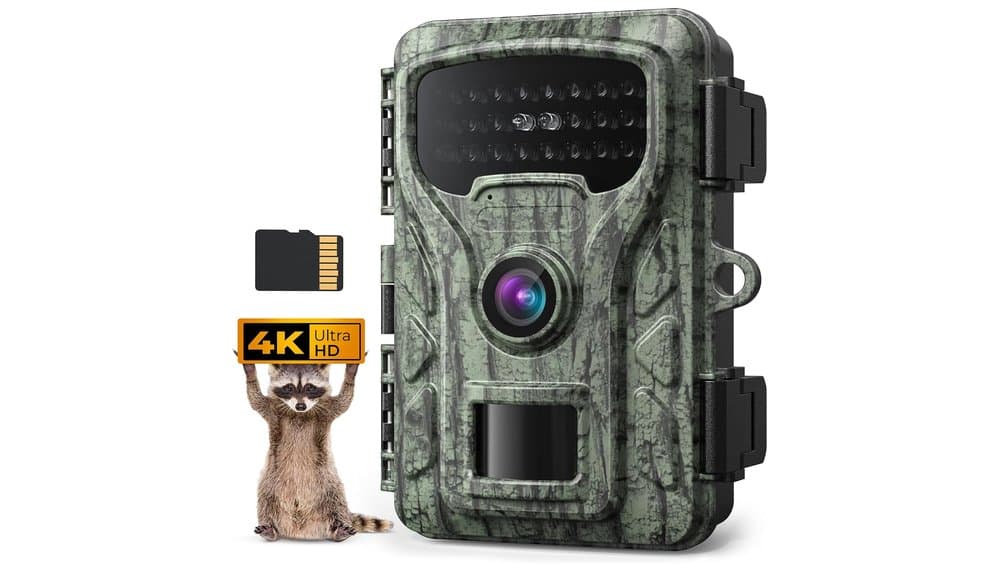
Caytail 4K 48MP Hunting Camera Review & Test
In-depth review of the Caytail 4K 48MP trail camera with included SD card. We analyze specs and real user feedback on its true field performance.
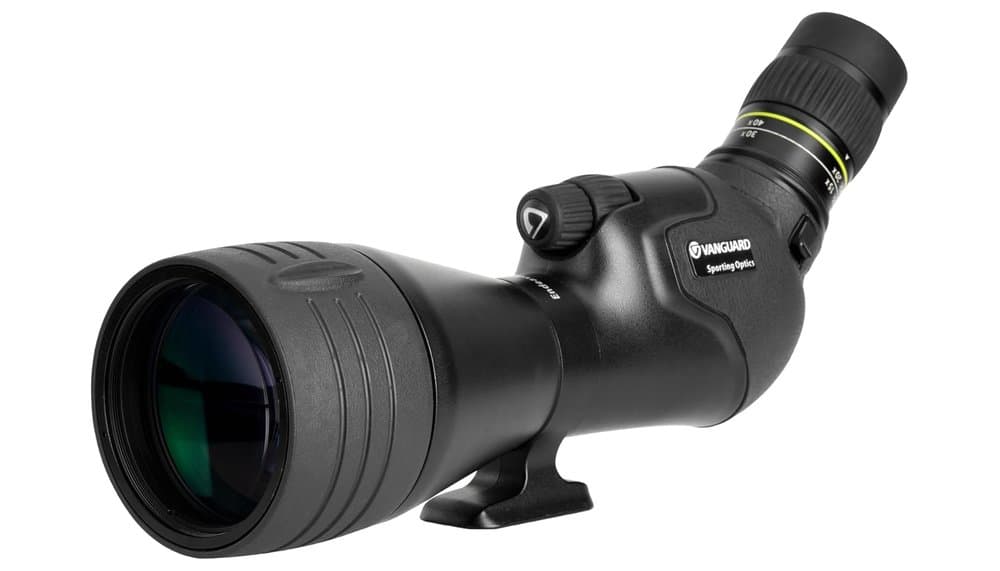
Vanguard Endeavor HD65A Spotting Scope Review
Spotting scope with 65mm ED glass & 15-45x zoom for birding & hiking. Balanced performance & portability for serious nature observers.
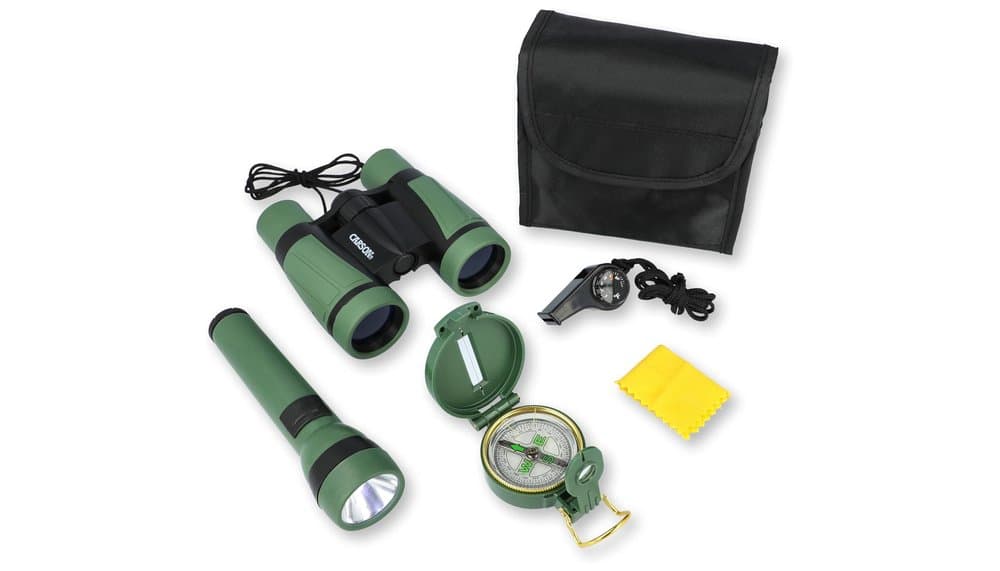
Carson AdventurePak Kids' Exploration Tool Kit Review
Explore nature with this kid's 5-piece tool kit for outdoor adventure and educational discovery. Perfect for young explorers.
Guides you might like
WiFi Trail Camera Guide
See wildlife discreetly from your couch! Learn how WiFi trail cameras let you monitor animals without disturbance and how to choose the right one.
Ultimate Travel Telescope Guide
Choose a portable, high-performance travel telescope to explore the universe from your backpack without compromising on essential astronomical views.
Ultimate Guide to Night Vision Binoculars
Choose the perfect night vision binoculars: Gen vs. digital? Unravel the tech to make your nighttime wildlife adventures a total success. Guide inside.