Bresser RA Motor Control Racket Telescope Drive Review
Published on 22 July 2026 · By OptiqueNature
Review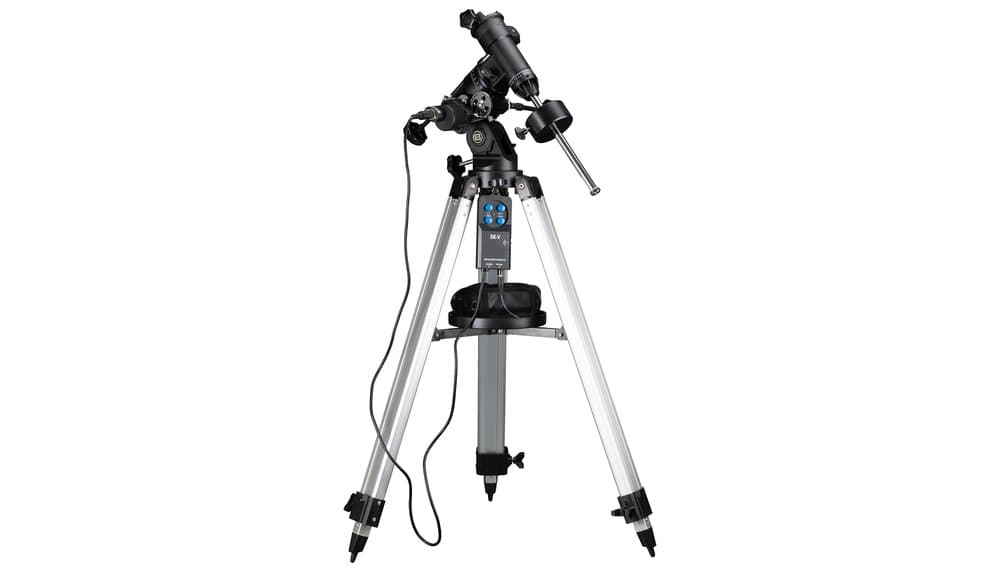
Introduction
In amateur astronomy, the magic of observation comes with an inescapable mechanical challenge: the rotation of the Earth. An object carefully centered in the eyepiece will inevitably drift out of the field of view, forcing the observer to make constant adjustments. This is precisely the problem the Bresser RA Motor + Control Racket Telescope Motor Drive addresses. It is a single-axis motor drive designed to equip basic manual equatorial mounts, giving them automatic tracking capability. This accessory is not a telescope itself, but a module that transforms the observing experience. We will dissect this device to determine if it lives up to its promises of stellar relaxation, based on its technical specifications, tester feedback, and the voice of the user community.
Key Strengths
- Transformative Functionality: It converts a standard manual equatorial mount into a semi-automatic system, eliminating the need to constantly manually correct right ascension.
- Broad Compatibility: Designed specifically for the Bresser ecosystem, it is compatible with a wide range of popular models (Pluto, Galaxia, Quasar, Skylux) and all compatible EQ-Sky and EQ3 mounts.
- Ease of Use: Once properly installed and the mount is aligned on the celestial North Pole, using it is as simple as turning on the motor via the control racket. No complex programming is required.
- Versatile Power Supply: While it runs on 4 D batteries, the community has successfully tested alternative power supplies like powerbanks, offering greater autonomy and reduced long-term costs.
Key Weaknesses
- Poor Documentation: A recurring criticism, both in reviews and expert feedback, concerns the instruction manual, often described as unclear, too brief, or poorly translated.
- Mechanical Interference: Some users report that the length of the motor and the placement of the cable can occasionally interfere with the movement of the optical tube, especially on larger telescopes like 130/650 Newtons.
- Installation Requires Care: The installation process, although mechanically simple, is not always intuitive and requires a certain understanding of how the equatorial mount works.
- Single-Axis Tracking: As a right ascension (RA) motor only, it does not compensate for drift in declination (Dec). Occasional manual adjustment of this axis is still necessary for perfectly precise tracking over long periods.
Detailed Analysis
The Bresser RA Motor is not an optical accessory, so usual metrics like light transmission or field of view do not apply. Its evaluation is based on its mechanical engineering, integration, and impact on the user experience.
Build Quality and Ergonomics
On paper, the specifications describe a compact module (10 x 9.5 x 29 cm) and relatively light weight (580g). The construction is typical of Bresser's entry-level accessories: robust plastic and metal components in critical areas. It is not described as waterproof or weatherproof, indicating recommended use in dry conditions. According to user feedback, the motor is generally considered reliable and quiet in operation. An important point raised by testers is the absence of noticeable vibrations induced by the motor, which is crucial to avoid degrading the image during high-magnification observation.
The ergonomics of the control racket are basic: a simple housing with an on/off switch. Its simplicity is an asset for immediate use, but it limits functionality to sidereal speed only. There are no controls for faster speeds (like lunar or solar tracking) or movement in the opposite direction.
Performance and Tracking Accuracy
The core performance of this motor is its ability to keep an object in the eyepiece's field of view. Reviews converge on one point: when mounted on a mount correctly aligned on the celestial North Pole (via approximate polar alignment), the motor perfectly fulfills this mission for common visual observing sessions. It eliminates the fatigue of constantly manipulating the RA axis knob, allowing for much more relaxed observation, especially in a group where everyone can look without intervention.
However, the community notes that absolute precision has its limits. As expected for a single-axis, non-goto system, a slow drift in declination occurs. Users report having to make a slight manual correction on the Dec axis approximately every 10 to 20 minutes, depending on the magnification used. This makes it perfect for prolonged planetary or lunar observation, but insufficient for long-exposure astrophotography without other corrections.
Typical Use Cases
- Visual Astronomical Observation (Beginner/Intermediate): This is its primary domain. It significantly enhances the observing experience of the Moon, planets, or star clusters.
- Introduction to Simple Astrophotography: It can allow for short exposures (a few seconds) on the Moon or planets with a webcam or smartphone (digiscoping), by reducing rotation blur.
- Teaching and Group Observation: It stabilizes the image in the eyepiece, allowing several people to take turns without constantly having to re-center the object.
It is not suitable for terrestrial observation (birdwatching, wildlife), as its tracking is calibrated for the Earth's sidereal rotation speed, which is far too fast for daytime use.
Value for Money and Competition
The Bresser RA Motor is positioned in the entry-level segment of motor drives. Its main advantage is its perfect plug-and-play integration with Bresser mounts, avoiding risky adaptations. Compared to purchasing a new motorized equatorial mount, it represents an economical upgrade for an owner of a Bresser kit.
Nevertheless, some international users, particularly in Italian and German reviews, consider its price slightly high for what it offers: a simple motor, a basic racket, and a summary manual. Competition exists in the form of generic motors for EQ3 mounts, sometimes cheaper, but with the risk of more random compatibility and build quality. The choice often comes down to the guarantee of optimized integration (Bresser) versus seeking the lowest cost (generic).
Technical Specifications
| Function | Single-axis motor drive (Right Ascension / RA) |
|---|---|
| Primary Compatibility | Bresser telescopes: Pluto, Galaxia, Quasar, Skylux. Bresser EQ-Sky and EQ3 mounts. |
| Box Contents | RA Motor, Control racket, Battery compartment, Carrying bag, Instruction manual. |
| Power Supply | 4 x D batteries (not included). Compatible with powerbank (5V/9V) according to user feedback. |
| Dimensions (LxWxH) | 10.5 x 9.5 x 29 cm |
| Weight | 580 g |
| Functionality | Automatic tracking at sidereal speed. On/Off control via racket. |
| Warranty | 2 years (according to manufacturer) |
What Users Say
The synthesis of 42 overall reviews (average rating of 4.2/5) and expert feedback consulted online paints a clear consensus.
Recurring positive points are:
- Works as expected: Mentions like "does the job," "works perfectly," "as described" are common. The motor fulfills its essential promise of automatic tracking.
- Simplified Installation: Once understood, the assembly is judged to be simple and quick. A German user even provides a clear procedure: "First fix the screw on the tripod spring, then slide the motor onto the pin and tighten."
- Significant Comfort Improvement: Terms like "relaxed," "mucho más cómodo," "spaß" (pleasure) recur to describe the post-installation experience. Observation gains serenity.
- Silence and Stability: "Leise und erzeugt keine Schwingungen" (quiet and does not create vibrations) is a crucial German comment confirming mechanical quality.
Frequently raised negative points are:
- Inadequate Manual: This is the main grievance. "Notice de montage manque de clarté," "Istruzioni di montaggio poco chiare" (unclear assembly instructions) appear systematically. Users often turn to online tutorials.
- Interference Problems: One user notes that on their 130/650 Newton mounted on an EQ3, the tube "gets caught on the motor" when pointing towards certain areas, due to the motor's length.
- Debated Value/Price: Several Italian and German reviews comment: "per quello che costa mi aspettavo di più" (for what it costs, I expected more), or directly "Im Vergleich etwas teuer" (a bit expensive in comparison).
- Isolated Delivery/Quality Issues: One review reports having received the mount... without the motor inside, highlighting random quality checks.
Conclusion
The Bresser RA Motor + Control Racket Telescope Motor Drive is an accessory that does exactly what it says, without frills. Its analysis reveals a perfectly targeted niche product: the beginner or intermediate amateur astronomer who already owns a manual Bresser equatorial mount and wants to gain comfort without investing in an entirely new system.
Its strengths are its plug-and-play integration, its quiet and stable operation, and its ability to radically transform a visual observing session by removing a major constraint. Its weaknesses lie in faulty documentation that can discourage novices, and a price perceived by some as slightly high for such a basic functionality.
Ultimately, if you are willing to look for an online assembly tutorial to compensate for the manual and your goal is to serenely prolong your observations of Saturn, Jupiter, or the Moon, this motor is a logical and effective upgrade. On the other hand, if you seek perfect precision for astrophotography or if your mount is not on the compatibility list, it will not be the solution. It is a practical tool that fills a gap between purely manual and advanced electronics, with the limits and advantages of that position.
100% free and independent — All our articles are written independently, without any sponsorship. We may earn a commission on purchases made through our links, at no extra cost to you.
Articles you might like

Caytail 4K 48MP Hunting Camera Review & Test
In-depth review of the Caytail 4K 48MP trail camera with included SD card. We analyze specs and real user feedback on its true field performance.
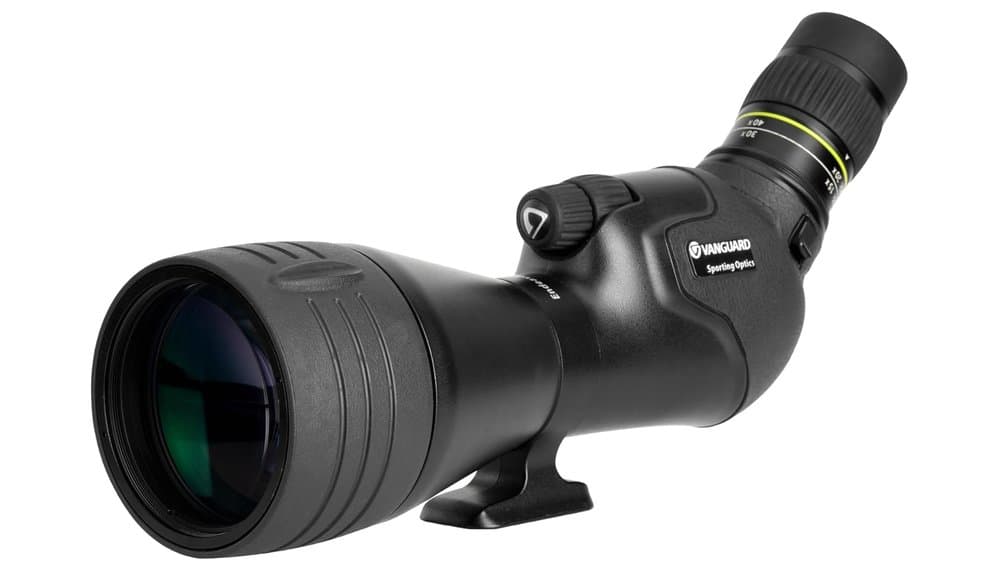
Vanguard Endeavor HD65A Spotting Scope Review
Spotting scope with 65mm ED glass & 15-45x zoom for birding & hiking. Balanced performance & portability for serious nature observers.
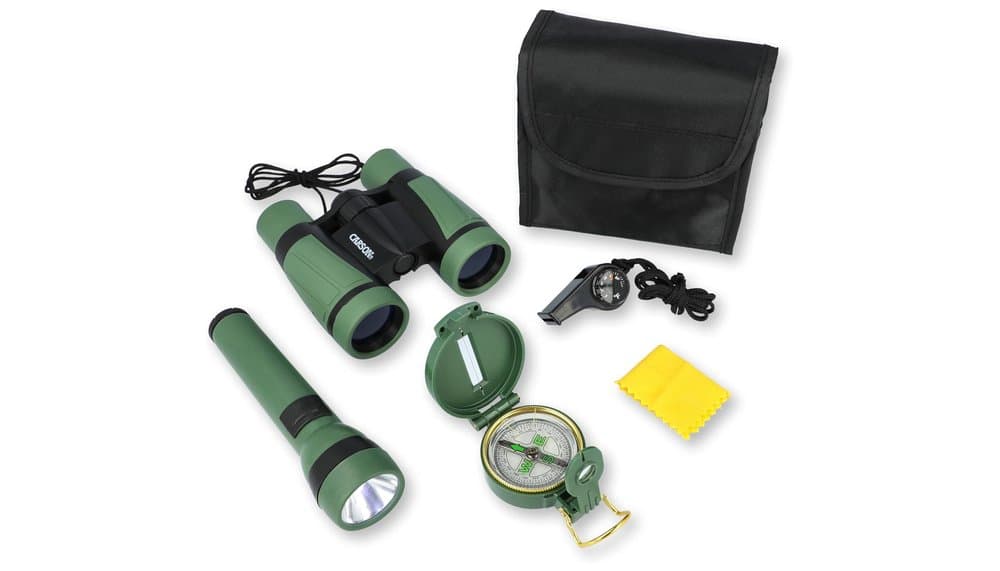
Carson AdventurePak Kids' Exploration Tool Kit Review
Explore nature with this kid's 5-piece tool kit for outdoor adventure and educational discovery. Perfect for young explorers.
Guides you might like

WiFi Trail Camera Guide
See wildlife discreetly from your couch! Learn how WiFi trail cameras let you monitor animals without disturbance and how to choose the right one.

Ultimate Travel Telescope Guide
Choose a portable, high-performance travel telescope to explore the universe from your backpack without compromising on essential astronomical views.
Ultimate Guide to Night Vision Binoculars
Choose the perfect night vision binoculars: Gen vs. digital? Unravel the tech to make your nighttime wildlife adventures a total success. Guide inside.