Bresser Messier 6 Dobson Telescope Review
Published on 28 August 2026 · By OptiqueNature
Review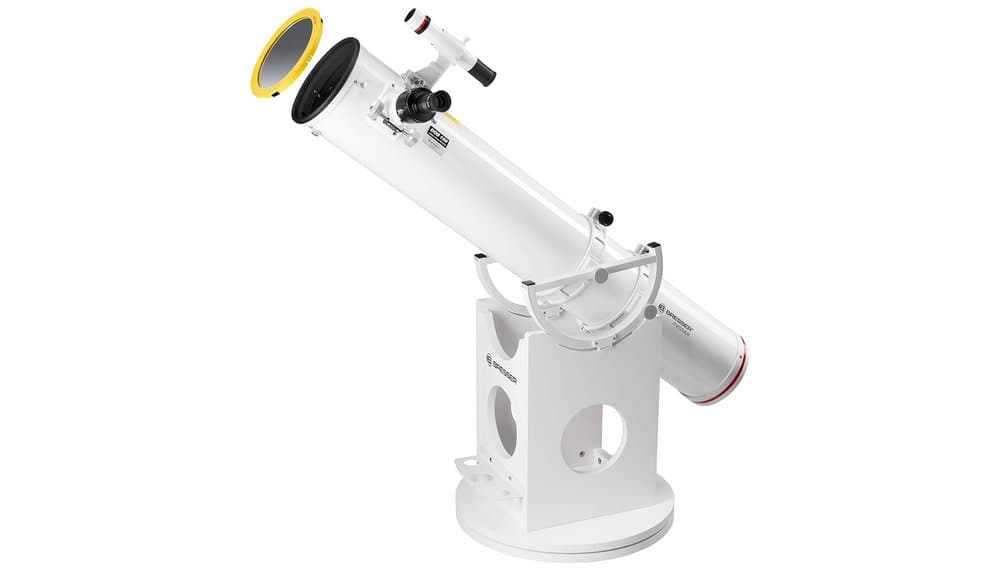
Introduction
The Bresser Messier 6" Dobson Planetary Telescope presents itself as an interesting proposition in the world of open-tube telescopes for amateur astronomers. Based on the proven Dobson concept, it combines a large 150 mm aperture with a long 1200 mm focal length (f/8), a configuration typically intended for planetary observation. What interests us here is to dissect whether this model lives up to its promises in the hands of users, beyond mere specifications. By analyzing community feedback and technical characteristics, we will determine if it constitutes a solid gateway to visual astronomy or if it involves compromises one must be aware of.
Strengths
- Remarkable planetary performance for its segment: According to user feedback, the optics deliver sharp, high-contrast images of the Moon, Jupiter (with its bands and Galilean moons), and Saturn's rings right from the first use with the supplied eyepiece.
- Favorable aperture/price ratio: The 150 mm diameter collects a significant amount of light, enabling not only planetary observation but also forays into deep sky (nebulae, star clusters). It's an aperture that offers real potential.
- Simplicity and stability of the Dobsonian mount: The community unanimously notes that assembly is quick and intuitive. Once assembled, the altazimuth system on the Dobsonian mount is praised for its stability and ease of manual pointing.
- Inclusion of a solar filter: The presence of a solar filter at the objective entrance (and not at the eyepiece, which is safer) is a major asset and quite rare in this range, immediately opening up the field of safe daytime observations.
- Overall finish and build quality: Users highlight a decent finish quality for the tube and base, with materials that seem robust. The 2-inch rack-and-pinion focuser is also appreciated for its precision.
Weaknesses
- Significant weight and size: With a total weight of 16.1 kg, this is not a portable instrument. Users concede that you need to be "strong" to move it regularly. Transporting it over long distances remains a challenge.
- Minimalist included accessories: The Super Plössl 25mm eyepiece (providing 48x magnification) is of good quality but is the only one. To fully exploit the telescope, purchasing additional eyepieces (especially shorter focal lengths for planets) is almost inevitable. The 6x30 finderscope is regularly described as the weakest point, with an all-plastic construction perceived as flimsy.
- Collimation required: Like any Newtonian telescope, it requires collimation (mirror alignment). Some units arrive well collimated, but experienced users insist on the necessity of learning and performing this operation to achieve the best performance.
- Not suitable for deep-sky astrophotography: Its manual altazimuth mount and the user must therefore be prepared to learn this manipulation.
- Not sealed and sensitive to dew: The tube is neither sealed nor nitrogen-purged. It is therefore sensitive to condensation and dust, requiring careful storage precautions.
Detailed Analysis by Criteria
Optical Quality and Performance
On paper, the optical specifications of the Bresser Messier 6" are classic and effective. The 150 mm aperture and 1200 mm focal length (f/8) define a long focal length instrument. This focal ratio favors high magnifications with standard eyepieces, which is ideal for observing planets, hence its "Planetary" name. Theoretical light gathering power is excellent for its diameter.
Testers and the community confirm this orientation. Planetary images are described as sharp and high-contrast. The primary mirror made of low thermal expansion glass contributes to good image stability once the instrument has acclimated to the outdoor temperature. For deep sky, the 150 mm allows resolving many globular clusters and revealing the brightest nebulae (like M42), although the field of view is relatively narrow due to the long focal length.
Light transmission depends on the mirror coatings (not specified in detail by Bresser, but typically aluminized and protected by an SiO2 layer). Feedback does not report complaints about insufficient brightness, indicating effective coatings. The exit pupil with the 25mm eyepiece is 3.1 mm (150/48), a good compromise for night vision.
Build Quality and Ergonomics
The construction receives praise for its overall solidity. The metal tube is robust and the attachment points seem well machined. The Dobsonian base (rocker box) is stable and its azimuth and altitude movements are smooth according to users. The ability to remove the tube from its base facilitates storage and transport in two trips.
However, ergonomics are affected by the weight. At nearly 8.3 kg for the tube alone and 16.1 kg in total, this is not a light instrument. Its size (128 cm tall once assembled) requires space. It is therefore more suited for use in a garden, on a terrace, or for occasional car trips.
The device is neither sealed nor anti-dew. This means prolonged exposure to high humidity without supervision should be avoided, and it should be stored in a dry place. The minimum focus distance is not relevant for astronomy, but the eye relief of the Super Plössl 25mm eyepiece is comfortable, even for some eyeglass wearers.
Value for Money and Target Audience
The Bresser Messier 6" Dobson clearly positions itself in the upper entry-level / mid-range segment for open-tube telescopes. Its main asset is offering a large aperture for a contained investment. Compared to refractor or catadioptric models of similar price, it offers a much larger diameter, synonymous with more detail and brightness.
It constitutes an excellent choice for a motivated beginner who wants to seriously discover visual astronomy, without breaking the bank, and who is ready to accept the size constraint and learn collimation. It is also suitable for the occasional astronomer looking to replace a smaller instrument. On the other hand, it is less suitable for those seeking an ultra-portable instrument for hiking astronomy or for those who want a "turnkey" experience without any adjustments.
The inclusion of the solar filter adds real value and significantly broadens its field of use in a safe manner.
Technical Specifications
| Criterion | Bresser Messier 6" Dobson Specification |
|---|---|
| Type | Newtonian telescope on Dobsonian mount |
| Diameter (Aperture) | 150 mm |
| Focal Length | 1200 mm |
| Focal Ratio (f/) | f/8 |
| Maximum Useful Magnification | Approximately 300x |
| Optical Tube | Metal |
| Mount | Dobsonian Altazimuth (Rocker box) |
| Finderscope | 6 x 30 (optical) |
| Focuser | 2-inch Rack-and-Pinion (with 1.25" adapter) |
| Supplied Eyepiece | 1 x Super Plössl 25mm (1.25") |
| Included Accessories | Objective solar filter, adapters |
| Tube Weight | 8.3 kg |
| Total Weight | 16.1 kg |
| Dimensions (assembled) | 45 x 45 x 128 cm |
What Users Say
The synthesis of customer reviews and expert feedback consulted online reveals a very positive consensus, with a high average rating. The trends are clear.
The recurring positive points are:
- Immediate awe: Many beginners express their satisfaction at having observed Jupiter, its moons, and Saturn's rings on the very first night, often without complex adjustments.
- Ease of assembly and handling: The Dobsonian mount is unanimously praised for its simplicity and stability. Assembly is described as quick and accessible.
- Perceived optical results as excellent: Sharpness and detail on the Moon and planets are the most frequently cited qualities.
- Packaging and delivery: Several notes mention careful and protective packaging.
The negative points or reservations concern:
- Weight and portability: This is the most common critique. The instrument is considered heavy and bulky for frequent movement.
- Basic accessories: The optical finderscope is often considered the weak link, with disappointing plastic construction. The single eyepiece is seen as a starting point, but insufficient.
- The need for collimation: Several users emphasize the importance of checking and performing collimation for optimal performance, a step that can intimidate complete novices.
- Documentation: The assembly manual provided in the box is sometimes considered basic, pushing users to turn to online resources.
Conclusion
The Bresser Messier 6" Dobson Planetary Telescope is a reliable choice in the world of beginner telescopes. It makes no secret of its nature: it is a large and bright instrument, designed to reveal planetary details and deep-sky objects from a fixed or semi-fixed observation site. Community feedback confirms that its optical performance delivers, often exceeding the expectations of new astronomers.
Its main flaw – its weight – is inherent to its diameter and design. It is the price to pay for such an aperture at this price level. The investment will likely not stop at the purchase of the tube, as acquiring a few additional eyepieces and possibly a more capable finderscope will quickly be considered by the user to exploit the full potential of the optics.
Ultimately, for a motivated amateur astronomer beginner, with storage space and ready to carry 16 kg between their home and garden, the Bresser Messier 6" represents a wise and durable choice. It offers a serious springboard into visual observation, all with the added safety and versatility of an included solar filter. It is a tool that rewards curiosity and learning.
100% free and independent — All our articles are written independently, without any sponsorship. We may earn a commission on purchases made through our links, at no extra cost to you.
Articles you might like
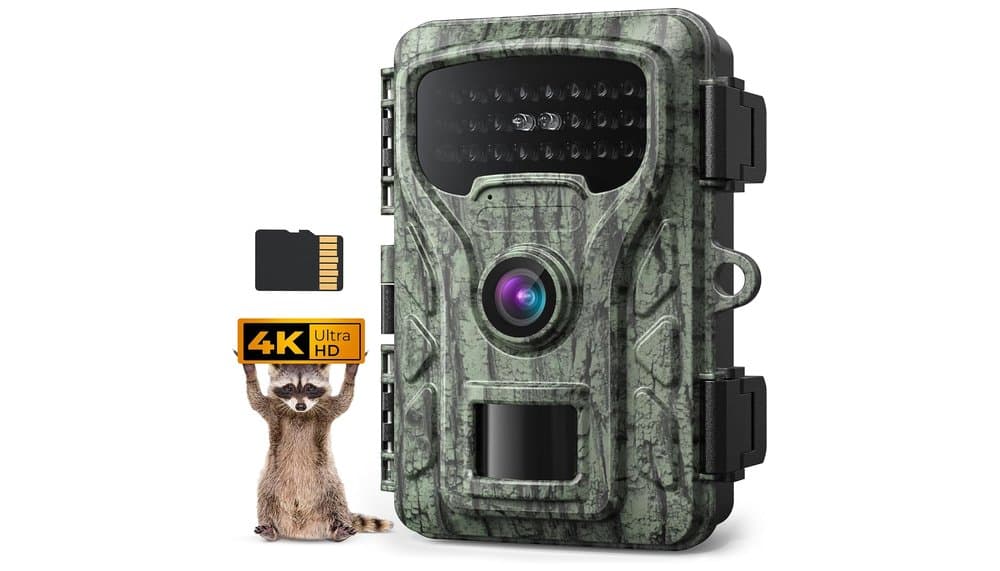
Caytail 4K 48MP Hunting Camera Review & Test
In-depth review of the Caytail 4K 48MP trail camera with included SD card. We analyze specs and real user feedback on its true field performance.
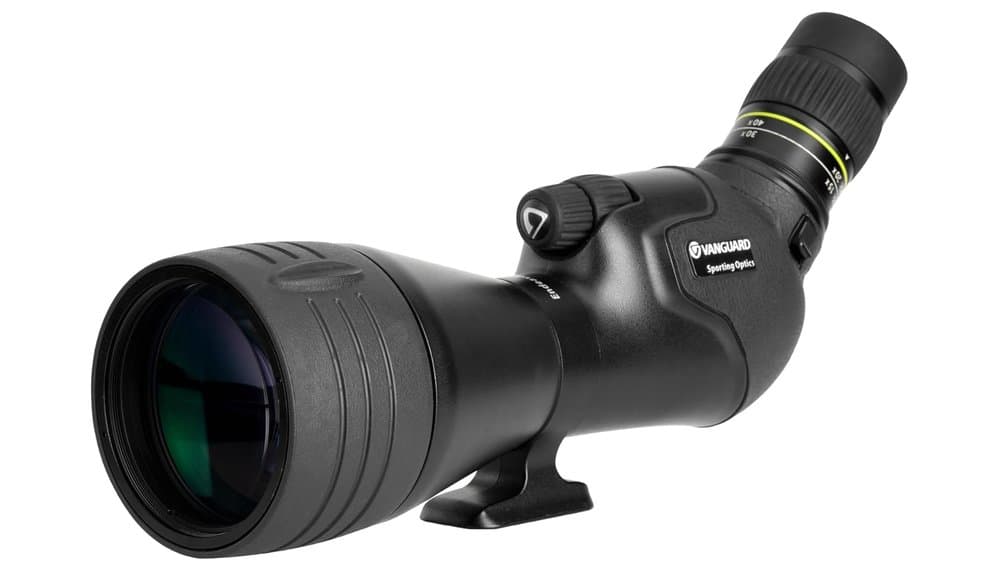
Vanguard Endeavor HD65A Spotting Scope Review
Spotting scope with 65mm ED glass & 15-45x zoom for birding & hiking. Balanced performance & portability for serious nature observers.
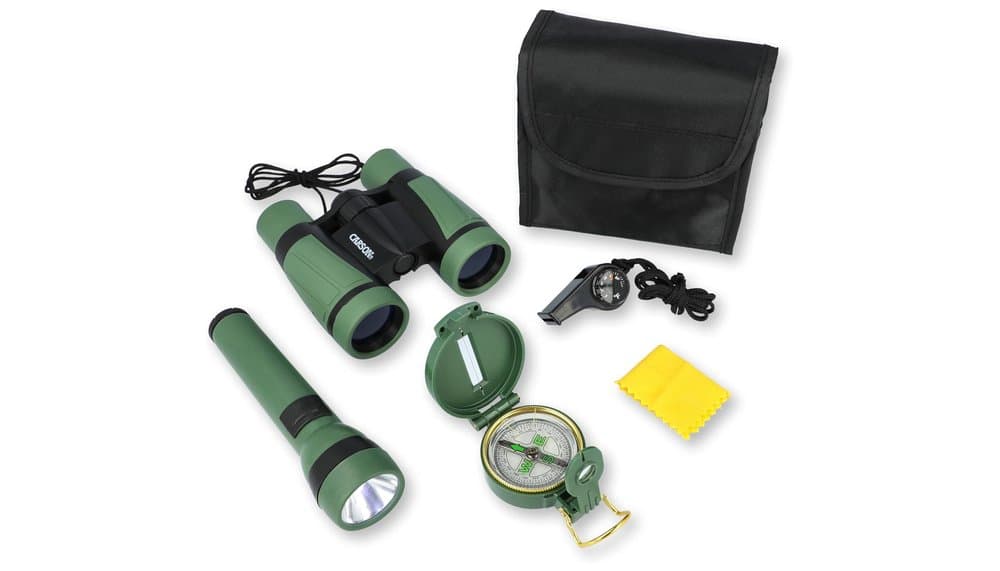
Carson AdventurePak Kids' Exploration Tool Kit Review
Explore nature with this kid's 5-piece tool kit for outdoor adventure and educational discovery. Perfect for young explorers.
Guides you might like
WiFi Trail Camera Guide
See wildlife discreetly from your couch! Learn how WiFi trail cameras let you monitor animals without disturbance and how to choose the right one.
Ultimate Travel Telescope Guide
Choose a portable, high-performance travel telescope to explore the universe from your backpack without compromising on essential astronomical views.
Ultimate Guide to Night Vision Binoculars
Choose the perfect night vision binoculars: Gen vs. digital? Unravel the tech to make your nighttime wildlife adventures a total success. Guide inside.