Bresser 10x42 Monocular Review & Waterproof Test
Published on 19 May 2026 · By OptiqueNature
Review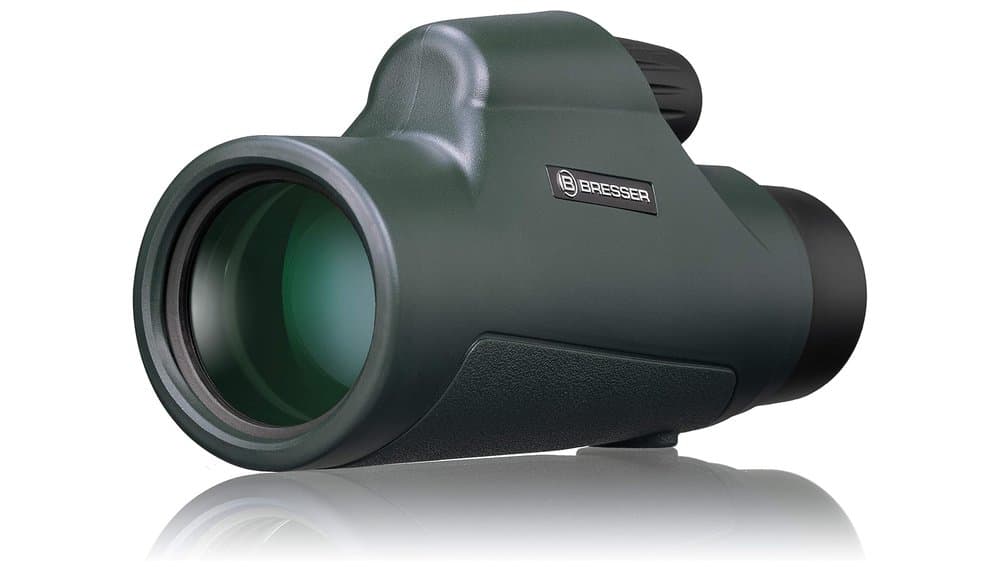
Introduction
Faced with the dominance of binoculars in the observation market, the monocular represents an ingenious alternative, promising lightness and compactness without sacrificing optical power. The Bresser 10x42 Waterproof Monocular fits into this niche, presenting itself as an all-terrain tool for the modern naturalist. But can it truly compete with the performance expected by seasoned observers? We dissect this instrument based on its technical specifications, expert feedback, and the hundreds of available customer reviews. The goal is clear: determine whether it is a relevant field companion or just a simple optical gadget.
Strengths and Weaknesses
Before diving into the details, here is a concise summary of what emerges from the overall product analysis.
Strengths
- Exceptional compactness and portability for a 10x42.
- Robust and waterproof construction, suitable for all weather.
- Affordable price for a waterproof instrument in this category.
- Twist-up eyecup suitable for eyeglass wearers.
- Integrated tripod thread, offering stability for prolonged observation.
Weaknesses
- Basic optics (BK-7 prisms and standard multi-coatings) limiting image sharpness and light transmission.
- Relatively narrow field of view (101m/1000m) for a 10x42.
- Some ergonomic frustration linked to pure monocular use, especially during long sessions.
- Color rendition and contrast inferior to models using ED glass and BaK-4 prisms.
Detailed Analysis of the Bresser 10x42 Waterproof
Optical Quality: The Compromises of a Tight Budget
On paper, the optical specifications of the Bresser 10x42 reveal its positioning. It uses a roof prism made of BK-7 glass and multi-layer coating. This is a key point of our analysis. BK-7 is a standard optical glass, less expensive than BaK-4, often used in higher-end segments. The consequence, noted by connoisseurs, is a slightly higher risk of light loss at the edge of the field and an image that may lack that absolute "bite" and contrast. While the multi-coating improves light transmission compared to a single coating, it is far from the performance of dielectric or phase-correction coatings found on more expensive models, which optimize light polarization in roof prisms.
The light transmission figure is not provided by the manufacturer, but the twilight factor of 20.5 and the relative brightness of 17.6 (calculated from the exit pupil diameter of 4.2mm) indicate theoretically correct performance for daytime and acceptable low-light observation. In practice, based on user feedback, the image is judged "quite good" and "clear" for its price, but it will never match the brightness and chromatic neutrality of a high-end instrument equipped with Extra-low Dispersion (ED) glass. For basic astronomical observation (Moon, bright planets), it does the job, but demanding enthusiasts will be limited by chromatic aberration and the field of view.
Ergonomics and Construction: The Resilient All-Rounder
It is on this ground that the product scores significant points. Its compactness (160 x 71 x 54 mm) and featherweight (353g) are its major assets. It literally slips into a jacket pocket, a feature praised by hikers and travelers for whom every gram counts. The rubberized armor provides a good grip, even in wet conditions, and protects against minor shocks.
Its waterproofing, ensured by nitrogen filling, is a strong argument. It makes it fogproof (resistant to internal fogging) and waterproof, making it suitable for activities like seaside birdwatching, mountain hiking, or hunting, regardless of weather conditions. The manual focus is described as quick and precise by users.
The twist-up eyecup is well-designed for eyeglass wearers, offering them comfortable eye relief to see the entire field without vignetting. Finally, the presence of a tripod thread (usually 1/4") is a non-negligible asset. It allows transforming this lightweight monocular into a stable tool for basic digiscoping (with a smartphone adapter) or for prolonged observation without fatigue.
Field Performance: Use Cases
- Hiking & Trekking: This is its preferred domain. Its lightness and waterproofing make it an ideal companion for identifying distant terrain features or observing a furtive animal without burdening oneself.
- Occasional Birdwatching: The 10x42 offers sufficient magnification to identify medium-sized birds at a good distance. However, the field of view of 101m at 1000m (about 5.8°) is considered a bit narrow by some users accustomed to binoculars, making it more difficult to locate small, fast-moving birds. The minimum focus distance of 3.5m is acceptable for observing insects or flora up close.
- Hunting & Sport Shooting: Several customer reviews mention perfect use for shooting at 25m. Its robustness and simplicity are appreciated on a range.
- Digiscoping & Photography: With a dedicated adapter, it can serve as an economical telephoto lens. Results will be decent in daylight but will be limited by the basic optical qualities of the system.
- Astronomical Observation: Possible use for the Moon or planetary alignments, but the narrow field and lack of stabilization make it less comfortable for this type of application.
Technical Specifications Table
| Characteristic | Bresser 10x42 Waterproof Specification |
|---|---|
| Magnification | 10x |
| Objective Lens Diameter | 42 mm |
| Exit Pupil | 4.2 mm |
| Field of View at 1000m | 101 meters (5.8°) |
| Twilight Factor | 20.5 |
| Relative Brightness | 17.6 |
| Minimum Pupil Diameter | 3 mm |
| Prism | Roof (Dachkant), BK-7 glass |
| Optical Coatings | Multi-layer (Fully Multi-Coated) |
| Minimum Focus Distance | 3.5 meters |
| Diopter Adjustment | Likely integrated into the eyepiece (according to experts) |
| Waterproofing | Waterproof, nitrogen-filled |
| Armor | Rubber |
| Eye Relief | Suitable for glasses (twist-up eyecup) |
| Tripod Thread | Yes (standard 1/4") |
| Dimensions (L x W x H) | 160 x 71 x 54 mm |
| Weight | 353 grams |
| Box Contents | Monocular, strap, case, cleaning cloth, manual |
What Users Say: A Synthesis of Reviews
The analysis of nearly 300 customer reviews (overall rating of 4.4/5) and expert feedback paints a clear consensus.
The praise focuses mainly on three aspects: the excellent value for money often mentioned, the practical compactness, and the perceived robustness. Phrases like "perfect for the price," "very good value for money," or "top for the price" are recurring themes. The sharpness is described as more than satisfactory for the price, and the ease of one-handed use is appreciated. Eyeglass wearers find the eyecup system effective.
The criticisms and limitations expressed are equally instructive. Several users note that the sensory experience is different from a pair of binoculars, with a feeling of a more reduced visual field and some fatigue during prolonged use. One review specifies that the field angle is quite narrow, which corroborates the technical analysis of the 101m/1000m field, indeed below what the best monoculars or 10x42 binoculars offer. A few comments point to a perceived magnification slightly lower than the advertised 10x, although this may be subjective. No recurring manufacturing defects or widespread poor waterproofing are reported.
Conclusion: Who Is This Monocular For?
The Bresser 10x42 Waterproof Monocular is not a high-precision, high-end optical instrument. It does not have the ED glass, dielectric coatings, or wide fields of view that delight the most demanding observers.
On the other hand, it perfectly fulfills its role as a versatile, robust, and accessible optical tool. It is the ideal companion for someone seeking honest magnification (10x) and decent brightness (42mm) in an ultra-compact and fully waterproof format, without investing a fortune. It excels as a secondary instrument for a hiker or cyclist, or as a first monocular for a nature enthusiast wanting to try this format without financial risk.
The verdict is therefore clear: if your priorities are portability, resistance to the elements, and a contained price, the Bresser 10x42 is a perfectly defensible and reliable choice. If, on the other hand, you seek absolute optical performance, a wide field of view, and premium finishes for prolonged observation sessions, it will naturally steer you towards higher-end ranges, whether in monoculars or binoculars. It fulfills its promise: that of simple and hassle-free access to the world of close-up observation.
100% free and independent — All our articles are written independently, without any sponsorship. We may earn a commission on purchases made through our links, at no extra cost to you.
Articles you might like
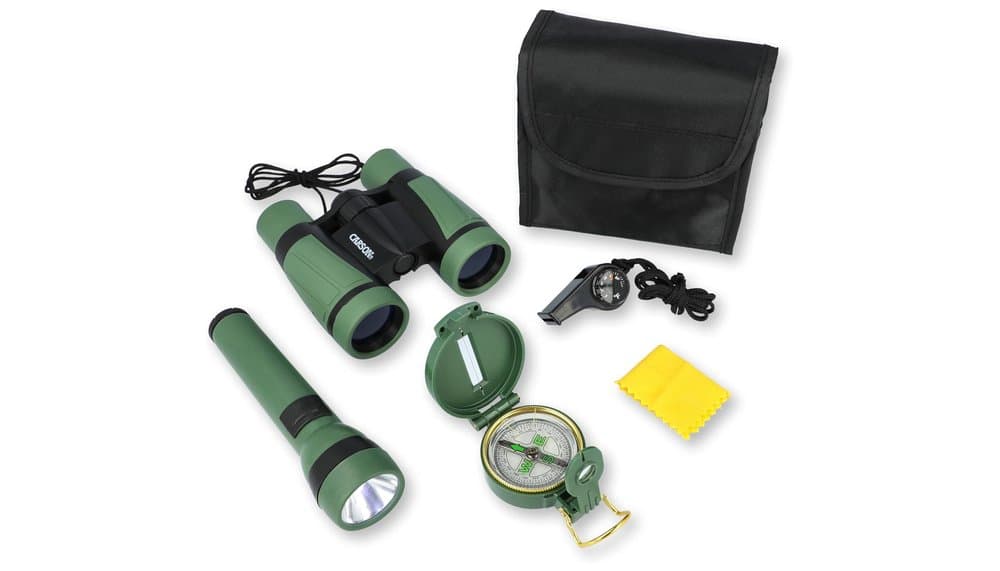
Carson AdventurePak Kids' Exploration Tool Kit Review
Explore nature with this kid's 5-piece tool kit for outdoor adventure and educational discovery. Perfect for young explorers.
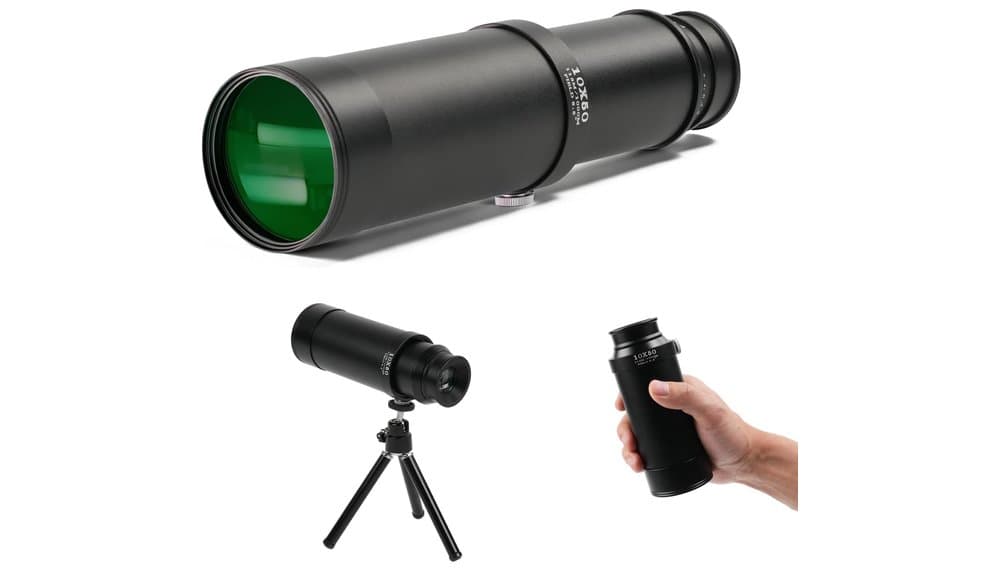
BOSTRON CY 10x50 Monocular Review & Test
Compact 10x50 monocular review: Analyzes optical clarity, field of view & build quality for hiking, nature & astronomy. See its true value.
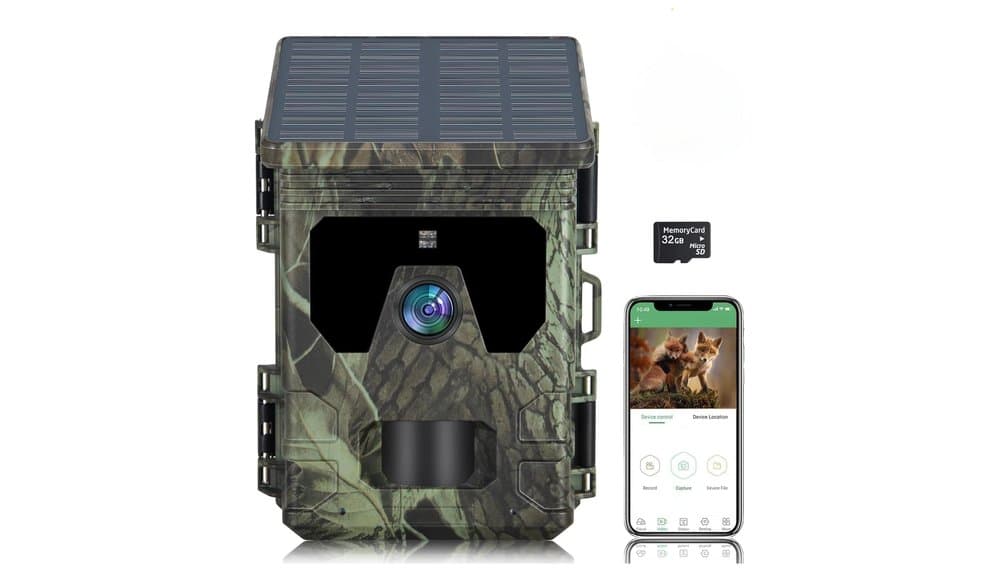
FunKind HC600Pro 4G Trail Camera Review
FunKind HC600Pro solar-powered 4G trail camera review. Analyzes real-time wildlife monitoring specs, solar/battery power, and performance data.
Guides you might like
WiFi Trail Camera Guide
See wildlife discreetly from your couch! Learn how WiFi trail cameras let you monitor animals without disturbance and how to choose the right one.
Ultimate Travel Telescope Guide
Choose a portable, high-performance travel telescope to explore the universe from your backpack without compromising on essential astronomical views.
Ultimate Guide to Night Vision Binoculars
Choose the perfect night vision binoculars: Gen vs. digital? Unravel the tech to make your nighttime wildlife adventures a total success. Guide inside.