BOSTRON CY300 20-60x80 Spotting Scope Review
Published on 11 March 2026 · By OptiqueNature
Review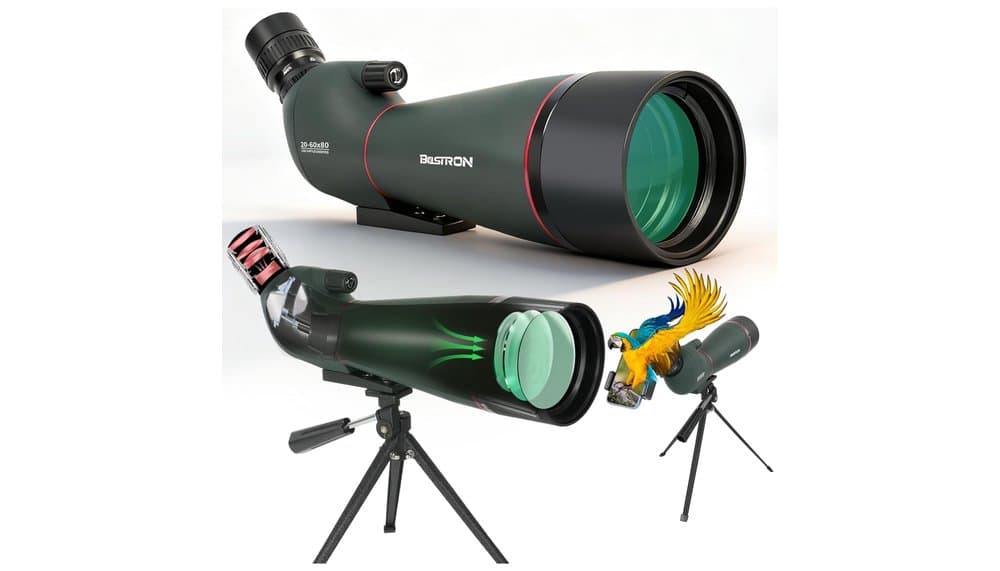
Introduction
The market for entry-level and mid-range spotting scopes is dense, and the BOSTRON CY300 20-60x80 positions itself as a complete kit aimed at the versatile nature enthusiast. With its 80mm objective lens, extensive zoom, and a package including a tripod and smartphone adapter, it promises a turnkey solution for terrestrial observation and light astronomy. But beyond the marketing promises, what is this instrument really worth? We analyze its technical specifications, build quality, and concrete feedback from the user community to determine which needs and which observers it best suits.
Strengths and Weaknesses
Before diving into the details, here is a summary of the strengths and limitations of the BOSTRON CY300 20-60x80, as they emerge from the technical analysis and user experiences.
Strengths
- Complete and Practical Package: The inclusion of a tripod, smartphone adapter, carrying case, and cleaning cloth makes it a truly ready-to-use kit.
- High Perceived Value for Money: According to reviews, the build quality and optical performance exceed expectations for its price segment.
- Generous 80mm Objective Lens: This large diameter promises good light gathering for bright images, especially at moderate magnifications.
- Good Performance for Basic Digiscoping: The included smartphone adapter works and allows for capturing souvenir images or videos, provided you take your time.
Weaknesses
- Limitations of the Included Tripod: Its lightness and thinness make it unstable in the slightest breeze or when touched, harming precision, especially at maximum zoom.
- Relatively Narrow Field of View: Even at the lowest magnification (20x), the field of 36m at 1000m is smaller than that of many competitors, giving a feeling of "looking down a tube."
- Precision Focusing is Tricky at High Magnification: Users note that achieving and maintaining perfect sharpness is difficult at 60x.
- Construction Largely Plastic: Although the rubber armor is appreciated, the structure is plastic, which explains its contained weight but raises questions about its longevity against shocks.
Detailed Analysis of the BOSTRON CY300 20-60x80
Optical Quality and Visual Performance
On paper, the specifications announce a classic configuration for the segment: an 80mm objective lens and a 20-60x zoom eyepiece. The objective lens is described as benefiting from FMC (Fully Multi-Coated) treatment, a crucial mention indicating that all air-to-glass surfaces are treated to reduce reflections and increase light transmission. The use of a BAK-4 prism (a superior standard to BK-7) is also stated, which is a good point for contrast quality and edge sharpness.
However, there is no mention of ED (Extra-low Dispersion) glass or dielectric coatings on the prisms, which is consistent with its price positioning. These elements are generally reserved for mid-range and high-end models to eliminate chromatic aberrations (color fringing) and maximize brightness.
The actual light transmission depends on the quality of the FMC coatings. With an 80mm objective, the exit pupil varies from 4mm (at 20x: 80/20=4) to only 1.33mm (at 60x). A figure of 4mm is very decent for daytime observation, while below 2mm, the image will appear dimmed and will be difficult to align with the eye. The twilight factor (square root of (80x20) = 40 up to square root of (80x60) ≈ 69) is theoretically good, but clarity in low light will be limited mainly by the minuscule exit pupil at 60x and the overall optical quality.
The advertised field of view is 36m at 1000m at 20x magnification, reducing to 17m at 1000m at 60x. This field at 20x is quite narrow. For comparison, entry-level spotting scopes from established brands often offer fields exceeding 40m, even 50m at 1000m for the same magnification. This characteristic is confirmed by an Italian tester who laments a "restricted visual field (almost like looking inside a tube)". For tracking birds in flight or observing landscapes, this is a point to consider.
Build, Sealing, and Ergonomics
The technical sheet mentions a "waterproof" coating, often synonymous with splash resistance, and an anti-fog coating. It is probably not nitrogen-purged like professional models (which would be specified), but rather a basic protection. The main structure is plastic, with rubber armor that, according to feedback, offers a good grip and protection against light shocks.
Its weight of 1.3 kg is moderate for an 80mm instrument, an asset for portability. The 45° angled design is appreciated for comfort during prolonged observation, especially for subjects at variable heights, and is more suitable for users wearing glasses.
The minimum focusing distance is not clearly specified in the provided data. Reviews do not mention it, suggesting it is not a particular strength (generally around 5 to 10 meters for this type of instrument).
The included tripod is consistently singled out in feedback. While appreciated for its compactness and being made of aluminum, testers emphasize its instability. "The image moves with every slight adjustment," notes a Vine user, and it is sensitive to wind. To exploit the scope's potential, especially at high magnifications, investing in a more robust tripod and a suitable photo head is highly recommended by the community.
Use Case Study
- Birdwatching and Wildlife Observation: The 80mm objective and extended zoom are theoretically suitable. The restricted field of view at 20x can hinder quickly locating birds. Stability is paramount, so the provided tripod will be a limitation. With a good tripod, it is a valid instrument for static observation from a hide.
- Hiking and Travel: Its moderate weight and the included carrying case are assets. Its plastic construction makes it less fragile than an all-metal instrument, but its long-term robustness in difficult conditions is not guaranteed.
- Digiscoping (Smartphone Photography): The included adapter works, but the operation is delicate. As a Vine tester specifies, aligning it with the phone's camera lens is tedious and precise focusing is time-consuming. The results are described as "average to decent", sufficient for sharing on social media, but far from the quality of a bridge camera or a dedicated system.
- Light Astronomical Observation: The size of the objective allows viewing lunar details or Saturn's rings (as a small oval). However, the zoom eyepiece is not optimized for the night sky (lack of a wide-field eyepiece) and the absence of an equatorial mount makes manual tracking difficult. This is an anecdotal and recreational use, as confirmed by a user satisfied with observing stars with their children.
- Sport Shooting or Archery: The high zoom and relative compactness may be suitable, but again, the stability offered by the original tripod will be insufficient for fine analysis of impacts at long distance.
Technical Specifications
| Characteristic | Detail |
|---|---|
| Model | BOSTRON CY300 20-60x80 |
| Magnification | 20x to 60x (Variable Zoom) |
| Objective Diameter | 80 mm |
| Eyepiece Diameter | 23 mm |
| Field of View at 1000m | 36 m (at 20x) to 17 m (at 60x) |
| Prism | BAK-4 |
| Lens Coating | FMC (Fully Multi-Coated) |
| Eyepiece Design | Angled (45°) |
| Waterproofing | Waterproof (advertised) |
| Anti-fog Coating | Yes |
| External Coating | Rubber armor |
| Focus | Manual, dual knob |
| Dimensions (L x W x H) | 44.5 x 17.5 x 10.5 cm |
| Spotting Scope Weight | 1.3 kg |
| Accessories Included | Aluminum tripod, smartphone adapter, carrying case, cleaning cloth |
| Manufacturer Warranty | 2 years |
What Users Say: Summary of Reviews
Analysis of customer feedback (notably from the Vine program and verified buyers) reveals a strong consensus around several points.
The recurring positive points are:
- Excellent Perceived Value for Money: This phrase appears in almost all reviews. Users are pleasantly surprised by the finish and optical performance for the price.
- Complete and Practical Kit: The presence of all necessary accessories (tripod, adapter, case) is a highly appreciated major advantage, avoiding immediate additional purchases.
- Satisfactory Image Quality at Medium Magnifications: Around 20-40x, users report clear, sharp, and bright images. A German tester summarizes: "Unbelievably good for the price."
- Ease of Use: The focus is described as precise and easy to manipulate, at least under standard observation conditions.
The frequently mentioned negatives or limitations are:
- Instability of the Included Tripod: This is the most unanimous criticism. It is considered too light and thin, causing vibrations that make observation tiring and imprecise, especially at 60x.
- Perceived Narrow Field of View: Several experienced testers note that the image lacks grandeur, which corresponds to the fairly weak technical specifications in this area.
- Difficulty Achieving Perfect Focus at Maximum Zoom: At 60x, the depth of field is very shallow and optical imperfections can become visible. A Vine tester specifies that focusing "remains tricky to achieve, especially at maximum zoom."
- Demanding Digiscoping: While the adapter works, its use is described as laborious, requiring meticulous adjustment and patience, with decent but not exceptional results.
The overall rating of 4.4/5 summarizes this duality well: a product that exceeds expectations for its cost, but whose practical limits (tripod, field of view) are clearly identified by knowledgeable users.
Conclusion: Who is the BOSTRON CY300 20-60x80 for?
The BOSTRON CY300 20-60x80 is not a high-end spotting scope, and it does not claim to be one. Its analysis reveals a product that perfectly plays the card of a complete and accessible starter kit.
It is a relevant choice for:
- The beginner or occasional observer who wants to discover the activity without a significant investment.
- The nature enthusiast looking for an all-in-one solution ready out of the box, even if it means upgrading the tripod later.
- Users for whom basic digiscoping (capturing souvenir images) is sufficient.
- Families or educators seeking a versatile and robust instrument for discovery activities.
On the other hand, it will be limited for:
- The demanding ornithologist or wildlife photographer who needs a wide field of view, excellent stabilization, and impeccable optical quality at high magnifications.
- Regular users in difficult weather conditions or very rugged terrain, where absolute durability is required.
- Serious amateur astronomers, for whom specific eyepieces and a suitable mount are essential.
In summary, the BOSTRON CY300 20-60x80 fulfills its contract: offering maximum functionality (high zoom, large objective, digiscoping) for a constrained budget. Its performance is respectable under standard use conditions, with the inherent limitations of its price. For a first step into the world of remote observation, it constitutes a competitive and practical offer. For intensive or specialized use, it serves more as a stepping stone towards optically and mechanically more accomplished models.
100% free and independent — All our articles are written independently, without any sponsorship. We may earn a commission on purchases made through our links, at no extra cost to you.
Articles you might like
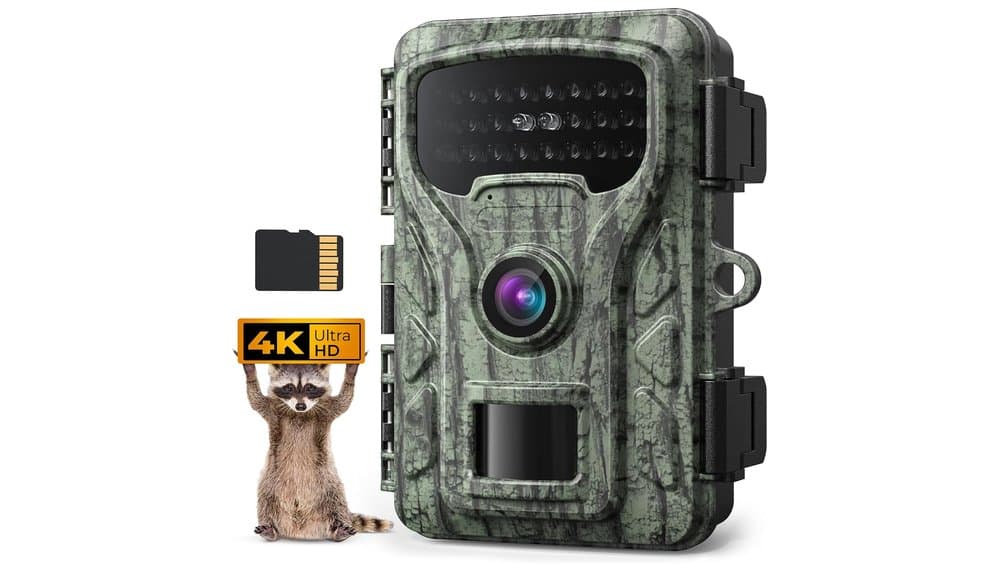
Caytail 4K 48MP Hunting Camera Review & Test
In-depth review of the Caytail 4K 48MP trail camera with included SD card. We analyze specs and real user feedback on its true field performance.
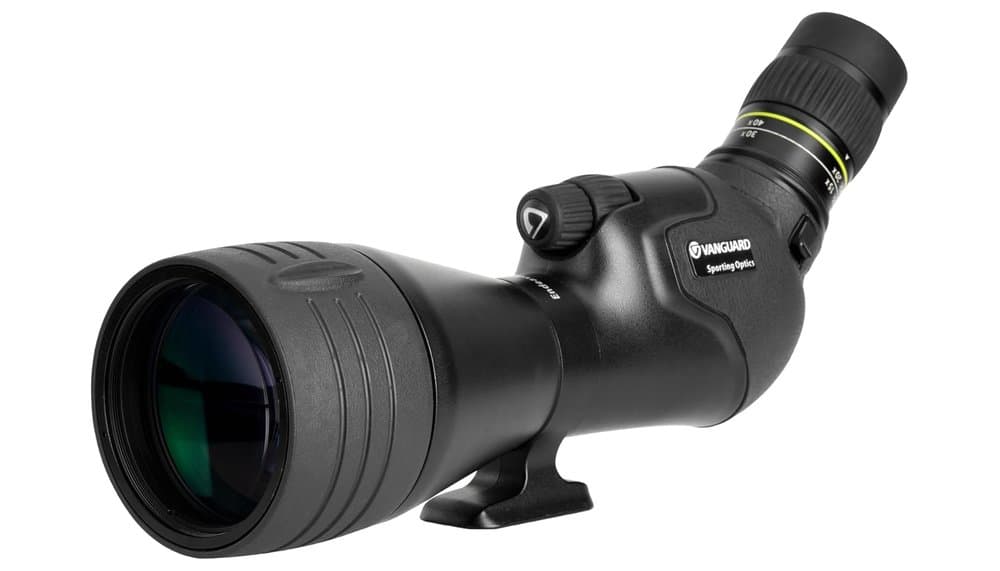
Vanguard Endeavor HD65A Spotting Scope Review
Spotting scope with 65mm ED glass & 15-45x zoom for birding & hiking. Balanced performance & portability for serious nature observers.
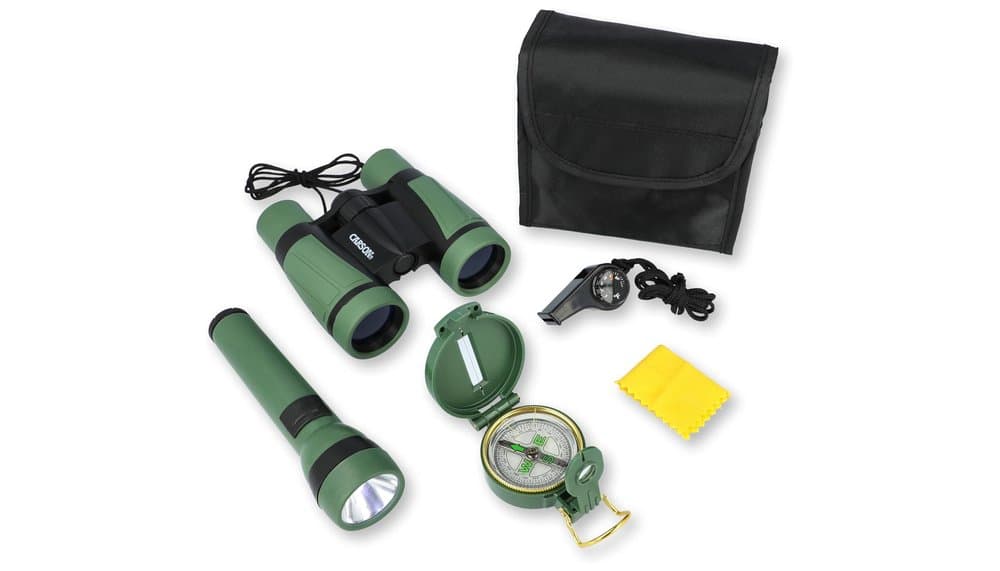
Carson AdventurePak Kids' Exploration Tool Kit Review
Explore nature with this kid's 5-piece tool kit for outdoor adventure and educational discovery. Perfect for young explorers.
Guides you might like
WiFi Trail Camera Guide
See wildlife discreetly from your couch! Learn how WiFi trail cameras let you monitor animals without disturbance and how to choose the right one.
Ultimate Travel Telescope Guide
Choose a portable, high-performance travel telescope to explore the universe from your backpack without compromising on essential astronomical views.
Ultimate Guide to Night Vision Binoculars
Choose the perfect night vision binoculars: Gen vs. digital? Unravel the tech to make your nighttime wildlife adventures a total success. Guide inside.