BATES Stenope Glasses Made in Italy Review
Published on 17 August 2026 · By OptiqueNature
Review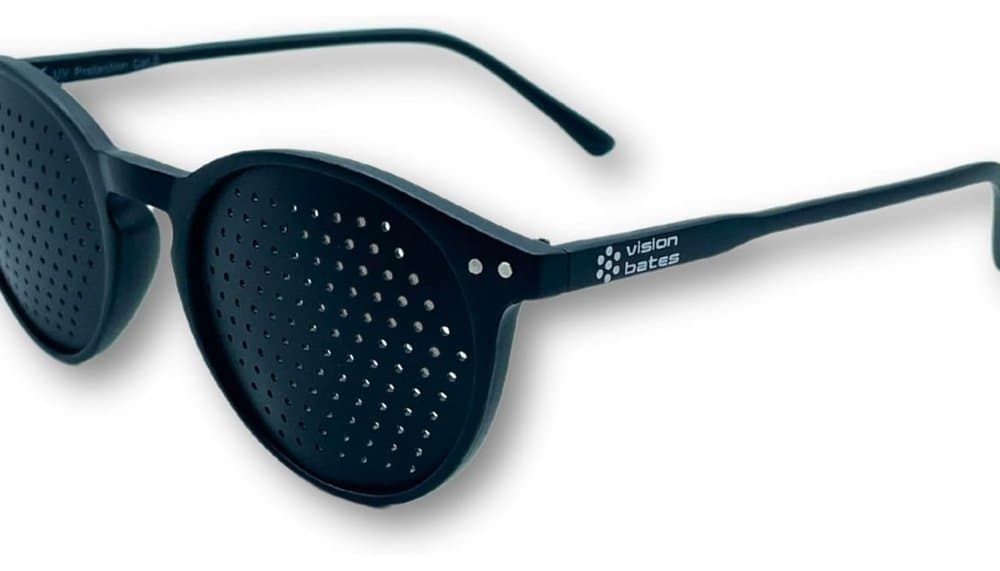
Analysis: BATES "Made in Italy" Stenopeic Glasses, a natural visual aid under the microscope
In the face of digital eye strain and minor near-vision issues, non-corrective solutions like stenopeic glasses are generating growing interest. Among them, the BATES Stenope Glasses Made in Italy position themselves as a high-end product, often cited as a reference. On a site dedicated to nature observation, we must analyze this object rigorously: is it a relevant optical accessory for our practices, or does it belong to a distinct category? This analysis is based on technical specifications, expert feedback, and user testimonials.
In summary, BATES Stenope glasses are not observation instruments like binoculars or a spotting scope. They are a visual training and relaxation tool using the pinhole principle (a tiny hole) to temporarily improve sharpness and force eye muscles to work. Their relevance for a nature observer would therefore lie in complementary use, for recovery after long observation sessions.
Strengths
- Italian manufacturing and construction quality: Testers and the brand highlight careful craftsmanship and a finish that stands out from many low-end models.
- Precise optical design: The grids are mechanically cold-punched, with cylindrical holes perfectly perpendicular to the visual axis. The honeycomb (pyramidal) pattern is designed for maximum optical precision.
- Proven effectiveness for relaxation: The vast majority of user feedback confirms notable relief from eye strain and improved near vision without correction during use.
- Lightweight and various styles: Several reviews highlight their comfort and the choice of models (Vision Black, Leonardo Black...) allowing for discreet integration.
Weaknesses
- Drastically reduced field of view and brightness: This is the very principle of the pinhole. The field of view is extremely restricted and the amount of incoming light is greatly reduced, requiring good ambient lighting. It is the complete opposite of a wide-field, bright optic.
- No magnification or classic optical correction: They do not replace prescription glasses, binoculars, or a magnifying glass in any way. Their effect is active and temporary.
- Adaptation period and demanding use: One must get used to the "grid" effect and adopt a disciplined, progressive daily use over several months to hope for lasting results, according to experts.
- Unsuitable for dynamic observation or in low light: Trying to follow a bird in flight or observe at dusk with these glasses would be counterproductive and dangerous.
Detailed analysis by criteria
Optical quality and operating principle
It is crucial to understand that we are not in the realm of coated lenses, roof or Porro prisms, or ED lenses. The optics here are geometric and non-refractive.
The pinhole principle reduces the circle of confusion on the retina by allowing only a very fine beam of light to pass through each hole. This dramatically increases the depth of field, allowing a presbyopic or slightly myopic person to see clearly up close without correction. It is this effect that "rests" the eye by reducing accommodation (the lens's work). The claimed quality of BATES lies in the precision of the punching and the alignment of the holes, avoiding distortions.
In terms of "specifications" for an observer:
- Light transmission: Very low, estimated at less than 10-20% depending on grid density. This is an intended feature.
- Exit pupil: Each hole acts as a minuscule exit pupil (a fraction of a millimeter). This is the opposite of a comfortable large exit pupil on binoculars.
- Field of view: Extremely narrow and fragmented by the grid. Not comparable to a classic observation instrument. We are talking about direct fields of view per hole, requiring eye and head movements to scan a scene.
- Magnification: None (1x). The effect is pseudo-focusing, not bringing things closer.
Build quality and ergonomics
According to feedback, the build quality is unanimously praised. The frames are described as lightweight, with a refined finish typical of "Made in Italy". No recurring issues with breakage or defective grids have been reported. Their featherweight makes them easy to wear for long periods for their intended uses (reading, screens).
They are neither waterproof nor fogproof, as their use is designed for indoors or outdoors in clear, static conditions. The frame is simply the plastic of the frame. Eye relief is not a concept applicable here, as the eye simply needs to be placed at a reasonable distance from the holes. Wearing them over prescription glasses is possible but impractical and rarely recommended.
Price-quality ratio and market segments
In the micro-segment of stenopeic glasses, BATES are clearly positioned in the high-end. Experts often rank them at the top for their overall price-quality ratio compared to cheaper, lower-end models with less precise punching and comfort. The investment is justified by the durability and effectiveness of the optical design. Compared to observation equipment, the purchase is modest, but it funds a visual wellness tool, not a performance optical instrument.
Use case for the nature observer
Here is how this accessory could integrate into a naturalist's practice:
- For recovery: After a long digiscoping or binocular observation session, wearing them for 15-20 minutes to relax accommodation.
- For static reading: To read a bird guide on a bench, in daylight, when one has forgotten reading glasses.
- As a visual "training" tool: With the aim of preventing accommodative fatigue from spotting scopes and cameras. Daily use could, in the long term, help maintain visual flexibility.
They are, however, completely unsuitable for:
- Active animal observation (field too narrow, light loss).
- Astronomy (requires maximum photons).
- Any activity involving movement (walking, active hiking) for safety reasons.
Synthesized technical specifications
| Criterion | BATES Stenope Glasses Characteristics |
|---|---|
| Optical Principle | Stenopeic (multi-hole grid) |
| Magnification | 1x (no magnification) |
| Field of View | Very restricted per hole, overall fragmented effect |
| Light Transmission | Very low (less than 20%) |
| Coatings | No lens coatings. Punching quality and certified non-toxic screen material. |
| Construction | Plastic frame, mechanically cold-punched grids, honeycomb pattern. |
| Waterproof / Fogproof | No |
| Weight | Very light (not specified, but confirmed by all users) |
| Recommended Use | Reading, screens, TV - in bright environments. Sessions of 10 min to 2-3h max, non-continuous. |
| Target Audience | People suffering from digital eye strain, early-stage presbyopia, mild myopia. |
What users and experts say
The synthesis of over 590 reviews (overall rating 4.4/5) and expert web analyses reveals clear trends.
Recurrent positive points:
- Immediate effectiveness for reading/screens: The majority agree on experiencing rapid relief from eye strain and an ability to read up close without correction. Phrases like "astonishing", "I can see miraculously", "fewer headaches" are frequent.
- Comfort and perceived quality: Users appreciate the lightweight nature, wear comfort, and finish superior to other models. Comments like "well made", "good quality", "discreet look" are common.
- Medium-term results: Several testify, after several weeks of regular use, to a tangible improvement in their near vision even when not wearing the glasses. "My vision, which was steadily declining, is recovering", "I was impressed by the effect".
Points of caution or negatives:
- Necessary adaptation period: The "grid" effect is disorienting at first. "The first few times... it's tricky", "you need to take a little time every day to get used to it".
- Need for good light: This is a constant: "you must use them with plenty of light".
- Uselessness for distance vision: One user specifies: "I see completely blurry at 3m!". This confirms the effect is limited to near and intermediate vision.
- Discipline required: Experts insist on the necessity of consistent and progressive use (10-15 min/day to start, over 5-6 months) for lasting results, which demands a certain discipline.
Conclusion
The BATES Stenope Glasses Made in Italy are a niche product that perfectly fulfills its mission: offering a high-quality visual relaxation and training tool. Their careful craftsmanship, the precision of their stenopeic grid, and the very positive user feedback make them a serious choice for anyone suffering from digital eye strain or seeking to naturally stimulate their near vision.
For the nature observer, they will never be an observation instrument. On the other hand, they can be a valuable visual comfort accessory in the kit, used in addition after long hours with one's face pressed to a telescope eyepiece or a camera viewfinder. Their value lies in preserving the observer's visual capital, an indirect but fundamental asset for continuing to practice one's passion under good conditions. If you are looking for relief from visual fatigue and are ready to adopt a daily routine, these glasses represent a sensible investment. If you are looking for binoculars or a magnifying glass, turn without hesitation to conventional optics.
100% free and independent — All our articles are written independently, without any sponsorship. We may earn a commission on purchases made through our links, at no extra cost to you.
Articles you might like
Caytail 4K 48MP Hunting Camera Review & Test
In-depth review of the Caytail 4K 48MP trail camera with included SD card. We analyze specs and real user feedback on its true field performance.
Vanguard Endeavor HD65A Spotting Scope Review
Spotting scope with 65mm ED glass & 15-45x zoom for birding & hiking. Balanced performance & portability for serious nature observers.
Carson AdventurePak Kids' Exploration Tool Kit Review
Explore nature with this kid's 5-piece tool kit for outdoor adventure and educational discovery. Perfect for young explorers.
Guides you might like
WiFi Trail Camera Guide
See wildlife discreetly from your couch! Learn how WiFi trail cameras let you monitor animals without disturbance and how to choose the right one.
Ultimate Travel Telescope Guide
Choose a portable, high-performance travel telescope to explore the universe from your backpack without compromising on essential astronomical views.
Ultimate Guide to Night Vision Binoculars
Choose the perfect night vision binoculars: Gen vs. digital? Unravel the tech to make your nighttime wildlife adventures a total success. Guide inside.