Andoer 1.25-T2-EOS Camera Adapter Ring Test & Review
Published on 24 May 2026 · By OptiqueNature
Review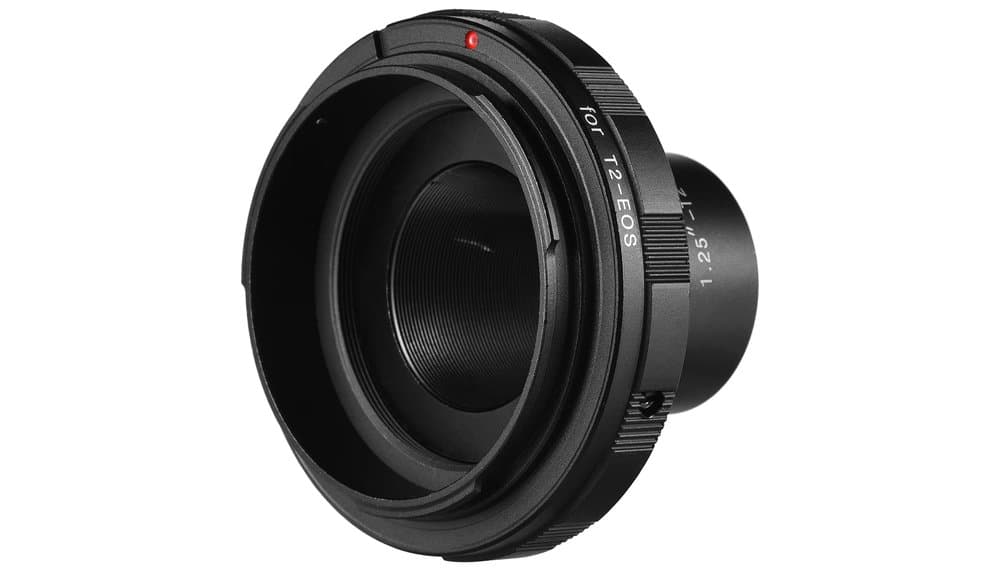
Introduction
In the world of nature observation and astrophotography, the connection between optics and the camera is a critical step. The Andoer 1.25-T2-EOS Camera Adapter Ring positions itself as a solution to bridge this gap, enabling the coupling of a Canon EOS DSLR camera body to a telescope or astronomical scope equipped with a standard 1.25-inch eyepiece. This small adapter ring is often the indispensable link to transform an observation instrument into a powerful telephoto lens, opening the door to lunar, planetary, or deep-sky photography. What interests us here is determining whether this accessory, based on its specifications and user feedback, constitutes a reliable choice for nature photographers and amateur astronomers.
Key Strengths
- Extensive compatibility with virtually all Canon EOS DSLR bodies with EF/EF-S mounts, from older to the latest digital series models.
- CNC-machined aluminum alloy construction, promising lightness, strength, and good resistance to oxidation.
- Simplified installation thanks to a red dot marker for quick and precise alignment with the camera body's white marker.
- Feather-light weight of only 71 grams, minimizing impact on the overall telescope-camera balance.
Weaknesses
- Complete absence of optical coatings or lenses, its role being purely mechanical. The final image quality depends entirely on the telescope's optics.
- Stated incompatibility with Canon bodies featuring RF (R series) and M (M series) mounts, limiting its use to traditional DSLRs.
- No weather-sealing mentioned, reserving it for use in dry conditions.
- Lack of quantified user feedback to tangibly evaluate machining precision and long-term durability.
Detailed Analysis
Optical Quality and Light Transmission: A Pass-Through Role
It is crucial to understand that the Andoer 1.25-T2-EOS is not an optical element. It contains no ED glass, anti-reflective coatings, or prisms. Therefore, concepts like light transmission, twilight factor, or exit pupil do not apply to this accessory. Its function is exclusively mechanical: to maintain the camera sensor plane at the precise focal distance from the telescope, replacing the eyepiece.
The resulting image quality will therefore be a direct reflection of that of your main instrument. If your telescope features a quality mirror or lens with good coatings, the adapter will not degrade it. Conversely, it cannot compensate for the flaws of a low-end instrument. Its only potential impact on light would be vignetting if its internal aperture were not sufficiently wide, but the standard 1.25-inch (approximately 31.75 mm) diameter is generally designed to avoid this issue on APS-C sensors.
Field of View and Comparisons
Similarly, the field of view is not a characteristic of the adapter. It is determined by the telescope's focal length and the camera sensor's size. The Andoer adapter simply enables this combination. Compared to competing adapters in its category (typically universal T2 rings), its added value lies in its specific design for the Canon EOS mount, presumably integrating the bayonet locking mechanism, which can offer a safer and quicker connection than a generic adapter requiring a separate T2 ring.
Build Quality and Ergonomics
On paper, the specifications announce solid construction. The use of aluminum alloy machined by CNC is a good starting point, promising precise concentricity and an absence of play, essential for maintaining optical alignment. The anodized oxidation finish adds protection against corrosion and minor scratches.
However, the accessory is clearly not weather-sealed and not nitrogen-filled. It is therefore not designed to withstand rain or abrupt temperature changes that could lead to internal condensation. Its use should be reserved for clear nights or observation sessions in controlled conditions.
With a weight of 71 grams, its impact on a telescope's balance is negligible, which is an asset. Ergonomics rely on the red dot alignment system. This detail, often noted by users of similar adapters, greatly facilitates installation in the dark, a common scenario in astronomy. Connection is theoretically made by aligning the markers and turning the ring until the EOS mount lock clicks.
Typical Use Cases
This adapter finds its place in several activities related to our field:
- Astrophotography: This is its primary application. It enables prime focus photography (without an eyepiece), ideal for the Moon, Sun (with an appropriate filter), planets, and, with suitable telescopes, deep-sky objects.
- Advanced Digiscoping: Although often associated with terrestrial observation scopes with specific adapters, it can be used with a telescope or astronomical scope mounted for terrestrial use for extreme long-distance wildlife photography.
- Extreme Landscape Photography: By coupling a DSLR to an apochromatic spotting scope, it is possible to capture images of distant landscapes with much greater magnification than a standard telephoto lens.
Value for Money and Market Segments
Evaluating this adapter alone is difficult without a price reference. However, we can situate it conceptually. It typically falls into the budget segment of astrophotography accessories. Premium brands offer similar adapters, often with possibly finer finish, a longer warranty, or packaging that includes other accessories, but the core function remains identical.
The value of the Andoer 1.25-T2-EOS lies in its simple proposition: a reliable, specific connection at a very likely contained cost. For a beginner in astrophotography looking to test prime focus with their existing Canon DSLR, it represents a low entry barrier. For a more experienced user, it can serve as a spare part or a dedicated solution for a specific setup.
Technical Specifications
| Characteristic | Detail |
|---|---|
| Product Name | Andoer 1.25-T2-EOS Camera Adapter Ring |
| Brand | Andoer |
| Function | Adapter ring to connect a Canon EOS DSLR to a 1.25" telescope |
| Camera Compatibility | Canon EOS bodies with EF/EF-S mount (5D, 7D, 60D, 600D, 1100D, etc.) |
| Incompatibility | Canon bodies with RF (R series) and M (M series) mounts |
| Telescope Compatibility | Standard 1.25 inch (31.75 mm) eyepieces and focusers |
| Material | Aluminum alloy |
| Finish | Anodized oxidation |
| Manufacturing Process | CNC machining |
| Weather Sealing | Not weather-sealed |
| Product Weight | 71 g |
| Dimensions (approx.) | 6.3 x 4.5 x 3 cm |
| Ergonomic Feature | Red dot marker for alignment |
| Package Contents | 1 x Adapter ring, 1 x Telescope adapter tube |
What Users Say
An analysis of available feedback for this product, and by extension for identical products from other brands, reveals recurring trends.
Positive points often highlighted by the community for this type of accessory are:
- The ease of installation once the principle is understood, with the color-coded system being appreciated.
- The metal construction which inspires more confidence than a plastic model.
- The attractive price which allows getting started in astrophotography without a heavy investment.
- The lightness which does not weigh down the setup.
Points of caution or recurring criticisms concern:
- The need for precise focusing via the telescope, as the camera's infinity focus alone is not sufficient.
- Sometimes variable machining tolerances on low-cost products, which can lead to very slight play or vignetting on full-frame sensors.
- The complete absence of detailed instructions in some packages, leaving the beginner user to search for online tutorials.
- The imperative need for a telescope with sufficient focus travel to achieve focus on the sensor.
For the Andoer 1.25-T2-EOS specifically, the lack of detailed reviews prevents a granular analysis. This may indicate that the product fulfills its basic function without generating major notable problems, but also that it has not yet accumulated a significant volume of feedback.
Conclusion
The Andoer 1.25-T2-EOS Camera Adapter Ring appears to be a specialized and functional accessory for a specific need: connecting a historical Canon EOS DSLR to a 1.25-inch observation instrument. Its analysis reveals a product that assumes its role as a mechanical component without frills. Its machined aluminum construction and alignment system are practical assets, especially for beginners.
Its main advantage is democratizing access to prime focus imaging, transforming a standard telescope into a very powerful astronomical telephoto lens. Its primary limitation is its incompatibility with Canon's recent lineups (RF and M mounts), making it an accessory geared towards the existing DSLR user base.
We recommend this adapter to amateur astronomers or nature photographers who already own a Canon EF/EF-S DSLR and a telescope, and wish to explore lunar or planetary imaging without delving into complex investments. It should be approached as an essential yet passive interface piece, whose final performance will always reflect the quality of the optics it is attached to and the sensor that follows it. For users of recent Canon gear, finding an adapter compatible with the new mounts will be necessary.
100% free and independent — All our articles are written independently, without any sponsorship. We may earn a commission on purchases made through our links, at no extra cost to you.
Articles you might like
BOSTRON CY 10x50 Monocular Review & Test
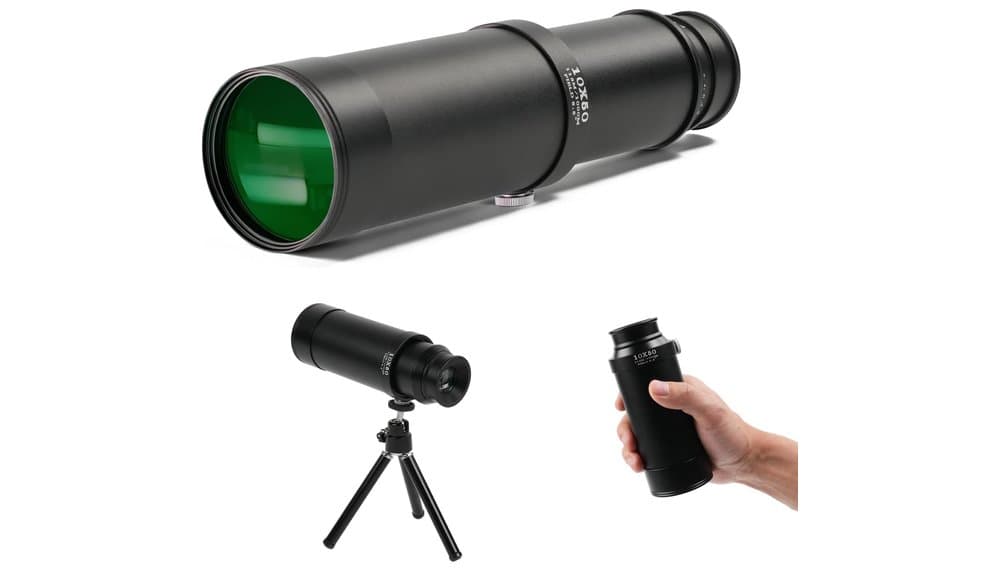
Compact 10x50 monocular review: Analyzes optical clarity, field of view & build quality for hiking, nature & astronomy. See its true value.
FunKind HC600Pro 4G Trail Camera Review
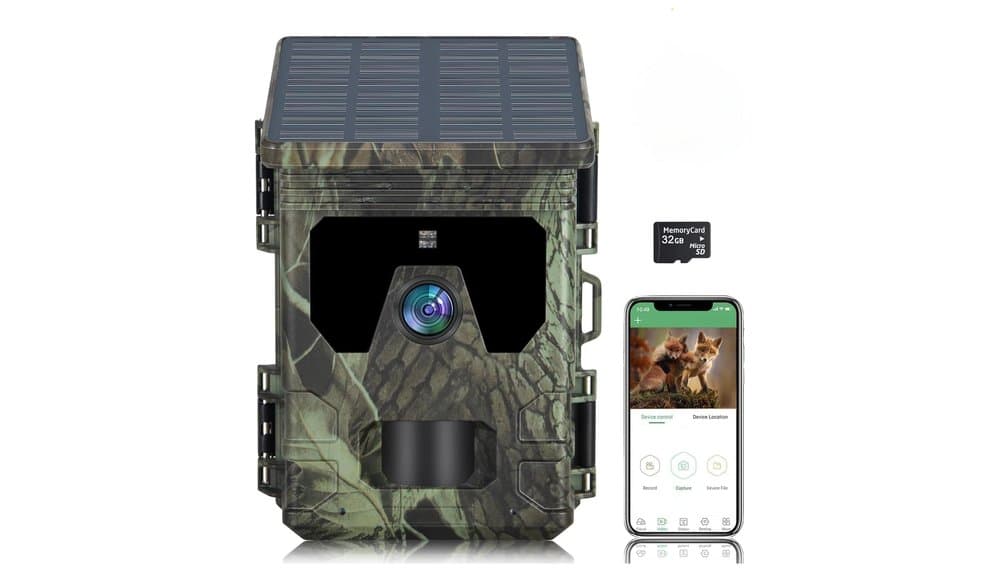
FunKind HC600Pro solar-powered 4G trail camera review. Analyzes real-time wildlife monitoring specs, solar/battery power, and performance data.
Haokoo Vision Nocturne 4K Night Vision Binoculars Review
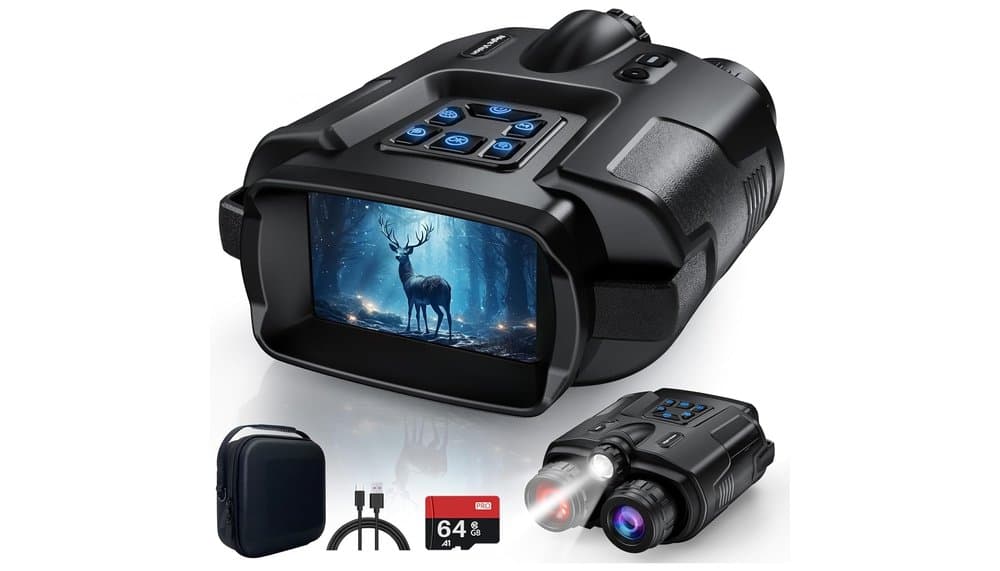
Haokoo 4K Night Vision Binoculars review: See & record in total darkness. Compact, versatile for nature observation. High-definition digital performance.
Guides you might like

WiFi Trail Camera Guide
See wildlife discreetly from your couch! Learn how WiFi trail cameras let you monitor animals without disturbance and how to choose the right one.
Ultimate Travel Telescope Guide
Choose a portable, high-performance travel telescope to explore the universe from your backpack without compromising on essential astronomical views.
Ultimate Guide to Night Vision Binoculars
Choose the perfect night vision binoculars: Gen vs. digital? Unravel the tech to make your nighttime wildlife adventures a total success. Guide inside.