Alipis Rubber Eyepiece Covers Review & Test
Published on 24 August 2026 · By OptiqueNature
Review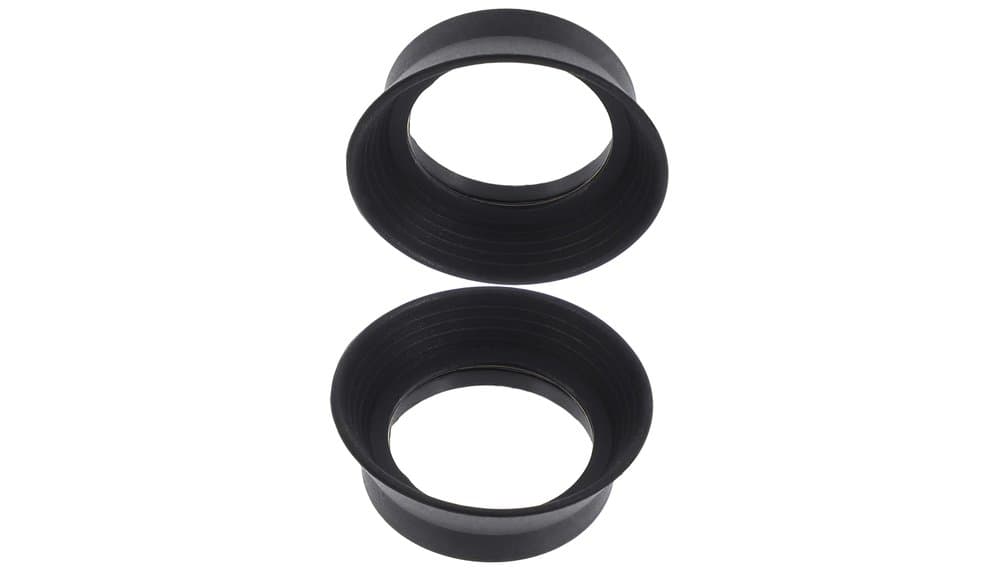
Introduction: The Discreet Accessory That Changes Your Observation Experience
In the world of field optics, attention often focuses on the technical prowess of lenses, prism coatings, or the robustness of the housing. However, the comfort and precision of observation begin at the point of contact between the instrument and the observer: the eyepiece. This is where accessories like the Alipis Rubber Eyepiece Covers for Binoculars and Microscopes come into play. This is not a product that improves the intrinsic optical specifications of your equipment, but a functional complement whose impact on comfort and subjective viewing quality can be surprising. In this analysis, we will dissect this accessory to understand its role, its utility, and for whom it represents a wise investment.
Strengths
- Broad Compatibility: The product is designed to fit both binocular and microscope eyepieces, offering a single solution for various optical equipment.
- Intuitive Installation: According to user feedback, installation and removal are described as simple and require no tools.
- Comfort Enhancement: The soft rubber offers a more pleasant feel than plastic or bare metal, especially during long observation sessions.
- Stray Light Protection: By forming a shield around the eye, these eyecups reduce lateral light interference, an asset for concentration.
- Aesthetic and Protective Effect: They can mask worn or cracked original eyecups and protect the eyepiece housing from micro-scratches.
Weaknesses
- Critical Dimensional Compatibility: The success of the installation depends entirely on the exact diameter of your device's eyepiece. A difference of a few millimeters can render the product unusable or unstable.
- Potentially Tight Fit: Some users report a "snug" installation, which, while ensuring good hold, could over time fatigue the rubber or make removal tricky.
- Absence of Recognized Optical Brand: As an "unbranded" product, the consistency of quality and long-term material durability are not evaluated by extensive independent tests, unlike accessories from established optics manufacturers.
- No Adjustable Function: Unlike high-end telescoping or foldable eyecups, this is a fixed piece. Adjusting the eye relief for eyeglass wearers is not possible with this model.
Detailed Analysis
Optical Quality and Performance: A Supporting Role
It is crucial to understand what the Alipis Rubber Eyepiece Covers are not. They do not incorporate ED glass, do not improve phase correction or dielectric coatings, and have no impact on the light transmission, twilight factor, or exit pupil of your binoculars or microscope. These parameters are defined by your instrument's internal optics and remain unchanged.
Conversely, their value is indirect and significant. By blocking side light, they enhance the perceived contrast under bright ambient conditions, such as in full daylight or in a lit room. This reduction of flare and stray reflections allows the eye to better focus on the image formed by the instrument, reducing eye strain. For amateur astronomers, this function is less critical (as observation is done in the dark), but it becomes an asset for daytime wildlife observation or digiscoping in open environments.
Build Quality and Ergonomics
The technical specifications are minimal, which is consistent for an accessory of this nature. The main material is rubber, chosen for its flexibility and soft touch. According to users, the material seems of decent quality, flexible enough to fit but firm enough to hold its shape. The negligible weight (10 grams per pair) is an obvious asset that adds no burden to the equipment.
The question of being waterproof/fogproof does not apply here. These eyecups are not sealing gaskets for the instrument body. They only protect the eye-eyepiece interface from light and offer tactile comfort. Their armor, so to speak, is limited to the rubber's resistance to tearing and deformation.
Ergonomics is the central point. The simple shape and easy installation are appreciated. However, we must emphasize that the eye relief – that critical distance between the eyepiece lens and your eye which allows you to see the entire field of view – is altered. Adding this rubber mechanically reduces this distance. For observers who do not wear glasses and whose instrument's eye relief was already just sufficient, this can become problematic, causing a "vignetting" effect or the need to press the eye against the eyepiece. For eyeglass wearers, this accessory is generally incompatible, as it prevents placing the glasses lenses close enough to the eyepieces to obtain the full field of view.
Typical Use Cases
- Birdwatching & Wildlife Observation: This is the primary use case. During long spotting sessions, the comfort and reduction of glare on the eyepieces significantly improve the experience.
- Hiking with Binoculars: Light and discreet, they protect eyepieces from rubbing in a bag and offer a more pleasant feel during casual use.
- Microscope Use: As noted by a customer review, they are perfect for replacing degraded original eyecups, restoring a like-new appearance and added comfort for laboratory work or hobbies (numismatics, model building).
- Digiscoping (with caution): They can help stabilize a smartphone against the eyepiece, but the fit will depend on the shape of the phone's holder.
- Astronomy (daytime or lunar): Useful for solar observation (with appropriate filters!) or lunar observation from a location with surrounding light sources.
Value for Money and Market Segments
Let's evaluate this accessory within the optical supplement ecosystem:
- Budget Segment: The Alipis Rubber Eyepiece Covers clearly position themselves here. They offer basic functionality (comfort and stray light protection) at a very low cost, as a replacement or upgrade for missing or defective eyecups on entry-level or mid-range instruments.
- Mid-Range Segment: Here, you find replacement eyecups offered by manufacturers (Nikon, Celestron, Vortex, etc.), often made of better-quality rubber, with anatomical shapes or foldable options. The advantage of the Alipis is their claimed versatility, but they cannot compete with the perfect, guaranteed fit of original parts.
- Premium Segment: High-end binoculars and spotting scopes (Swarovski, Zeiss, Leica) feature multi-stage telescopic eyecups made of high-quality materials, optically designed not to degrade the image. The Alipis are not an alternative for these instruments; they might even degrade the carefully calibrated user experience.
The perceived value is excellent if and only if the dimensional compatibility is confirmed. It is a "low-risk" financial accessory that can provide a notable comfort gain.
Technical Specifications
| Characteristic | Detail |
|---|---|
| Product Name | Alipis Rubber Eyepiece Covers for Binoculars and Microscopes |
| Main Material | Rubber |
| Color | Black |
| Item Dimensions (L x W x H) | 42 x 32 x 14 mm |
| Item Weight | 10 g |
| Components Included | 2 covers (one pair) |
| Advertised Compatibility | Binocular and microscope eyepieces |
| Compatibility Diameter (estimated from feedback) | Approximately 30 mm (typical range 29-31 mm) |
| Primary Function | Protection from stray light and eye comfort |
What Users Say
The synthesis of available customer reviews and expert feedback paints a clear consensus.
The recurring positive points are:
- Ease of Installation: Users confirm that mounting is simple and quick.
- Adaptability: A user who fitted them on a Zeiss microscope noted that the rubber's flexibility allowed for compensation of a slight diameter mismatch, ensuring a good hold.
- Aesthetic and Functional Improvement: They are described as giving a "like-new" appearance to an instrument with aged or cracked eyecups. The comfort against the skin is unanimously praised.
- Effectiveness Against Stray Light: The reduction of glare and eye strain during prolonged observation is the most frequently cited benefit.
Points of caution or negatives concern:
- Fit Accuracy: This is the main pitfall. All comments emphasize the crucial importance of measuring your eyepiece diameter before purchasing. A non-conforming diameter renders the product unusable.
- Installation Tension: Some note that the eyecup is "slightly tight" once in place. While this guarantees it won't fall off, it raises questions about its longevity and ease of later removal.
- Lack of Known Brand: As Alipis is not an established player in optics, potential buyers must rely on user experience rather than brand reputation.
Conclusion
The Alipis Rubber Eyepiece Covers for Binoculars and Microscopes are a perfect example of a modest yet potentially transformative accessory. They do not claim to revolutionize your optics' performance, but they address two very tangible points of friction: discomfort during observation and bothersome glare.
Our analysis concludes that this product represents excellent value for money for any owner of binoculars or a microscope whose original eyecups are damaged, missing, or simply too hard and uncomfortable. Its success depends entirely on a rigorous prior verification of the eyepiece diameter. For eyeglass wearers, on the other hand, it is very likely inadvisable, as it would worsen the already limited eye relief issue.
In summary, if you are looking for a simple, economical, and effective solution to improve the comfort of your observation sessions without altering the mechanics or optics of your instrument, the Alipis eyecups deserve your consideration. It is a small investment for a tangible gain in usability, provided you carefully check the measurements before clicking "buy".
100% free and independent — All our articles are written independently, without any sponsorship. We may earn a commission on purchases made through our links, at no extra cost to you.
Articles you might like
Caytail 4K 48MP Hunting Camera Review & Test
In-depth review of the Caytail 4K 48MP trail camera with included SD card. We analyze specs and real user feedback on its true field performance.
Vanguard Endeavor HD65A Spotting Scope Review
Spotting scope with 65mm ED glass & 15-45x zoom for birding & hiking. Balanced performance & portability for serious nature observers.
Carson AdventurePak Kids' Exploration Tool Kit Review
Explore nature with this kid's 5-piece tool kit for outdoor adventure and educational discovery. Perfect for young explorers.
Guides you might like
WiFi Trail Camera Guide
See wildlife discreetly from your couch! Learn how WiFi trail cameras let you monitor animals without disturbance and how to choose the right one.

Ultimate Travel Telescope Guide
Choose a portable, high-performance travel telescope to explore the universe from your backpack without compromising on essential astronomical views.
Ultimate Guide to Night Vision Binoculars
Choose the perfect night vision binoculars: Gen vs. digital? Unravel the tech to make your nighttime wildlife adventures a total success. Guide inside.