86mm 260x160 Astronomy Binoculars Review
Published on 27 August 2026 · By OptiqueNature
Review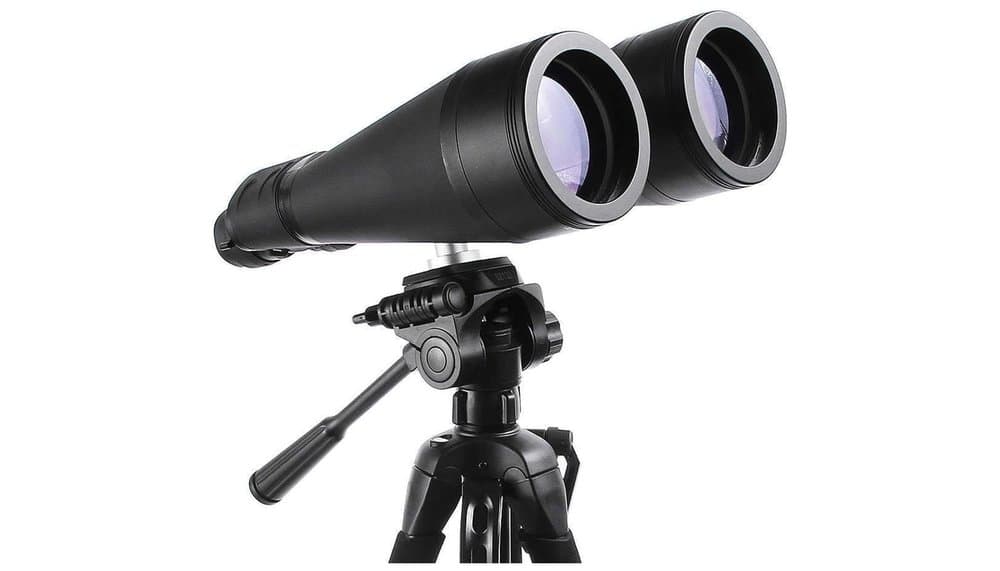
Introduction
In the world of optical observation, large objectives always promise bright images and striking details. The product we are analyzing today, the Professional Astronomy Binoculars 86mm 260x160 Zoom HD, presents itself as a versatile and powerful instrument, capable of switching from terrestrial observation to astronomy with extended zoom. Its name and specifications clearly announce professional ambitions. We will dissect this offering by relying on its technical specifications, the optical logic underlying them, and by confronting them with the realities of use reported by the observer community. Can one truly obtain "professional" performance with an advertised zoom of 260x and an 86mm objective? This is what we will explore objectively.
Strengths (according to specifications and feedback)
On paper, the product displays several strong arguments that can attract observers seeking versatility and power.
- Generous Objective Diameter: The 86mm aperture is a major asset for light gathering. Theoretically, this allows for a brighter image than standard models (42mm, 50mm), which is crucial for astronomical observation or in low-light conditions.
- Extreme Zoom Range: The mention "260x160" suggests an impressive zoom capability, potentially ranging from 30x to 260x with an adjustable field of view. This promises to go from an overview to very high magnification on a single instrument.
- Quality Prisms: The use of BAK4 prisms is a positive point. This type of high-density glass is known for minimizing light loss and aberrations, generally offering a sharp exit pupil and better image quality compared to low-end BK7 prisms.
- Multi-Coating: The "fully multi-coated" specification indicates that the lenses have received a treatment to reduce reflections and increase light transmission, an essential element for contrast and clarity.
- Announced Robust Construction: The metal body promises better durability and better protection of internal optical alignments compared to plastic models.
Weaknesses (analysis of intrinsic limitations)
These theoretical strengths clash with well-known physical and practical limits among opticians and experienced observers.
- The Myth of Very High Magnification: A magnification of 260x on an 86mm aperture is, in practice, unusable. The optical rule states that the maximum practical magnification is around 2x the diameter in millimeters (i.e., ~172x for 86mm). Beyond that, the image becomes excessively dark, blurry, and extremely sensitive to vibrations and atmospheric turbulence, making observation frustrating.
- Very Narrow Field of View and Critical Exit Pupil: At high magnification, the field of view inevitably narrows. The advertised field of 180 feet at 1000 yards (i.e., ~33 meters at 1000 m, or 1.9°) is already modest. At 260x, it would become tiny, making aiming very difficult. Worse, the exit pupil of 0.2 mm (calculated: 86mm / 260x ≈ 0.33mm) is well below the diameter of the human eye's pupil (about 7mm at night). This means the image will be extremely dark and the slightest eye movement will make it disappear ("keyhole effect").
- Compromised Ergonomics and Stability: An instrument weighing 1.87 kg (without the tripod) is heavy to hold by hand. For any magnification beyond 15x-20x, a solid tripod is absolutely essential to prevent the image from shaking uncontrollably, especially at high magnifications. Its use as a classic "binocular" is therefore very limited.
- Optics Likely Not Sealed: The specifications do not indicate any sealing certification (like an IPX rating) or nitrogen filling. The fixed eyecups (as opposed to fold-down eyepieces) and the absence of "waterproof" in the description suggest this model is not designed to withstand weather or internal fogging, which is a handicap for field observation.
- Versatility Questioned: Its weight, bulk, the necessity of a tripod, and its low resistance to the elements make it a poorly suited candidate for hiking or mobile wildlife observation. Its close focus distance of 10 meters makes it unusable for observing birds or insects at short distance.
Detailed Analysis by Criterion
Optical Quality and Performance
On paper, the combination of an 86mm objective, BAK4 prisms, and multi-coating constitutes a solid foundation for good light transmission. However, the actual quality depends entirely on the precision of lens polishing, prism alignment, and the sophistication of anti-reflective coatings. A "multi-coating" can vary considerably in quality. Experts point out that on very low-cost models, chromatic aberrations (color fringing) and distortions are often pronounced, especially at the edge of the field and at high magnification. The light transmission, although potentially good at low magnification, literally collapses around 260x due to the minuscule exit pupil.
Field of View and Twilight Factor
With a field of 1.9° (33m/1000m), this model offers a standard field for a large-objective, high-base-magnification instrument, but well below that of dedicated wide-angle binoculars for nature observation. The twilight factor (square root of (86 x 30) ≈ 50.8 at its minimum magnification) is excellent, indicating good potential for low-light vision at reasonable magnifications. This is where its performance will be most interesting, well below the maximum zoom.
Construction and Ergonomics
The weight of 1.87 kg and generous dimensions make it a stationary observation instrument. The user community for this type of product consistently reports that use without a tripod is doomed to failure. The sturdy focus knob is a positive point, but the probable lack of waterproofing and fog resistance (fogproof) is a serious drawback for any outdoor use in changing conditions. The interpupillary distance is not specified, but on such a wide model, its adjustment must be checked.
Practical Use Cases
- Light Astronomy: Observation of the Moon, star clusters, or bright planets at moderate magnifications (between 30x and 80x), mounted on a robust tripod. The 86mm aperture can show more detail than classic binoculars.
- Stationary Terrestrial Observation: Landscape surveillance, wildlife observation from a fixed blind, with the same magnification limitations and the necessity of a tripod.
- Basic Digiscoping: Smartphone adaptation is theoretically possible, but the required stability and variable image quality make the exercise more difficult than with an instrument designed for this purpose.
Discouraged Uses: Hiking, active birdwatching (except from a fixed point), mobile hunting, maritime observation on a boat, or any situation where compactness, waterproofing, and quick deployment are required.
Value for Money and Segments
Positioned as a "professional" product, our analysis places it rather in the low-end segment of large-objective instruments. Its main argument is the objective diameter at a very low cost. However, it sacrifices fundamental elements: waterproofing, quality eyepieces with good eye relief (not specified, but fixed eyecups suggest low eye relief, problematic for glasses wearers), and above all, a realistic and usable zoom range. For a similar budget, a model with a more modest aperture (60-70mm), a less ambitious but better-corrected zoom, and a waterproof construction would often offer a more satisfying and reliable user experience. In the premium segment, one finds astronomy binoculars (or "binoscopes") with ED optics, dielectric coatings, precise mechanics, and quality zoom, but at a completely different price level.
Technical Specifications
| Characteristic | Detail |
|---|---|
| Model | Professional Astronomy Binoculars 86mm 260x160 Zoom HD |
| Magnification | 30 - 260 x |
| Objective Diameter | 86 mm |
| Prisms | BAK4 |
| Optical Coating | Fully Multi-Coated |
| Field of View | 180 ft/1000 yds (33 m/1000 m) ~ 1.9° |
| Exit Pupil (min/max) | ~0.33 mm (at 260x) / ~2.87 mm (at 30x) |
| Minimum Focus Distance | 10 meters |
| Eyepiece Diameter | 15 mm |
| Eye Relief | Not specified (fixed eyecups) |
| Filling (waterproof/fogproof) | Not specified |
| Body Material | Metal |
| Weight | 1870 g |
| Included Accessories | Telescope (the device), covers, strap, bag, cloth, manual |
What Users and Experts Say
Available data shows a complete absence of published customer reviews for this specific model. This situation is in itself an important indicator: either the product is very new on the market, or its sales volume is low, limiting feedback.
However, analyzing the specifications and comparing them with the constant feedback from the community on products with similar characteristics (large zoom, large objective, low price) allows us to establish predictable trends:
Recurring Positive Points on Similar Models:
- Perceived brightness at low and medium magnification is often considered acceptable for the price, thanks to the large objective.
- The feeling of solidity linked to the metal body is appreciated.
- For occasional use and at reasonable magnifications, the performance/price ratio can seem attractive at purchase.
Recurring and Severe Negative Points on Similar Models:
- The maximum zoom is unanimously considered unusable: dark, blurry, unstable image. Users confirm the optical theory.
- Image quality degrades strongly at the edge of the field (distortion, blur, marked chromatic aberrations).
- The imperative need for a heavy, quality tripod is emphasized, which increases the cost and complexity of the setup.
- The lack of waterproofing is a major problem reported by users outdoors.
- Poor-quality eyepieces offer mediocre visual comfort, insufficient eye relief for glasses, and unreliable diopter adjustments.
Expert reviewers, for their part, consistently warn against promises of extreme zoom on this type of instrument, often calling them "marketing gimmicks" that harm the product's credibility and the experience of beginners.
Conclusion
The Professional Astronomy Binoculars 86mm 260x160 Zoom HD is a product with ambivalent characteristics. On one hand, it offers an 86mm aperture and BAK4 prisms, which constitutes, on paper, an interesting technical basis for low-magnification observation in low-light conditions. On the other hand, it suffers from unrealistic marketing promises (the 260x), the omission of essential features like waterproofing, and an ergonomics that imposes the use of a tripod.
Our analysis concludes that this is an instrument that can offer an economical entry into stationary, large-objective observation, provided one maintains realistic expectations and uses it primarily in its low and medium zoom range (30x to 80x maximum). For the amateur astronomer or nature observer demanding reliability, field versatility, and consistent image quality, it will be preferable to turn to models from specialized brands, with more reasonable zoom ranges, waterproof construction, and better-corrected optics, even if it means accepting a more modest aperture for an equivalent budget. The term "professional" in its name therefore seems more like marketing positioning than a true description of its capabilities and build quality.
100% free and independent — All our articles are written independently, without any sponsorship. We may earn a commission on purchases made through our links, at no extra cost to you.
Articles you might like
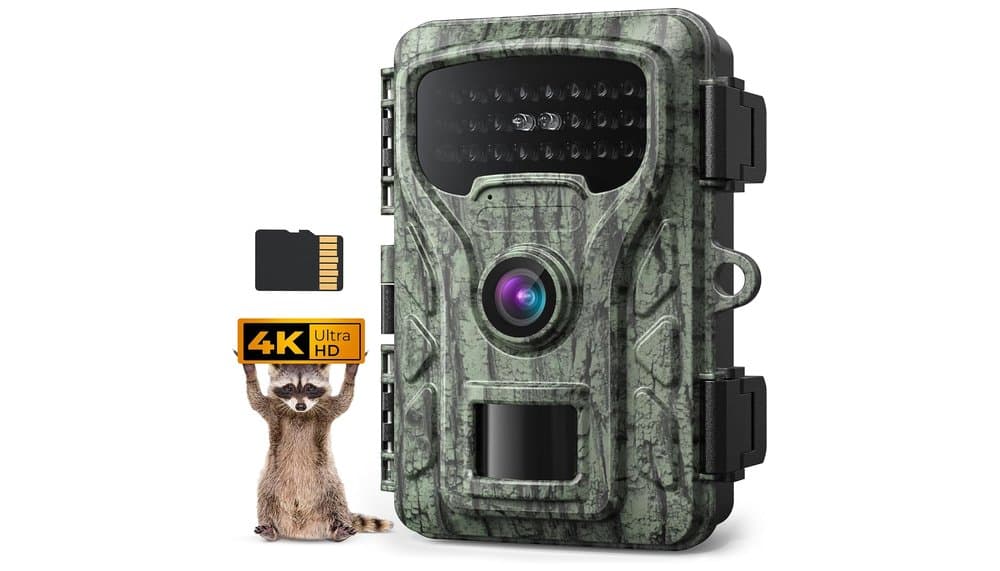
Caytail 4K 48MP Hunting Camera Review & Test
In-depth review of the Caytail 4K 48MP trail camera with included SD card. We analyze specs and real user feedback on its true field performance.
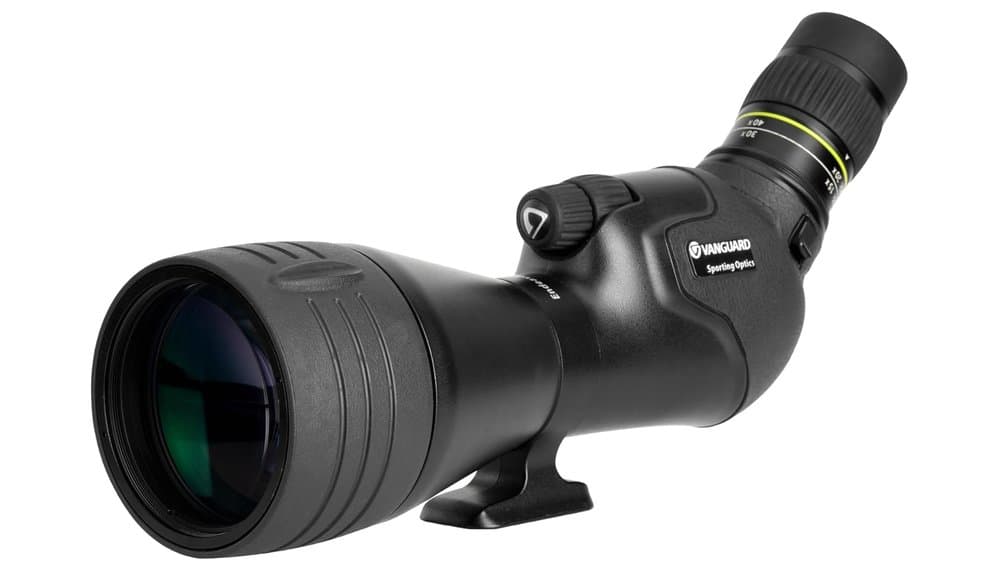
Vanguard Endeavor HD65A Spotting Scope Review
Spotting scope with 65mm ED glass & 15-45x zoom for birding & hiking. Balanced performance & portability for serious nature observers.
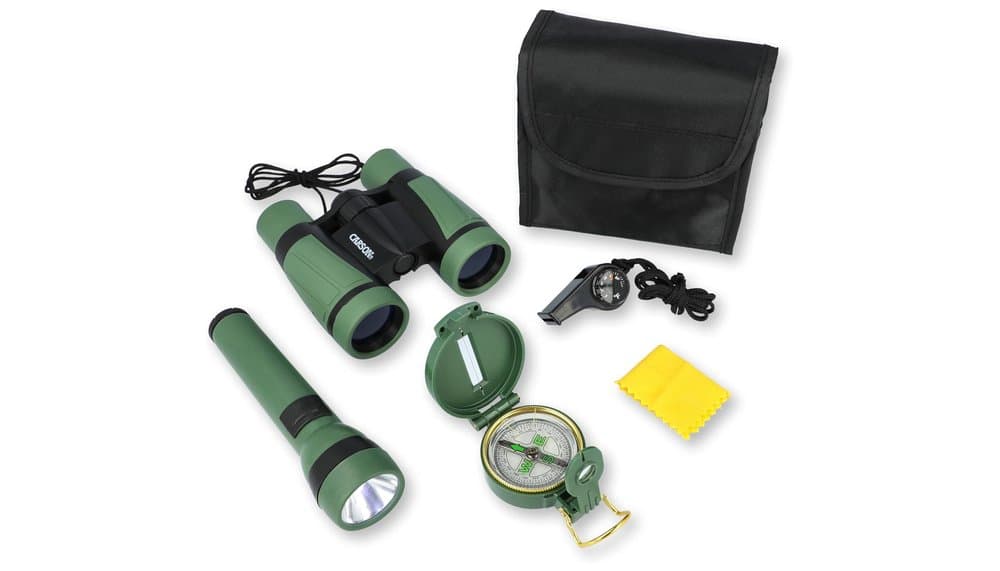
Carson AdventurePak Kids' Exploration Tool Kit Review
Explore nature with this kid's 5-piece tool kit for outdoor adventure and educational discovery. Perfect for young explorers.
Guides you might like
WiFi Trail Camera Guide
See wildlife discreetly from your couch! Learn how WiFi trail cameras let you monitor animals without disturbance and how to choose the right one.
Ultimate Travel Telescope Guide
Choose a portable, high-performance travel telescope to explore the universe from your backpack without compromising on essential astronomical views.
Ultimate Guide to Night Vision Binoculars
Choose the perfect night vision binoculars: Gen vs. digital? Unravel the tech to make your nighttime wildlife adventures a total success. Guide inside.