Nikon Aculon T02 10x21 Binoculars Review
Published on 30 April 2026 · By OptiqueNature
Review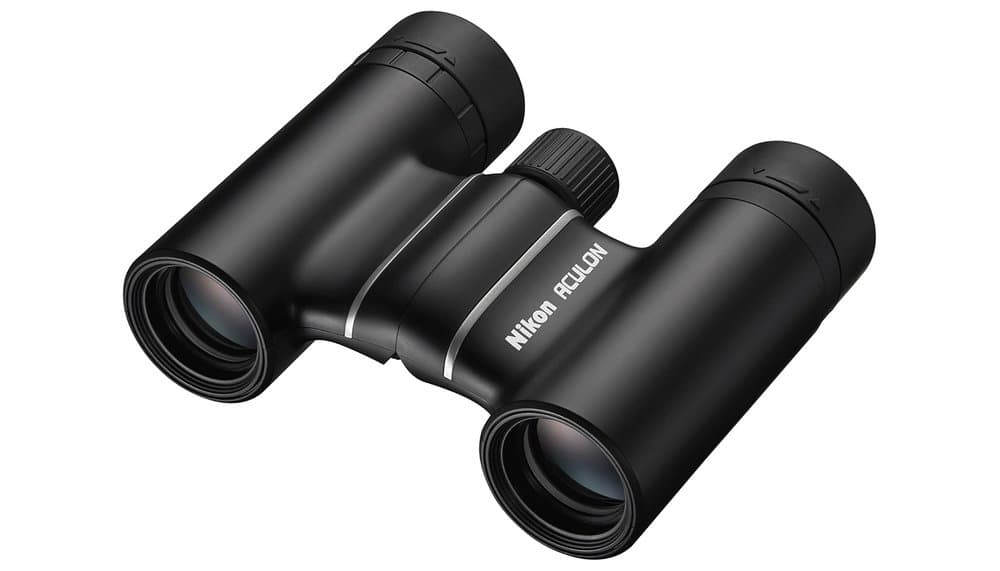
Introduction
In the world of nature observation, the trade-off between optical performance and portability is a constant quest. Ultra-compact binoculars promise to slip into a pocket without sacrificing image quality. The Nikon Aculon T02 10x21 position themselves precisely in this niche. With an announced weight of only 195 grams and dimensions rivaling a smartphone, they target the casual observer, the light hiker, or the spectator at events. But does this extreme compactness impose too many compromises for serious naturalistic use? Here we analyze this model by dissecting its technical specifications, cross-referencing community feedback and expert opinions to determine its real place in the binocular ecosystem.
Key Strengths
- Exceptional Portability: Its major, undisputed asset. A featherweight and an ultra-thin folding format that allow it to be taken anywhere, permanently, without a second thought.
- Value for Money: Testers and users agree that for its price segment, the image quality delivered by Nikon optics is more than decent.
- Ease of Use: Central focusing with a large ring, interpupillary adjustment, sliding eyecups. Immediate handling, without technological frills.
- Design and Finish: The "single block" monobloc design is regularly cited for its modern look and neat finish for an entry-level model.
Weaknesses
- Limited Comfort in Low Light: The small 2.1 mm exit pupil and the 21mm objective lens seriously limit brightness and visual comfort as soon as the light fades.
- Compromised Stability at 10x: The 10x magnification, while providing detail, strongly amplifies natural hand tremors, requiring a stable support or brace.
- Relatively Narrow Field of View: For a 10x magnification, its field is in line with compact format standards, but it remains narrow compared to bulkier models, making it trickier to locate subjects.
- Limited Robustness and Weatherproofing: The construction is not waterproof or fogproof (nitrogen filled). It is designed for urban use or light hiking in fair weather.
Detailed Analysis of the Nikon Aculon T02 10x21
Optical Quality and Visual Performance
On paper, the optical specifications of the Aculon T02 are those of a classic compact. The 10x magnification is ambitious for such a small instrument, theoretically offering good ability to discern details at a distance. The lenses are multi-coated, a basic technology that improves light transmission and reduces stray reflections. According to user feedback, "the image is beautiful and I find it bright" and the "optical quality [is] more than satisfactory" in daylight.
However, it is important to understand the physical limits. The 21mm diameter objective lens determines the amount of light gathered. The twilight factor (√(10x21) ≈ 14.5) and the exit pupil (21/10 = 2.1 mm) are the two key data points. An exit pupil of 2.1 mm is small. This means little light reaches your eye. Consequently, images will naturally appear darker and comfort will decrease rapidly in low-light situations (dense forest, end of day). Furthermore, this small exit pupil requires perfect alignment of the binoculars with the eyes, which can be less forgiving.
No mention is made of phase-correction coated prisms or ED (Extra-low Dispersion) glass, which is expected at this price level. These technologies, present in higher ranges, respectively improve color fidelity and contrast, and reduce color fringing (chromatic aberration). Their absence here places the T02 in a "clear and honest" category for daytime use, but without the optical refinements of more expert models.
Field of View and Ergonomics
The advertised field of view is a point to consider. For the 10x21 format, it sits on the lower end of average. This translates to a more pronounced "tunnel vision" effect. For observing birds or moving animals, a wide field is a valuable asset for locating and following the subject. Here, the community notes that the field is functional but not generous.
Ergonomics are twofold. On one hand, compactness is an undeniable asset for transport. On the other, the small size can be a drawback for large hands when gripping. The central focusing ring is described as wide and easy to manipulate, a positive point. The sliding eyecups allow for an adjustable eye relief, even for some eyeglass wearers, although users with thick glasses may lose part of the field of view. The 195g weight is its absolute weapon: "you will hardly notice you're carrying them," as the manufacturer points out.
Build and Durability
The construction relies on a monobloc chassis made of polycarbonate, covered with a basic rubber armor that provides a good grip and protection against minor shocks. This is where the "leisure" positioning is clearest. The total lack of waterproofing and nitrogen filling (fogproof) is the major limiting factor for dedicated naturalistic use. These binoculars fear rain, prolonged ambient humidity, and sudden temperature changes which will cause irremediable internal fogging. They are made for outings in dry and stable weather.
The minimum focusing distance is adequate for versatile use, allowing observation of insects or flowers from a few meters away.
Value Comparison
Where do the Aculon T02 10x21 stand in the landscape?
- Compared to the absolute entry-level: They often stand out for better image clarity and a more polished finish, generally justifying a slight premium for the Nikon brand.
- Compared to the mid-range (waterproof compacts): This is where the difference is striking. For a slightly higher budget, one can find compacts (often in 8x25 or 10x25) that offer waterproofing, a more generous exit pupil (around 3mm), and sometimes a wider field. The jump in versatility and durability is significant.
- Compared to the high-end: No comparison possible. Premium compacts (with ED glass, advanced coatings, waterproof metal construction) offer transparency, brightness, and visual comfort in another league, often for a similar weight but a multiplied price.
Their value is therefore excellent if and only if your priority criteria are: 1) maximum compactness, 2) a tight budget, 3) use exclusively in fair weather and daytime. As soon as one of these criteria changes, other alternatives become more relevant.
Typical Use Cases
- Light Hiking & Travel: This is their preferred terrain. Their negligible weight makes them an ideal companion when every gram counts, for panoramic observations or occasional close-ups during the day.
- Bird Watching (Beginner/Casual): Usable for leisure ornithology in open, sunny environments. The 10x allows for seeing details, but the narrow field and instability make tracking birds in flight difficult. Not recommended for regular practice or in forest environments.
- Cultural & Sporting Events: Perfect for theater, concerts, or stadium sporting events. The 10x brings the action closer well.
- Elementary Astronomy: Can serve for observing the Moon in detail, but their small objective lens and low brightness make them very limited for deep-sky objects.
- Digiscoping: Not suitable, due to lack of a dedicated support and eyepieces designed for this use.
What Users Say
A synthesis of available customer reviews and expert tests paints a consistent and unsurprising picture.
The recurring positive points revolve around compactness and lightness, described as "perfect for hiking or vacations." The image quality is generally judged very good for the price, with mentions like "clear," "sharp," and "bright" in daytime conditions. The ease of use and design are also appreciated. Several users appreciate being able to "forget them in a bag" and always have them at hand.
The negative points confirm the technical limits. Image shake at 10x is the most frequently cited flaw: "The only fault I find is that the 10x21: The image shakes." This is directly linked to the high magnification / miniature format combination. Insufficient brightness in low light is also mentioned, as is a field of view perceived as a bit tight. Finally, some comments note a somewhat "plastic" or "light" construction, highlighting their non-robust nature for intensive use.
The average overall rating reflects this assessment: excellent satisfaction for nomadic and occasional use, with full awareness of its technical limits.
Technical Specifications
| Characteristic | Nikon Aculon T02 10x21 Specification |
|---|---|
| Magnification | 10x |
| Objective Lens Diameter | 21 mm |
| Prism | Porro (probable) |
| Optical Coatings | Multi-coated (Full Multicoated according to Nikon) |
| Field of View at 1000m | Approximately 105m (standard data for this model) |
| Real Field of View (degrees) | ~6° |
| Exit Pupil | 2.1 mm |
| Eye Relief | Information not provided, estimated at ~10mm (with eyecups retracted) |
| Minimum Focusing Distance | ~3 m (estimate based on similar models) |
| Diopter | Adjustment on the right eyepiece |
| Water Resistance | None |
| Gas Filling | None (not waterproof, not fogproof) |
| Weight | 195 g |
| Dimensions (Closed) | 104 x 87 x 30 mm (L x H x D approx.) |
| Included Accessories | Soft case, neck strap, lens cloth (depending on pack) |
Conclusion
The Nikon Aculon T02 10x21 are the perfect example of a tool that excels in its primary role without pretending to be more. They fulfill their fundamental promise brilliantly: to be the most discreet and lightest binoculars possible while offering a clear and usable image in broad daylight. Their portability is unmatched in their price category, and the reliability of the Nikon brand brings legitimate confidence in the basic optical quality.
However, their technical analysis and field feedback confirm it: they are not a universal solution. The regular nature observer, faced with variable light conditions and seeking long-term comfort, will find their limits (2.1mm exit pupil, instability at 10x, lack of waterproofing) too restrictive. They represent an excellent travel or light hiking companion, or a first pair of binoculars for a limited budget, provided one accepts their constraints. For more serious naturalistic use, investing in a waterproof compact model with a larger objective lens (25mm or 28mm) will, undoubtedly, be a more sustainable and satisfying choice.
100% free and independent — All our articles are written independently, without any sponsorship. We may earn a commission on purchases made through our links, at no extra cost to you.
Articles you might like
Vanguard Endeavor HD65A Spotting Scope Review
Spotting scope with 65mm ED glass & 15-45x zoom for birding & hiking. Balanced performance & portability for serious nature observers.
Carson AdventurePak Kids' Exploration Tool Kit Review
Explore nature with this kid's 5-piece tool kit for outdoor adventure and educational discovery. Perfect for young explorers.
BOSTRON CY 10x50 Monocular Review & Test
Compact 10x50 monocular review: Analyzes optical clarity, field of view & build quality for hiking, nature & astronomy. See its true value.
Guides you might like
WiFi Trail Camera Guide
See wildlife discreetly from your couch! Learn how WiFi trail cameras let you monitor animals without disturbance and how to choose the right one.
Ultimate Travel Telescope Guide
Choose a portable, high-performance travel telescope to explore the universe from your backpack without compromising on essential astronomical views.
Ultimate Guide to Night Vision Binoculars
Choose the perfect night vision binoculars: Gen vs. digital? Unravel the tech to make your nighttime wildlife adventures a total success. Guide inside.