K&F Concept Carbon Tripod Test & Review
Published on 30 March 2026 · By OptiqueNature
Review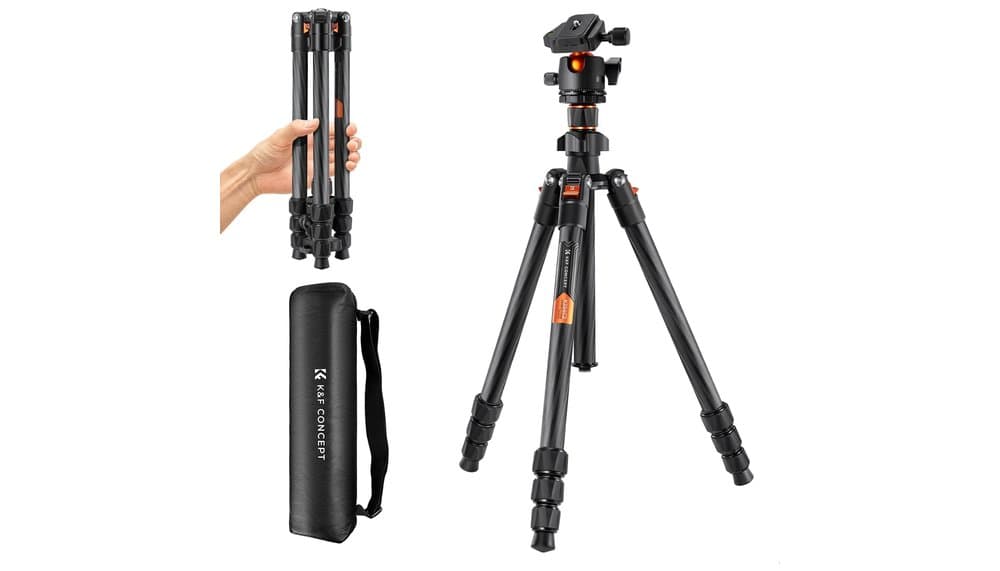
Introduction
For any nature observer, whether a bird photographer, amateur astronomer, or hiker equipped with a spotting scope, a stable tripod is not a mere accessory: it is an essential pillar. It transforms a shaky observation into a sharp and detailed image. The K&F Concept Carbon Tripod falls into this category of lightweight travel tripods, promising stability and compactness. On paper, its specifications seem tailored for field observation. But how do they hold up against the concrete demands of users and expert analyses? We investigate by dissecting the technical data, community feedback, and published tests.
Key Strengths
The technical characteristics of the K&F Concept Carbon Tripod reveal several major assets for outdoor activities.
- Featherweight and exemplary compactness: With an announced weight of 1.15 kg and a folded length of only 41.5 cm, this tripod positions itself as an ideal travel companion. It can easily slip into a backpack dedicated to hiking or observation bivouacking.
- Stability relative to weight: The carbon fiber construction is the heart of its argument. This material offers an excellent stiffness-to-weight ratio and absorbs vibrations better than aluminum, a crucial point for long-exposure photography or use with powerful spotting scopes.
- Versatile working height: Its maximum height of 162 cm allows comfortable use in a standing position for most users. The reversible center column also allows for low-angle shots, useful for macro photography of plants or insects.
- 360° panoramic ball head: The metal 36 mm ball head offers great freedom of movement for framing, essential for tracking a moving animal or scanning a landscape.
Weak Points
Analysis of user feedback highlights some compromises inherent in this design focused on lightness and accessible price.
- Long-term mechanical reliability: Several user reports and expert reviews point to plastic components in the locking mechanisms and the center column. These parts are perceived as the potential weak link in terms of durability under intensive and rough use.
- Quick-release system: The mechanism of the quick-release plate, which requires manual screwing/unscrewing, is considered less convenient and less secure than the spring-loaded latch systems (Arca-Swiss or Manfrotto type) common among higher-end brands.
- Absolute precision in extreme conditions: While stability is generally praised, testers note that for heavy loads (close to the advertised 8 kg) or in strong winds, a tripod with a more robust chassis and a more precise head will offer superior rigidity.
Detailed Analysis for Nature Observation
Let's now evaluate the relevance of the K&F Concept Carbon Tripod for our core activities: birdwatching, light astronomy, hiking, and wildlife photography.
Stability and Rigidity: The Foundation of a Sharp Image The carbon fiber provides good stability for its weight. The maximum load capacity of 8 kg (17.6 lbs) is largely sufficient for the majority of DSLRs, mirrorless cameras paired with standard lenses, or field spotting scopes. According to feedback, it supports without issue a Nikon Zf with a standard lens, for example. However, for a heavy setup like a full-frame DSLR with a 500mm telephoto lens or a small telescope, one will approach the limit. In this case, and for very long exposures in astrophotography, the community advises staying below this maximum limit and consistently using the hook under the center column to hang your bag and improve stability.
Compactness and Mobility: The Hiker's Ally This is where this tripod excels. Its minimal footprint and light weight make it a perfect candidate for activities where every gram counts. It will not be a burden during a long approach walk to observe wildlife or reach a viewpoint. Users describe it as "ideal for trekking or walking."
Ergonomics and Handling in the Field The one-handed quick deployment via the twist locks is appreciated. The presence of a bubble level integrated into the head is a practical but essential detail for leveling your device quickly, especially on uneven terrain. On the other hand, the recurring ergonomic negative point concerns the quick-release plate. For an observer who often needs to attach and detach their device (for example, to switch from photography to naked-eye viewing), the manual screw system is less intuitive and slower than a latch-based fixation.
Robustness and Durability Against the Elements The specifications do not mention weather sealing. This is important information for equipment intended for outdoor use. Expert reviews suggest regular maintenance of the mechanisms, especially after exposure to sand or moisture. A few negative reports mention plastic parts (seal, spring in a leg) that failed after a few weeks of use, highlighting possible variability in quality control or fragility in some models.
Summary Technical Sheet
| Characteristic | Specification K&F Concept Carbon Tripod (Model K254C2) |
|---|---|
| Main Material | Carbon fiber |
| Weight | 1.15 kg |
| Maximum Height | 162 cm (with center column extended) |
| Minimum Height | 54 cm (center column retracted) |
| Folded Length | 41.5 cm |
| Leg Diameter | 25 mm |
| Number of Sections | 4 per leg |
| Head Type | 360° panoramic ball head (36 mm) |
| Mounting System | Standard 1/4" quick-release plate (manual screwing) |
| Maximum Load | 8 kg / 17.6 lbs |
| Included Accessories | Carrying bag, stabilization hook |
What Users Say: Trends and Concrete Feedback
A synthesis of hundreds of customer reviews and available online expert analyses paints a clear consensus, with nuances.
The recurring praise revolves around three pillars: the value for money, often described as "excellent" or "great"; the lightness and compactness for transport; and a stability deemed satisfactory for general use. Phrases like "very good lightweight and easy-to-carry tripod" or "stable, light, good value for money" summarize the majority opinion, represented by a very high overall rating.
The criticisms and reservations focus on specific points:
- The perception of certain materials: The term "plastic" comes up to describe the leg twist locks and the center column, creating an impression of "cheap" compared to older alloy models.
- The quick-release plate mechanism: It is regularly compared unfavorably to latch systems (Manfrotto type), considered more "practical, fast, and secure."
- Isolated quality control issues: A few testimonies mention heads developing premature play ("the head already has play") or broken parts (spring, seal), although these cases seem to be in the minority.
- Precision in limiting conditions: For the most demanding users (professional photographers, astronomers), the head, although correct, does not rival high-end heads in fineness of adjustment and total absence of drift.
Conclusion
The K&F Concept Carbon Tripod establishes itself as a very convincing proposition for the occasional nature observer or traveling photographer seeking a lightweight, compact, and stable tripod without breaking the bank. Its performance perfectly meets the needs of hiking, birdwatching with binoculars or a small spotting scope, and general landscape photography.
However, its analysis also reveals its limits. It reflects an intelligent compromise, where savings are made on certain ergonomic details (quick-release plate) and on the use of composite materials for mechanical parts to achieve this weight and price. Its durability under years of intensive use remains to be proven, unlike established brands.
Final verdict: It is an excellent entry-level carbon tripod and an ideal travel companion. For the demanding user whose equipment is heavy and expensive, or who practices serious astrophotography, investing in a model with a high-end head and a construction less reliant on plastic may prove necessary. But for the vast majority of nature enthusiasts wishing to significantly improve the stability of their observations without weighing down their pack, the K&F Concept Carbon Tripod represents a perfectly relevant and reasoned choice.
100% free and independent — All our articles are written independently, without any sponsorship. We may earn a commission on purchases made through our links, at no extra cost to you.
Articles you might like
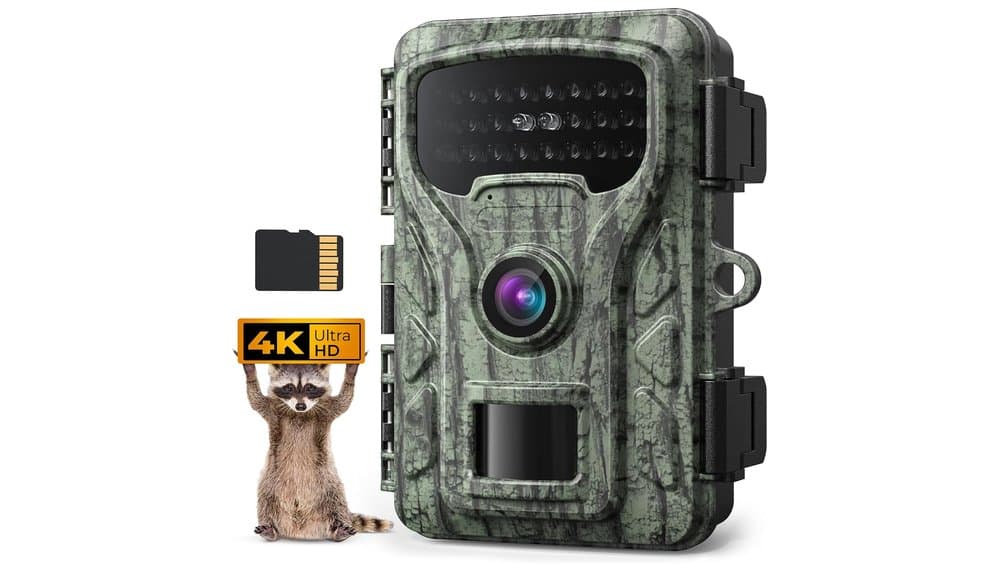
Caytail 4K 48MP Hunting Camera Review & Test
In-depth review of the Caytail 4K 48MP trail camera with included SD card. We analyze specs and real user feedback on its true field performance.
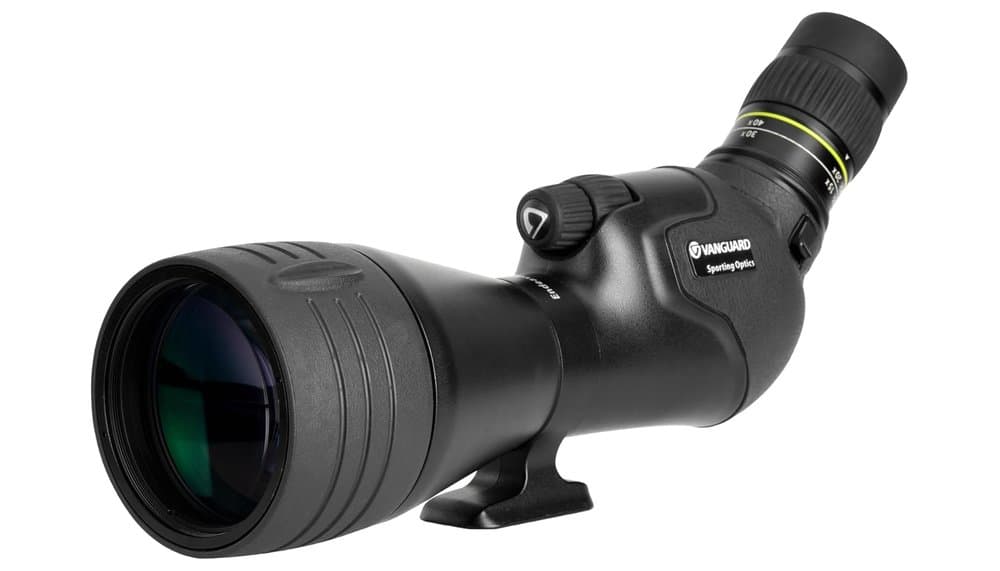
Vanguard Endeavor HD65A Spotting Scope Review
Spotting scope with 65mm ED glass & 15-45x zoom for birding & hiking. Balanced performance & portability for serious nature observers.
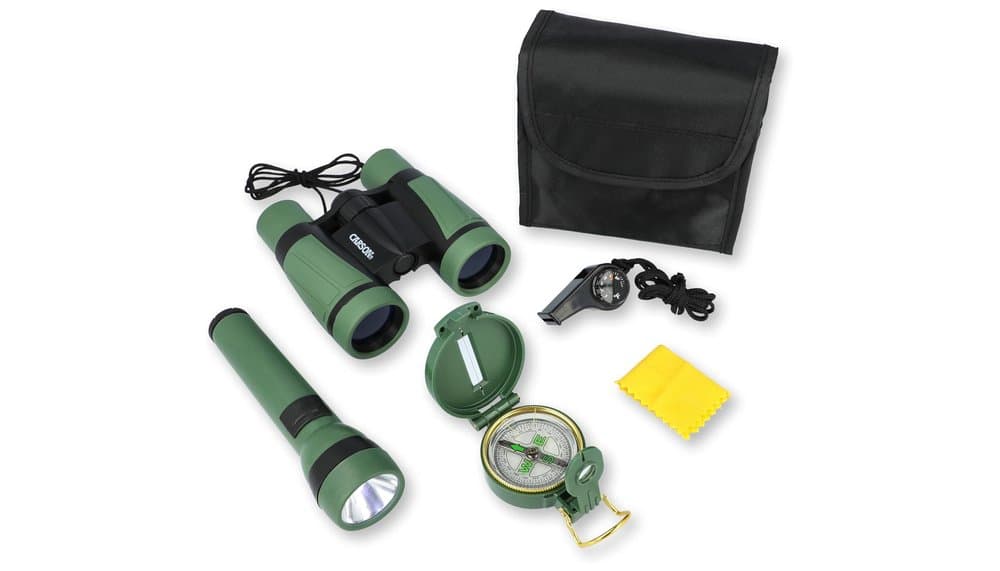
Carson AdventurePak Kids' Exploration Tool Kit Review
Explore nature with this kid's 5-piece tool kit for outdoor adventure and educational discovery. Perfect for young explorers.
Guides you might like
WiFi Trail Camera Guide
See wildlife discreetly from your couch! Learn how WiFi trail cameras let you monitor animals without disturbance and how to choose the right one.
Ultimate Travel Telescope Guide
Choose a portable, high-performance travel telescope to explore the universe from your backpack without compromising on essential astronomical views.
Ultimate Guide to Night Vision Binoculars
Choose the perfect night vision binoculars: Gen vs. digital? Unravel the tech to make your nighttime wildlife adventures a total success. Guide inside.