CELTICBIRD 80-600 Telescope Review & Test
Published on 15 March 2026 · By OptiqueNature
Review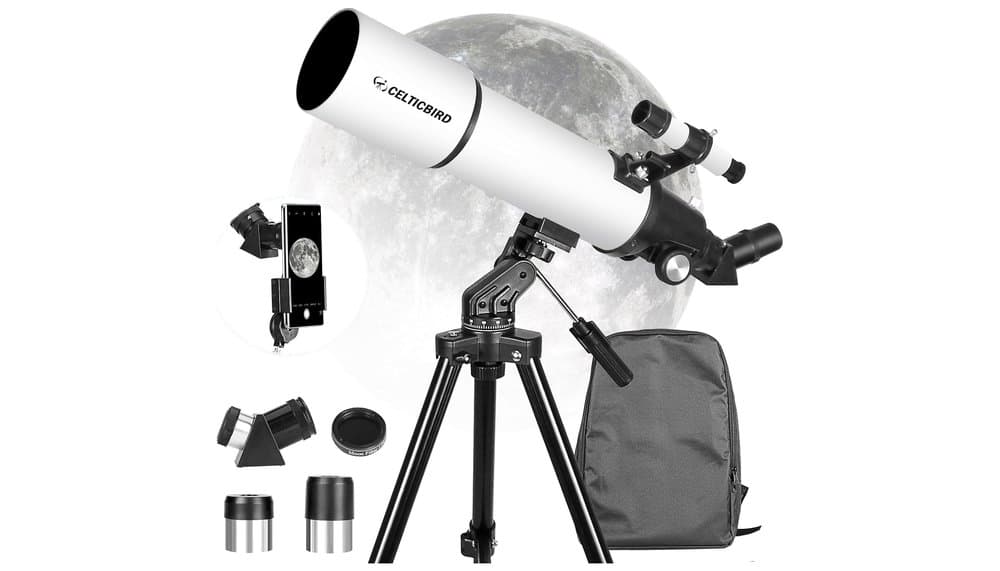
Introduction
The CELTICBIRD 80-600 Astronomical Refractor Telescope frequently appears in recommendations for beginner amateur astronomers. On paper, it's an instrument that promises a simple and complete gateway to celestial and terrestrial observation. But beyond marketing promises, what is it really worth? By cross-referencing its technical specifications, user community feedback, and expert analysis, we provide a complete picture of what one can reasonably expect from this refractor. This article aims to demystify its performance, robustness, and relevance for specific needs like lunar, planetary observation, or even digiscoping.
Strengths
Analysis of feedback reveals several qualities unanimously praised by new users.
- Simplicity and quick setup: The majority of comments highlight an intuitive installation that is quick. The fact that the optical tube and mount assemble without tools is a major asset for families or complete novices.
- Practical portability: The inclusion of a dedicated backpack is an extremely appreciated point. It transforms a bulky setup into a portable kit, suitable for field trips or travel.
- Excellent value for money for beginners: Most users agree that the package, for its price point, offers a high perceived value. The inclusion of accessories like the smartphone adapter and several eyepieces right out of the box is a real plus.
- Satisfactory lunar performance: This is the standout point mentioned in almost all reviews. The combination of the 80mm aperture and the provided eyepieces allows for clear and detailed views of the Moon, with the ability to distinguish numerous craters.
- Responsive customer support: Several testimonials report an efficient and quick after-sales service in case of problems, which is a reassuring argument for an online purchase.
Weaknesses
Despite its entry-level qualities, the CELTICBIRD 80-600 shows its limits, consistent with its price category.
- Limited ceiling for celestial observation: Experts and experienced users confirm it: this is an instrument designed for bright objects. Observing planets beyond Jupiter and Saturn is very limited, and deep-sky objects (nebulae, galaxies) remain out of reach under good conditions.
- Reported mechanical fragility: While not systematic, several reports indicate average robustness of some components, notably the tripod or mounting pieces. Careful handling is recommended.
- Modest quality finderscope: The 5x24 finderscope is often described as the weak point of the kit. Its adjustment is considered tricky ("a pain" according to one review) and its optical quality is basic, which complicates the initial aiming at objects.
- Limiting manual alt-azimuth mount: For tracking objects at high magnification, the manual AZ mount quickly shows its limits. It requires very stable and precise manipulation, which can be frustrating for following a planet.
- Restricted eyepiece kit: Only two eyepieces (20mm and 9mm) are provided. This range of magnifications (30x and 66x) is sufficient to begin but quickly becomes inadequate, pushing for additional purchases.
Detailed Analysis of the CELTICBIRD 80-600
Optical Quality and Visual Performance
The heart of the instrument is an achromatic 80mm diameter objective lens with a 600mm focal length, giving a focal ratio of f/7.5. On paper, the specs advertise "fully coated" lenses. In this segment, this generally means a multi-layer coating on air-to-glass surfaces to reduce stray reflections and improve light transmission. According to user feedback, this transmission is sufficient to provide bright and contrasted images of the Moon. Chromatic aberration control is described as low to very low on bright objects, which is typical for an achromat of this aperture and focal ratio. For beginner astronomical use centered on the Moon and major planets, the optical quality is largely sufficient. For daytime terrestrial observation, performance will be good.
The field of view depends on the eyepiece used. With the 20mm eyepiece (30x magnification), the field is relatively wide, facilitating aiming. With the 9mm (66x), it naturally narrows. Compared to direct competitors in the same range, it is average. The exit pupil (objective diameter / magnification) remains comfortable in both cases (2.7mm at 66x and 1.2mm at 30x), suitable for night observation.
Build, Sealing, and Ergonomics
Reviews are mixed on build quality. While the overall impression upon unboxing is generally good, weaknesses appear with use. The aluminum tripod is stable at low height but can exhibit vibrations at full extension or with a light wind. Several users note that some plastic parts (notably the tightening knobs) seem fragile and must be handled with care. The user manual is frequently judged too brief by true beginners.
Regarding sealing, no IP specification or "waterproof" mention is provided by the manufacturer. We must therefore consider the instrument to be neither sealed nor fog-resistant (nitrogen purged). It is a telescope for use in dry conditions or with light precautions.
Ergonomics is its strong point for a beginner. The controls are simple: a focusing wheel and movements in azimuth and altitude on the mount. The modest total weight (about 3 kg for the whole set) and the backpack make it truly portable. The minimum focusing distance is not specified but, being a refractor, it should allow for decent terrestrial observation.
Accessories and Use Cases
The kit is notably complete for its price:
- 20mm and 9mm Eyepieces: They provide a decent working base.
- 5x24 Finderscope: Useful but of modest quality, its adjustment is a crucial step for successful observations.
- Smartphone adapter: This is a highly appreciated accessory that opens the door to basic digiscoping. User-shared photos of the Moon attest to this. However, one should not expect deep-sky astrophotography.
- Tripod and backpack: Essential and well-designed for mobility.
Recommended use cases:
- Lunar observation: Its strong point. Ideal for discovering lunar craters and seas.
- Basic planetary observation: To see Saturn's rings and Jupiter's bands as spots, under optimal sky conditions.
- Daytime terrestrial observation: For wildlife and flora at medium distance, with an upright image to be obtained via an additional prism (not included).
- Astronomy initiation for children and adults: Perfect for first outings under the stars without a heavy investment.
- Light digiscoping: For capturing and sharing images of the Moon or landscapes.
Discouraged use cases:
- Advanced deep-sky observation: The 80mm aperture is too weak for most nebulae and galaxies.
- Long-exposure astrophotography: The lack of a motorized equatorial mount makes it unsuitable.
- Use in wet or extreme conditions: Due to lack of sealing.
Comparison with the Market
In the budget segment, the CELTICBIRD 80-600 positions itself as a challenger against entry-level models from more established brands. It often stands out for a more generous accessory kit (backpack, smartphone adapter included). Its optical performance is similar to other 80/600 achromatic refractors. It loses to some models with a slightly more robust mount or a better quality finderscope, but wins in perceived value thanks to the accessories.
Against the mid-range segment (with ED optics or more solid mounts), its optical and mechanical limits become evident. It is clearly a discovery instrument, not a tool for long-term progression without changing equipment.
Technical Specifications
| Feature | Specification of the CELTICBIRD 80-600 |
|---|---|
| Type | Achromatic refractor |
| Aperture (Diameter) | 80 mm |
| Focal Length | 600 mm |
| Focal Ratio (F/D) | f/7.5 |
| Lens Coating | Multi-coated ("Fully Multi-Coated") |
| Mount | Manual Alt-Azimuth (AZ) |
| Included Eyepieces | 20 mm (30x) and 9 mm (66x) |
| Finderscope | 5 x 24 (optical) |
| Main Accessories | Smartphone adapter, adjustable aluminum tripod, backpack |
| Total Weight (approximate) | ~3.14 kg |
| Warranty | 1 year |
What Users Say
The synthesis of over a thousand customer reviews, as well as consulted expert analyses, paints a clear consensus.
The recurring positive points revolve around the overall user experience for a beginner. The ease of installation, portability thanks to the bag, and immediate satisfaction during lunar observation come back as leitmotifs. The image quality on the Moon is very often described as "impressive" or "very good" for the price. The smartphone adapter is a source of great satisfaction, allowing easy capture and sharing of first observations. The responsiveness of after-sales service is also highlighted.
The reported criticisms and limitations are just as instructive. Several users mention fragility of some mechanical parts, such as the tripod or mounting rings. The finderscope is unanimously considered the weak point of the kit, difficult to adjust precisely. The manual AZ mount is perceived as limiting as soon as one wants to use high magnification (66x) to observe planets, making tracking less smooth. Finally, the initial enthusiasm sometimes gives way to frustration with the instrument's limits for observing anything other than the Moon or the brightest planets, which is however inherent to this product category.
The overall rating of 4.4/5 summarizes this paradox well: a product that is excellent for what it is designed for (a simple and fun initiation), but whose limits are quickly reached as soon as the user's ambitions grow.
Conclusion
The CELTICBIRD 80-600 Astronomical Refractor Telescope is a product that perfectly fulfills its mission: to be a first astronomical telescope without complication and at a controlled cost. Its objective analysis shows that it excels in ease of use, portability, and providing a truly complete kit to start, even including basic digiscoping. Its performance on the Moon is very satisfactory and will provide moments of real emotion for the novice.
However, it is essential to understand its natural limits. It is an instrument for sky initiation, designed for bright objects. Its mechanics, although sufficient for occasional use, are not designed for the rigor of intensive use. Dreams of deep-sky astrophotography or detailed observation of nebulae will require a much larger budget.
In the end, we recommend it without reservation to the absolute astronomy beginner, the family wanting to share lunar observations, or someone looking for a portable companion for occasional outings. For those already certain of their passion for astronomy and wanting an instrument to progress with over several years, it may be wise to consider an entry-level model from a specialized brand, with a more upgradeable mount. The CELTICBIRD 80-600 is a very good first step, but one should not expect it to reach very high into the sky.
100% free and independent — All our articles are written independently, without any sponsorship. We may earn a commission on purchases made through our links, at no extra cost to you.
Articles you might like
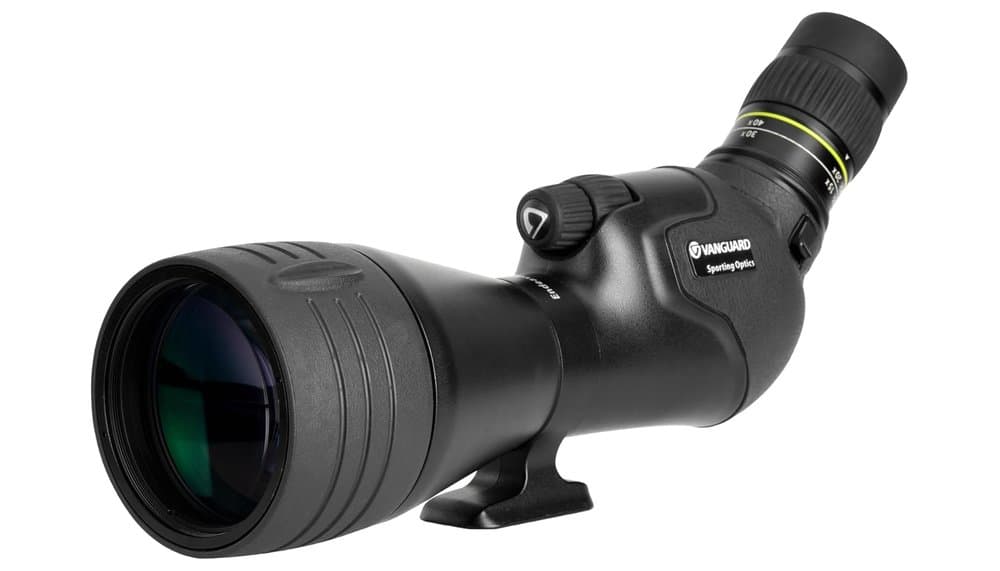
Vanguard Endeavor HD65A Spotting Scope Review
Spotting scope with 65mm ED glass & 15-45x zoom for birding & hiking. Balanced performance & portability for serious nature observers.
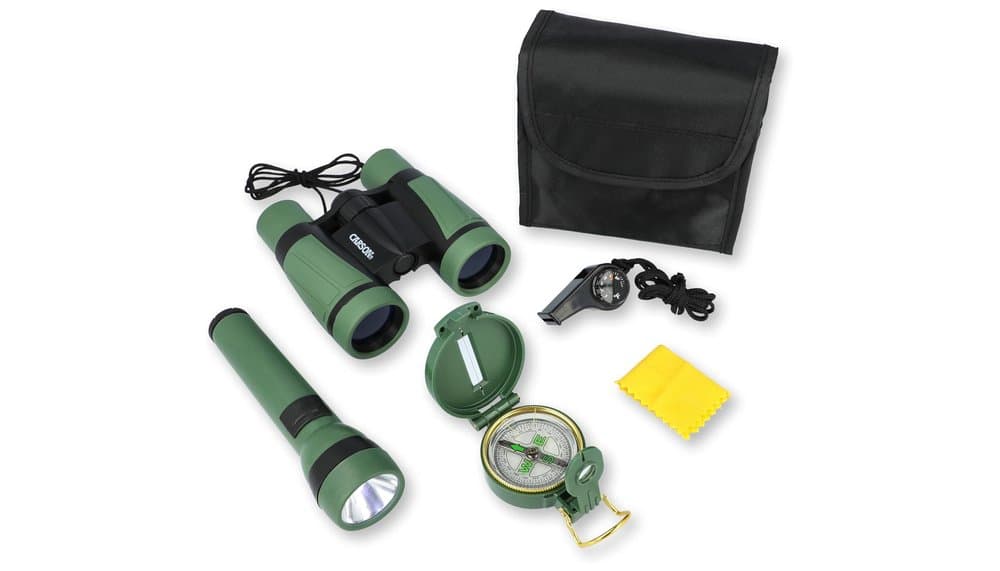
Carson AdventurePak Kids' Exploration Tool Kit Review
Explore nature with this kid's 5-piece tool kit for outdoor adventure and educational discovery. Perfect for young explorers.
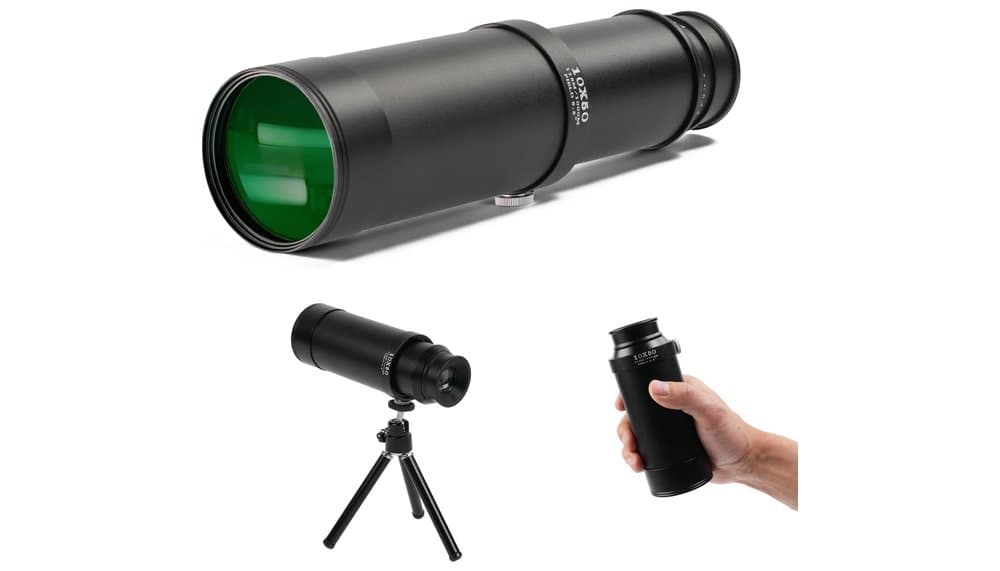
BOSTRON CY 10x50 Monocular Review & Test
Compact 10x50 monocular review: Analyzes optical clarity, field of view & build quality for hiking, nature & astronomy. See its true value.
Guides you might like

WiFi Trail Camera Guide
See wildlife discreetly from your couch! Learn how WiFi trail cameras let you monitor animals without disturbance and how to choose the right one.

Ultimate Travel Telescope Guide
Choose a portable, high-performance travel telescope to explore the universe from your backpack without compromising on essential astronomical views.
Ultimate Guide to Night Vision Binoculars
Choose the perfect night vision binoculars: Gen vs. digital? Unravel the tech to make your nighttime wildlife adventures a total success. Guide inside.